Best Time to Visit Lofoten: A Local’s Guide to the Seasons
When is the best time to visit Lofoten? Well, it depends.
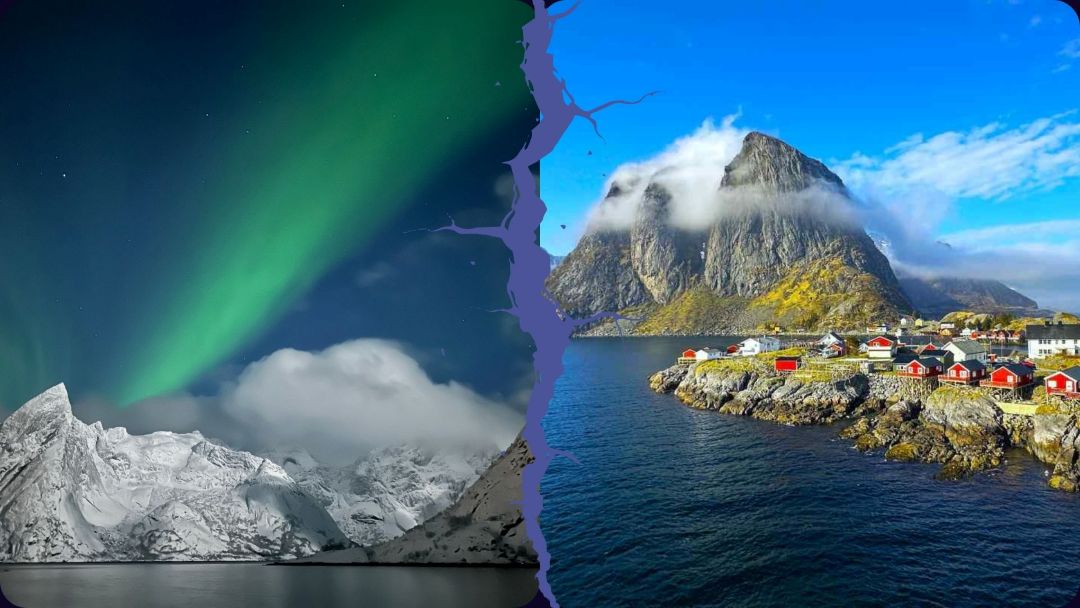
If you want endless daylight, epic hikes, and midnight kayaking, come in summer. If you want to soak up the Polar Night, Northern Lights, and want to experience “a bit of weather”, come in winter. If you want a bit of both, you have spring and autumn.
Lofoten doesn’t really do “mild.”
I moved to Reine one year ago and bought a house with a view that is so beautiful that it still makes me feel slightly smug every morning.
My living room looks straight across the West Fjord, with Reinebringen towering behind me like a silent bodyguard. In the last twelve months, I’ve lived through all four seasons here, and if there’s one thing I’ve learned, the best time to visit Lofoten depends entirely on what you’re after.
So let’s break it down.
Why Timing Matters When Visiting Lofoten
Unlike many travel destinations that offer more or less the same experience year-round, Lofoten is a true shape-shifter.
In summer, the sun doesn’t set here up north for about six weeks, and you’ll find yourself hiking or kayaking at 2 a.m. just because you can (or because you can’t sleep).
Then, in winter, daylight becomes a scarce commodity, with about 20 hours of darkness, and a few hours of “blue light”. You’ll suddenly care deeply about the difference between “blue light” and “pitch black” while dressing in multiple layers to go chase the Aurora Borealis.
Spring and autumn sit in between, offering drama in the skies, storms that rearrange your plans (and your hair), and the kind of solitude that either makes you wonder why more people aren’t here, or why people come here at all!
So, the best time is less about a “right” answer and more about aligning the season with the experience you want. Midnight sun or northern lights — you just have to choose.
Quick 12 Months Lofoten Weather Guide
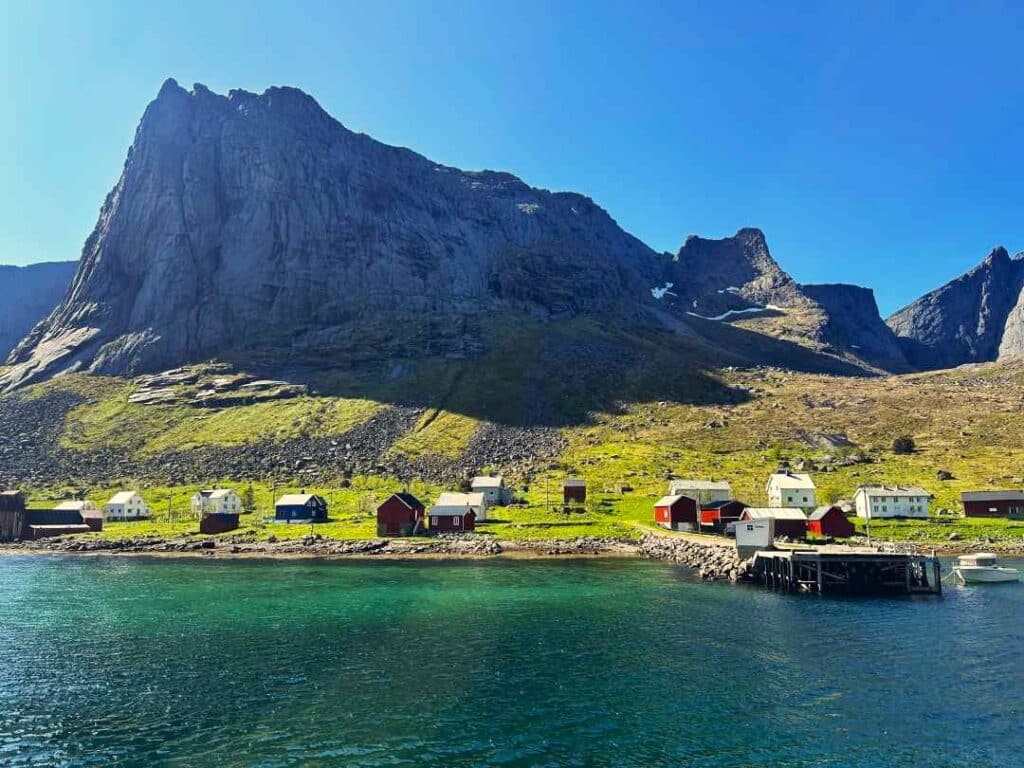
December through February
- Temperatures: –3°C to +3°C (26°F to 37°F)
- Expect long, dark days with only a few hours of daylight (or none at all in mid-winter). Snow, sleet, and rain all make appearances, often in the same week. Storms can be fierce, and the weather changes quickly.
- The sun is below the horizon between December 7th and January 7th. This is peak Northern Lights season (even though we have Northern Lights from September to March).
March through May
- Temperatures: 0°C to +8°C (32°F to 46°F)
- Days grow noticeably longer, on March 1st, you have snow begins melting, and spring slowly pushes its way in. March can still feel very much like winter, while May can surprise with mild, sunny days. It’s shoulder season, so you’ll see fewer tourists.
June through August
- Temperatures: 10°C to 17°C (50°F to 63°F)
- Midnight Sun dominates June and July, with no real darkness for weeks. Weather is unpredictable: you can get 20°C and sunshine or 12°C and steady rain. It’s the best time for hiking, kayaking, and camping, but also the busiest season.
September through November
- Temperatures: 4°C to 10°C (39°F to 50°F)
- Autumn brings shorter days, fiery sunsets, and the return of darkness — and with it, the Northern Lights. September is often mild and colorful, while October and November are stormier, wetter, and colder. Expect dramatic skies and fewer crowds.
Also Read: Ultimate Lofoten Islands Travel Guide From A Local
Best Time To Visit Lofoten For Midnight Sun

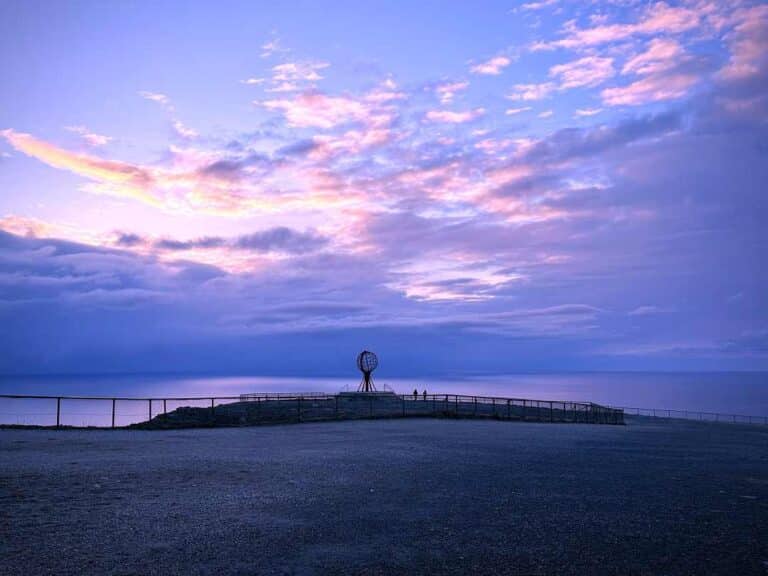
If you’ve never experienced the midnight sun, prepare yourself. From mid June until mid-July, the sun doesn’t set at all. It just rolls lazily along the horizon, throwing golden light across the mountains and fjords.
It sounds romantic, and it is — but it also messes with your sleep schedule. Blackout curtains become essential, and you’ll catch yourself saying things like, “Oh, it’s only midnight, let’s go for a hike.” You might want to bring a sleeping mask in your bag for this season.
Summer is the time for:
- Hiking spectacular mountains at night — fewer people, softer light, and the smug satisfaction of being slightly eccentric.
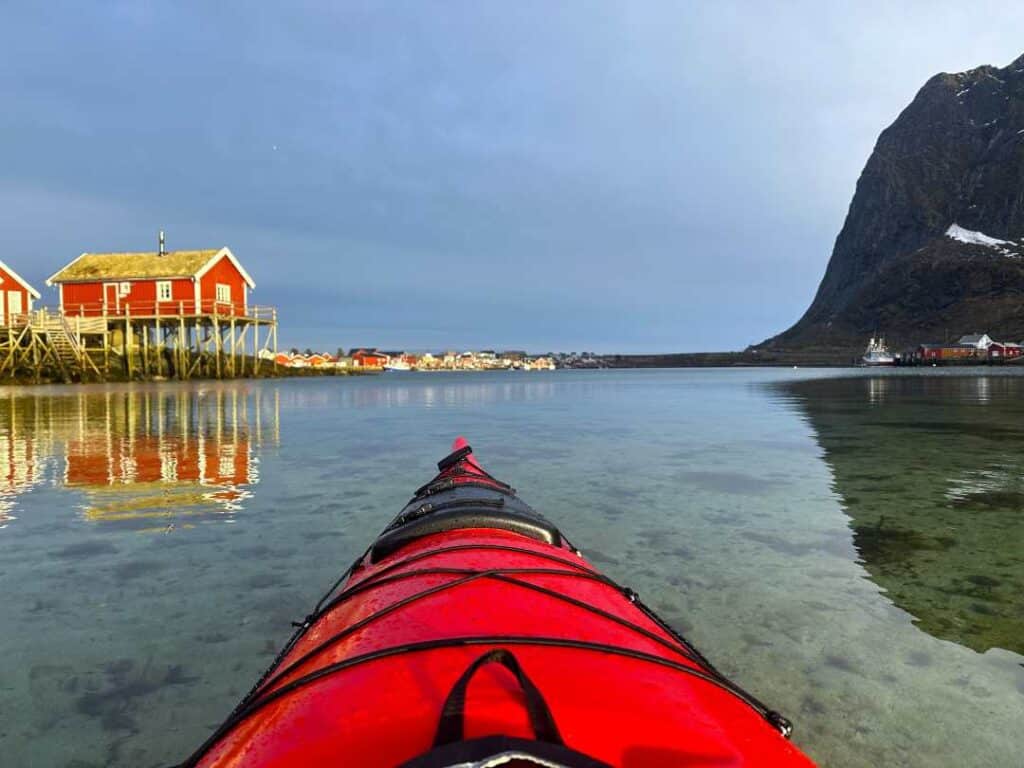
- Kayaking under the midnight sun — surreal, a little chilly, but unforgettable.
- Late night fishing trips — the cod don’t care what time it is, and neither do the fishermen.
- Boat trips: RIB Bird safaris and malstrom safaris
- See the sun at midnight from one of the crispy white Lofoten beaches
If your dream trip to Lofoten involves hiking, camping, kayaking, or basically anything outdoors, summer is your season. Just don’t expect peace and quiet in July. That’s when everyone else also thinks it’s the best time to visit.
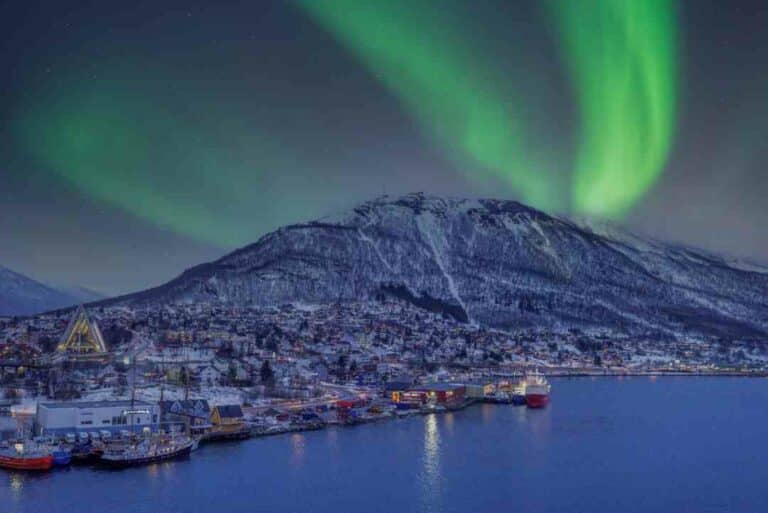
Best Time to Visit Lofoten for Northern Lights

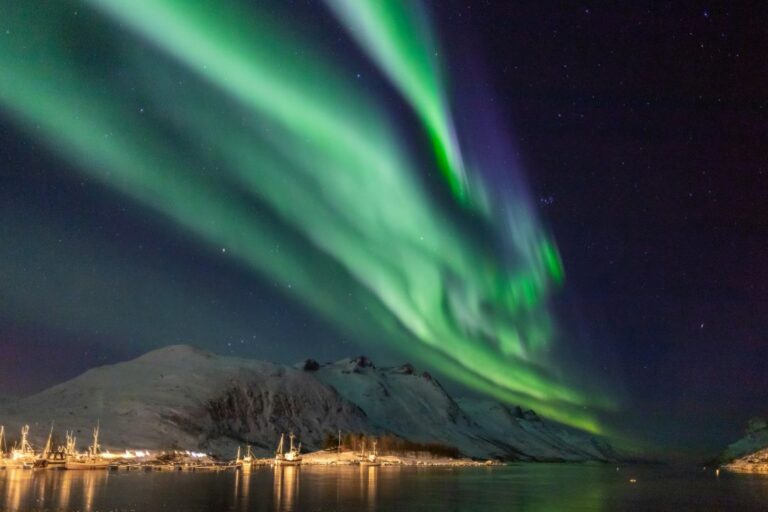
The northern light is the unpredictable diva of the Arctic. It only shows up when it feels like it and require darkness, clear skies, and patience from you. From late September to late March, you stand a chance of seeing them.
During winter in Lofoten, nights here are long and dark, which means plenty of aurora-hunting hours.
The good thing about living in Reine in western Lofoten is that I don’t have to go anywhere — sometimes I just stand in my garden with my down jacket and wait. When the lights appear, the whole sky ripples green, purple, and pink. It never gets old.
Winter is the time for:
- Northern lights photography — bring a tripod and warm boots.
- Snowshoeing and skiing — don’t worry, you don’t have to be super sporty, but you do need balance.
- Winter kayaking – yes, you can kayak in winter as well. On clear days, it is spectacular.
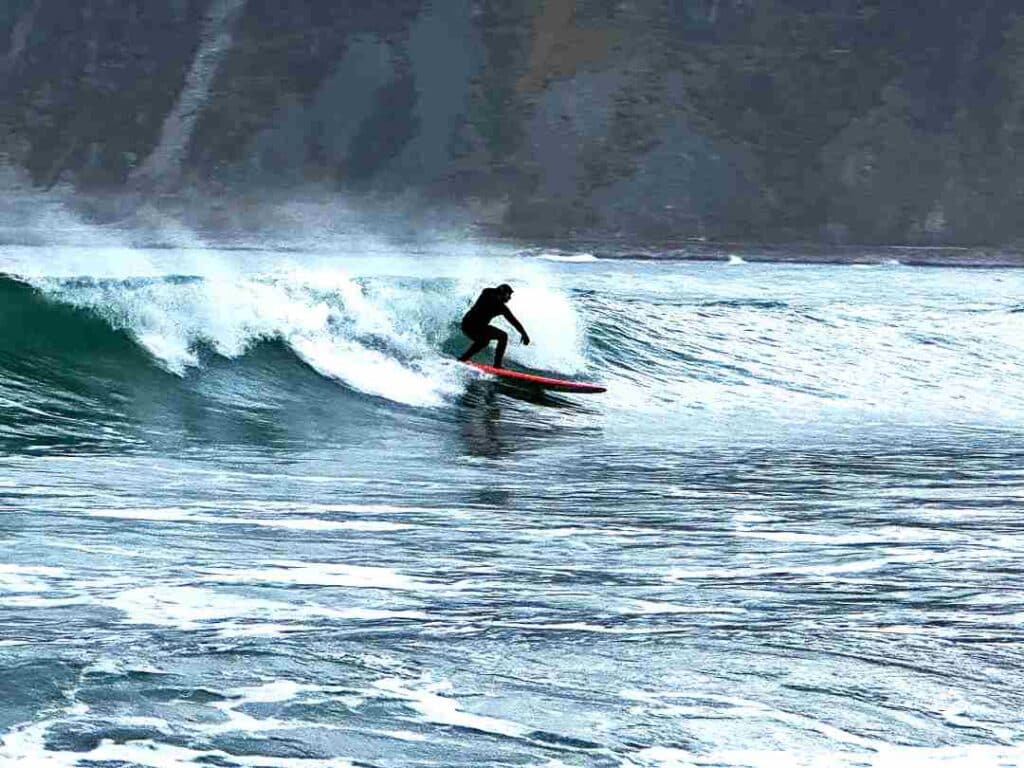
- Wave surfing – yep, that too. Check out Lofoten Beach Camp for Arctic winter surfing.
- Cabin life — book a traditional rorbu, light the fireplace, and accept that you won’t be productive.
One word of advice: don’t expect the Aurora every night. Sometimes you get clouds. Sometimes you get nothing. Sometimes you get the best show of your life. That’s part of the magic.
Summer in Lofoten (June–August): Hiking and Kayaking Paradise

I’ll be honest: summer is when Lofoten feels like it’s been discovered by everyone. The roads are busier, the rorbu cabins are booked months in advance, and you’re suddenly sharing your mountain summit selfie with 20 others.
But there’s a reason people come:
- The hiking trails are snow-free, safe, and stunning
- The beaches (yes, we have white-sand beaches) look like the Caribbean, even though the water is closer to an ice bath than a warm swim.
- The light is so magical that photographers lose track of time (and their partners’ patience).
Weather-wise, don’t be fooled by pretty Instagram pictures. It can rain for days, it can storm, and it can be 12°C in July. Pack layers. Always.
Winter in Lofoten (December–March): Snow, Aurora, and Cozy Cabins

Winter is quieter. The crowds thin out, ferries run less often, and life slows down.
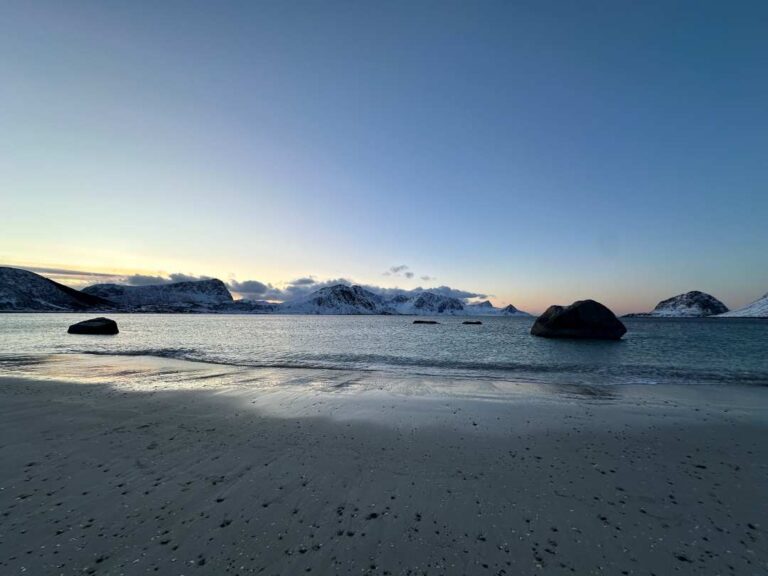
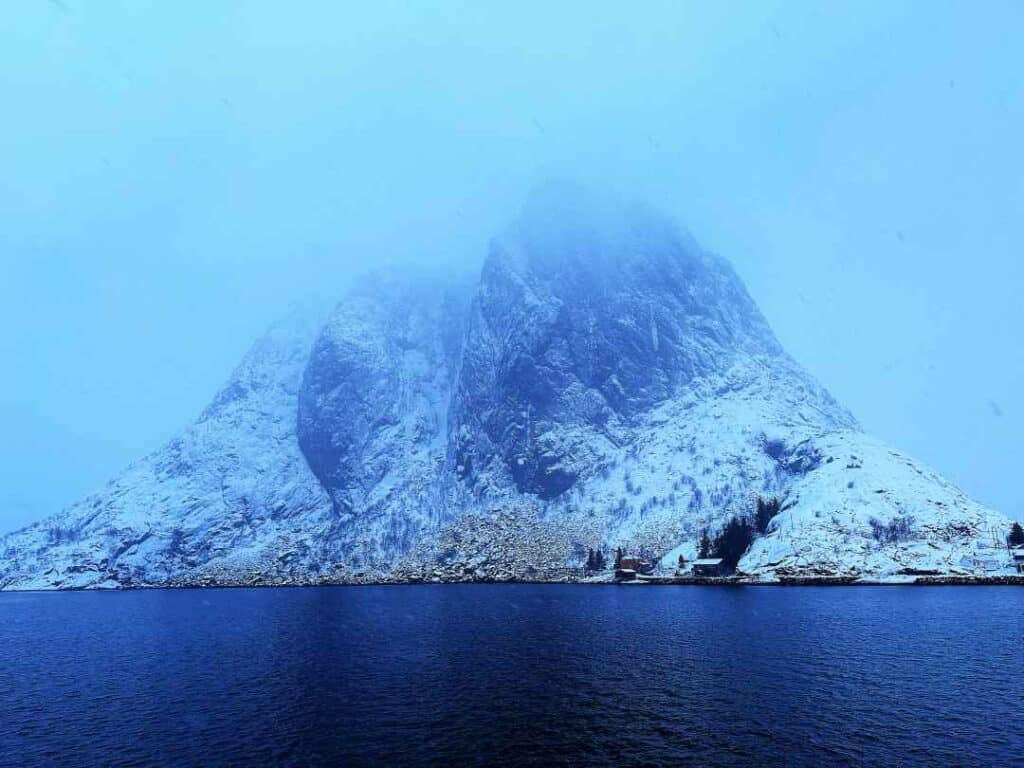
It’s the season of frozen beaches, mountains dusted in snow, and skies that switch between fiery sunsets and total darkness in a matter of minutes.
This is when you’ll find photographers camped out by roadside pull-offs, hoping for the perfect aurora shot. It’s also when you’ll appreciate that the supermarkets here sell wool socks year-round.
The Lofoten Winter can be magical — but it’s also unpredictable.
Storms close the roads, ferries are canceled, sometimes even flights, and sometimes you’ll wonder if you’ll ever see the sun again. If that sounds depressing, maybe skip February.
Spring and Autumn in Lofoten: The Shoulder Seasons
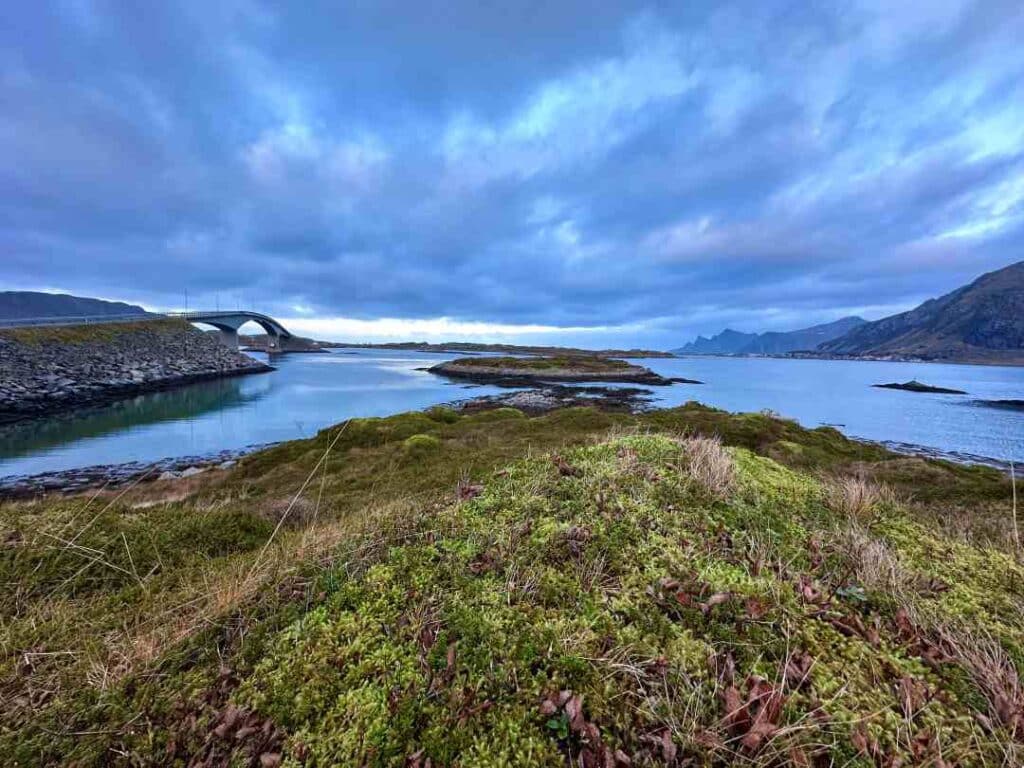
If you don’t like crowds and you don’t mind a bit of weather roulette, spring (April–May) and autumn (September–October, and even November) are underrated gems.
Spring brings back the light after the long winter darkness. The snow begins to retreat, lambs appear in the fields, and locals start behaving as if 7°C is warm enough for a barbecue.
Autumn is dramatic — fiery sunsets, stormy seas, and the first aurora sightings of the year. It’s also when the cod fisheries begin preparing for winter, and the villages smell faintly of fish drying on racks. You get used to it. Eventually.
Shoulder seasons are best if you want:
- Fewer tourists.
- Cheaper accommodation (although not really cheap-cheap)
- More “local life” experiences.
- The possibility of both northern lights and some daylight adventures.
When is the Cheapest Time to Visit Lofoten?
Let’s not pretend Lofoten is cheap. It isn’t. Accommodation, food, car rental — it all adds up. But you can save some money if you time it right.
- November and April are usually the cheapest months. There’s less going on, the weather can be grim, and tourists are scarce. If you don’t mind rain and you’re happy with solitude, this is your budget window.
- Summer is peak season, which means the highest prices. Book early if you want a deal (or last minute, but that is risky business, summer is also often sold-out season).
- Winter sits somewhere in between. Christmas and New Year are expensive, but otherwise, you can find decent prices.
Best Time to Visit Lofoten for Photographers

If you’re a photographer, the answer is: all year. Every season offers something unique.
- Summer: golden light 24/7, endless compositions.
- Autumn: moody skies, storms, and the Aurora.
- Winter: snow-capped peaks, northern lights, deep contrasts.
- Spring: softer light, melting snow, new life in the landscape.
The real challenge isn’t what to shoot, it’s making sure your camera batteries don’t die in the cold.
Month-by-Month Guide to Lofoten Weather and Activities
- January–February: cold, dark, rain and snow, Aurora season.
- February-March: brighter days, great for skiing and Northern Lights, and skrei fishing
- April: unpredictable weather, fewer crowds, cheaper.
- May: spring flowers, longer days, still quiet.
- June–July: midnight sun, busy trails, main tourist season.
- August: still warm(ish), slightly fewer people.
- September: can be everything, calm or raging. The Aurora returns, autumn colors.
- October: dramatic skies, moody photography, storm season, lower prices.
- November: quiet, dark, can be stormy, lowest prices, not for everyone.
- December: Christmas vibes, aurora, short days with blue light.
Final Tips for Choosing the Right Time to Travel to Lofoten
If you’re still undecided, here’s the blunt version:
- Come June – August if you want ourdoorsy stuff, hiking, kayaking, and midnight sun.
- Come December – March if you want snow, northern lights, and cozy cabin vibes.
- Come in spring or autumn if you want solitude, cheaper (although not cheap-cheap) prices, and a mix of everything.
Wrap Up Best Time To Visit Lofoten
I can tell you from my home here in Reine: the islands are spectacular no matter when you come. The seasons just change the script.
So there is no “bad” time to visit Lofoten — unless you hate weather, in which case this might not be your destination at all. In Norway, we say “no such thing as bad weather, only bad clothing”!
Whether standing under the midnight sun on a mountain peak or waiting for the aurora to flicker across the sky, you’ll realize timing matters, but the beauty of Lofoten is constant.