11 Best Destinations In Lofoten Islands Norway (2025)
Thinking about experiencing Lofoten in Northern Norway this year? That is a GREAT idea!
Take it from a native who has visited multiple times, and suddenly decided to move here last year!
Yep, I live in a super cute old white wooden house in Reine, which is in Moskenes Municipality in western Lofoten. The wild, breathtaking part.
There are lots of things to say about Lofoten, like when you should visit, what you should do, whether you should drive, take the ferry, or take the bus. But let us first focus on what destinations you should visit when you finally decide to find your way up here, north to us.
Let me show you the unmissable destinations you should put on your Lofoten itinerary.
This free content contains affiliate links. If you choose to book something through these links, I will receive a small commission at no extra cost to you. Thank you for your support.
Quick Facts About Lofoten Norway
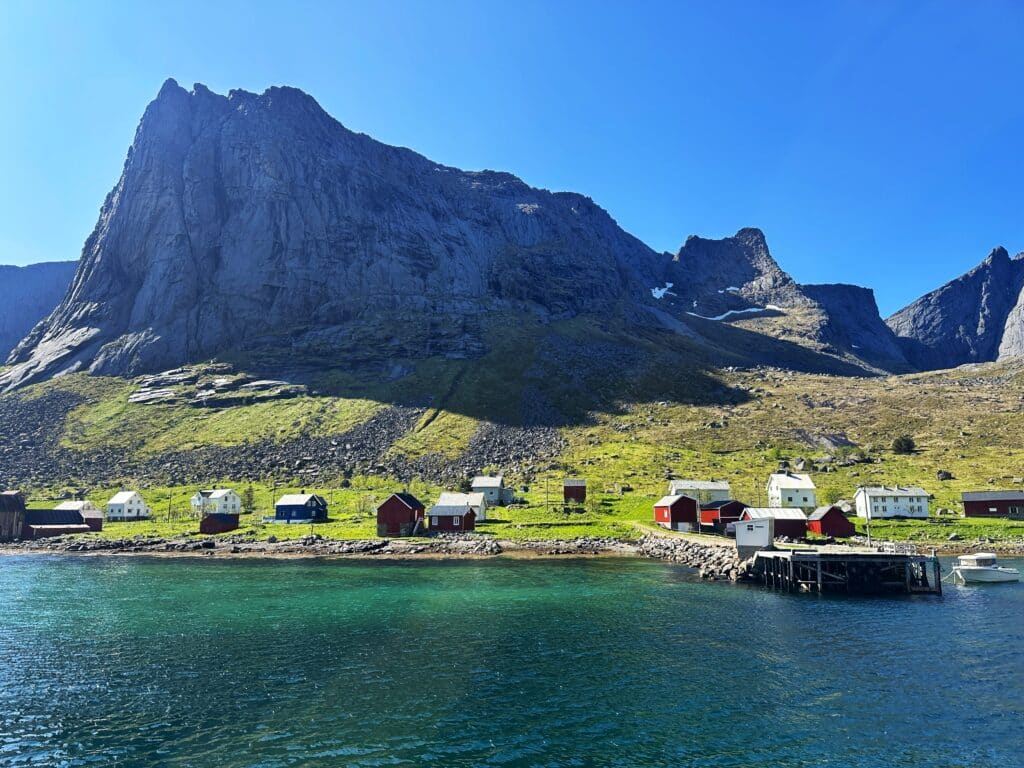
First, let me just give you a few quick facts about this string of islands in Northern Norway.
- There are two airports in Lofoten, Svolvær (on top), and Leknes (in the middle)
- You can fly to both in 25 minutes from Bodø with Widerøe Airlines
- One more airport is located north of the Lofoten Islands, called Evenes
- The largest town is Svolvær, and the second largest is Leknes
- Locals divide Lofoten into two, eastern and western Lofoten
- Public transport is scarce, so if you plan to travel by bus, do your research
- There is also a ferry from Bodø to Moskenes Ferry Dock in western Lofoten, a ride that takes 3,5 hours
- In the winter, both the ferry, buses, and even planes can be delayed because of stormy weather, so be prepared. This is the wild north!
PS: If you are really serious about your Lofoten travel planning, you might want to read this Ultimate Lofoten Islands Travel Guide.
The Best Destinations In Lofoten
For this article, I am going to start on top, in eastern Lofoten, and make my way west towards Moskenes, Reine, and Å in Lofoten.
If you decide to take the ferry over to Moskenes (15 minutes from Å, “the end” of Lofoten, you just reverse the order and plan accordingly.
1. Svolvær Town
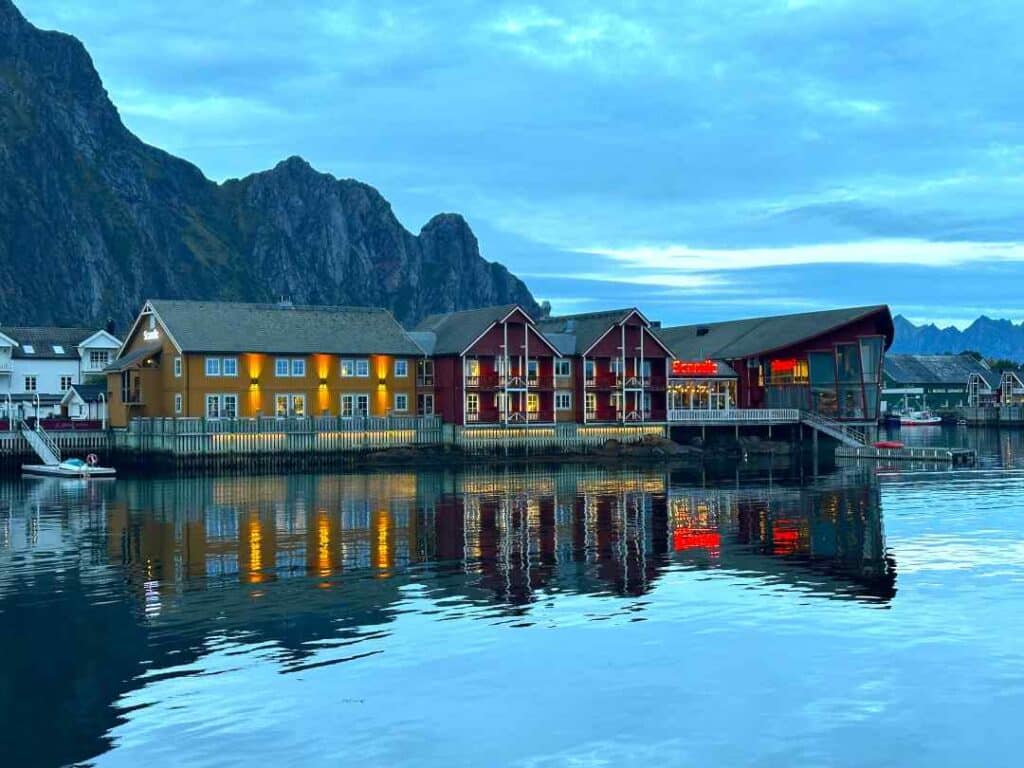
Svolvær is the bustling heart of Eastern Lofoten and the unofficial capital of the archipelago. With its picturesque harbor, dramatic mountain backdrop, and thriving art scene, it blends small-town charm with vibrant energy.
There is an airport here, and the Norwegian coastal cruise/ferry Hurtigruten also docks here daily.
You can sip coffee with locals at a cozy café, explore the North Norwegian Art Center, or embark on a thrilling sea eagle safari. Svolværgeita, the iconic twin-peaked mountain that dares climbers to leap between its horns, looms above the town, making it a dream for hikers who like it airy.
Despite being a town (well, a “town”), Svolvær never loses touch with its coastal soul in its ambiance and architecture, and is the perfect starting point for a Lofoten journey.
Eat: Bacalao, Restaurant Nihao, Fellini, or Restaurant Kjøkkenet.
2. Kabelvåg Village
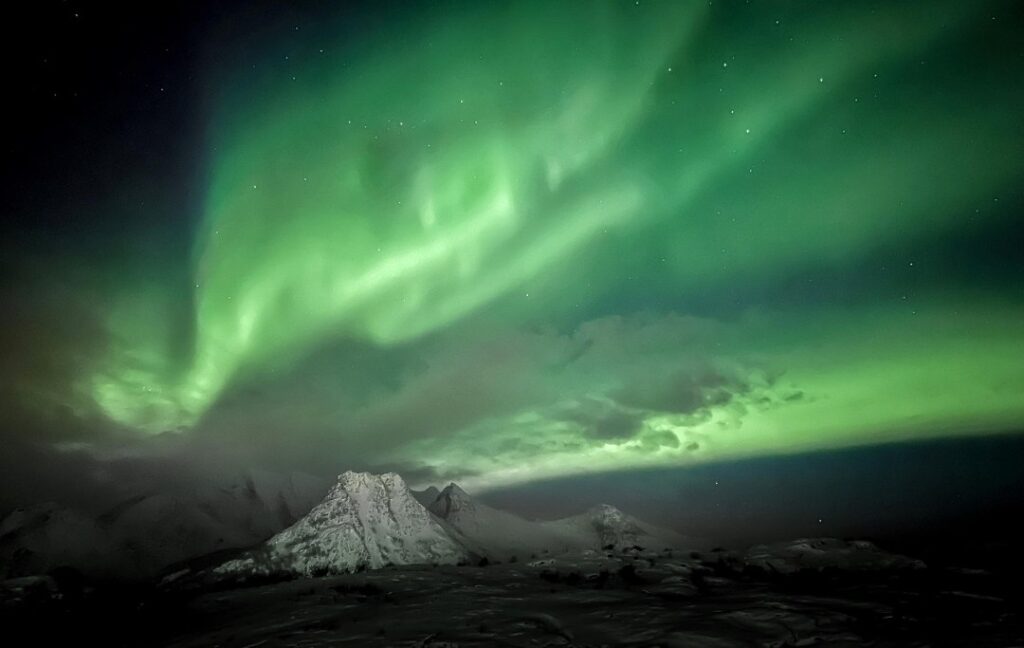
Kabelvåg is a tiny place outside Svolvær where Lofoten’s modern story began. Once the center of the cod fishing empire, this charming town offers a rich slice of history with a warm community feel.
Visit the Lofoten Museum, the Espolin Gallery, and the historic Lofoten Cathedral—Norway’s largest wooden church north of Trondheim.
The waterfront is full of life in the summer, with fishing boats coming and going as they’ve done for centuries. Kabelvåg may not shout for attention, but its gentle blend of heritage, nature, and real local life makes it quietly unforgettable.
Eat: Brygga Restaurant
3. Henningsvær Village
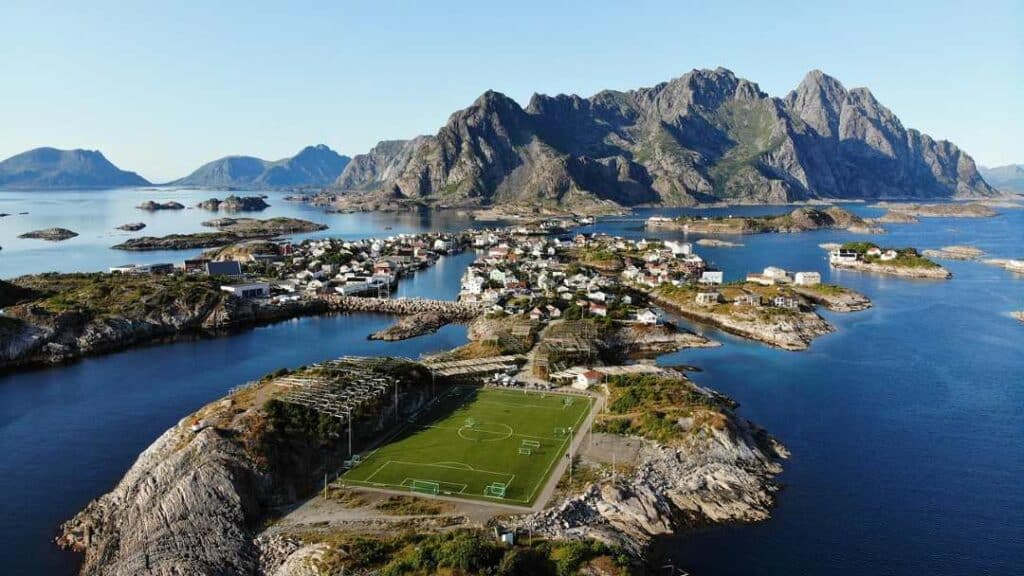
Often called the “Venice of the North” (minus the gondolas), Henningsvær is a fishing village turned cultural hotspot, spread gracefully across small islands linked by bridges.
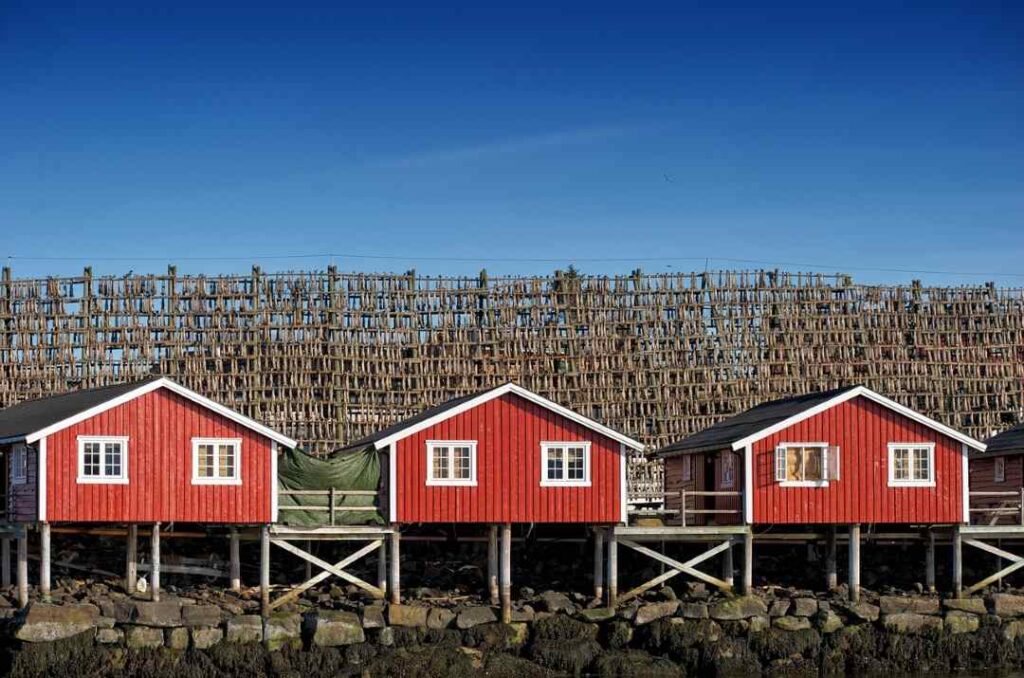
Its blend of rustic rorbuer (fishermen’s cabins) and stylish galleries, like the renowned KaviarFactory, makes it both authentic and artsy. Henningsvær has, in fact, become trendy!
Wander the harbor, pop into artisan shops, and don’t miss the surreal sight of the football pitch perched at the water’s edge. With its colorful houses and dramatic ocean views, Henningsvær is Instagram-famous, but it’s the laid-back, salty air vibe that truly steals your heart.
Eat: Klatrekafeen, Trevarefabrikken, Vind Brasserie, or Restaurant Feskarheimen.
4. Leknes Town
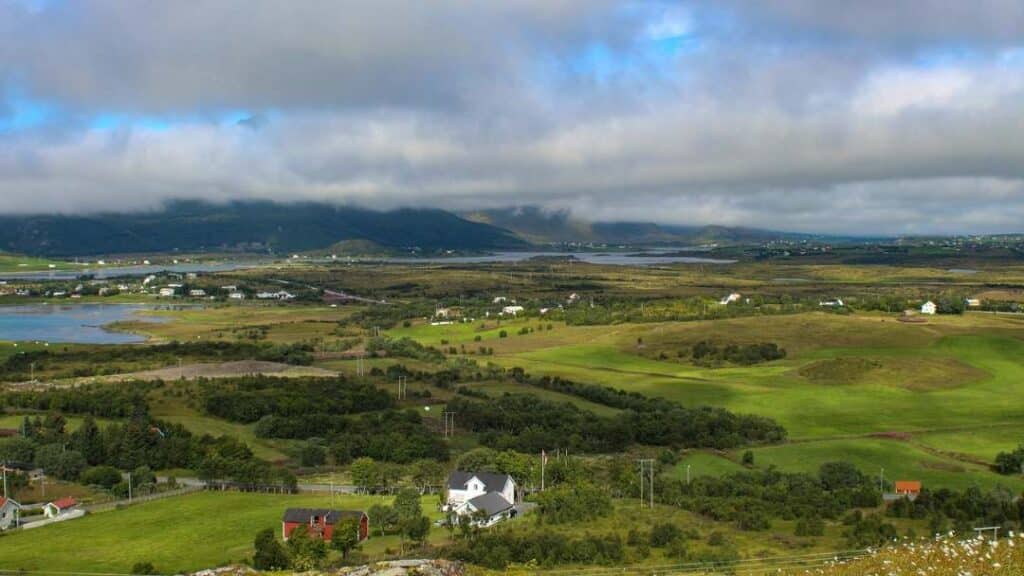
As one of only two towns in Lofoten (the other being Svolvær), Leknes is possibly the only place in Lofoten that lacks dramatic mountains and views.
This small town is the least spectacular part of the archipelago, but it is also the last place where you find an airport, larger supermarkets, and the “Vinmonopolet”; the wine shop on your way west, so it might be worth a stop. (You can not buy wine in supermarkets in Norway.)
Although Leknes is not a spectacular destination in its own right, it is still close to lots of adventures, and the gateway to nearby gems like Haukland and Uttakleiv beaches, and amazing hikes like Offersøykammen.
It may not charm you at first glance, but it’s the heart of central Lofoten where locals shop (and you should too), meet for coffee, and catch flights off the islands.
Eat: Huset Cafe, Digg Lofoten, or Makalaus.
5. Nusfjord Village
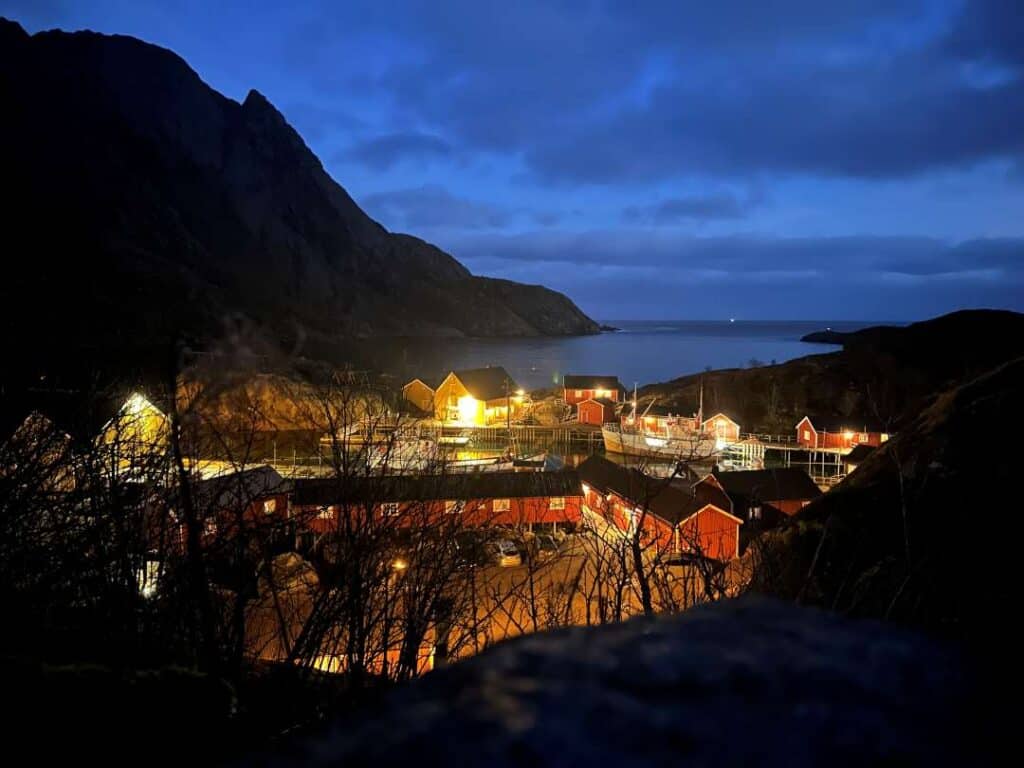
Stepping into Nusfjord feels like stepping into a living museum. One of Norway’s oldest and best-preserved (tiny) fishing villages, it’s tucked into a narrow fjord with dramatic cliffs towering above.
Traditional red and yellow rorbuer hug the shoreline, and the scent of stockfish lingers in the sea air. The entire village is a UNESCO-worthy experience, with cozy eateries, a working blacksmith, and even a sauna with a fjord view.
It’s quiet, authentic, and atmospheric—a place that honors the past while still welcoming travelers with open arms. Be aware, you have to pay to “get in” to Nusfjord, because of all of the above.
Or stay there in the rorbu resort.
Eat: Karoline Restaurant or Oliana Kro.
6. Lofoten Beach Camp
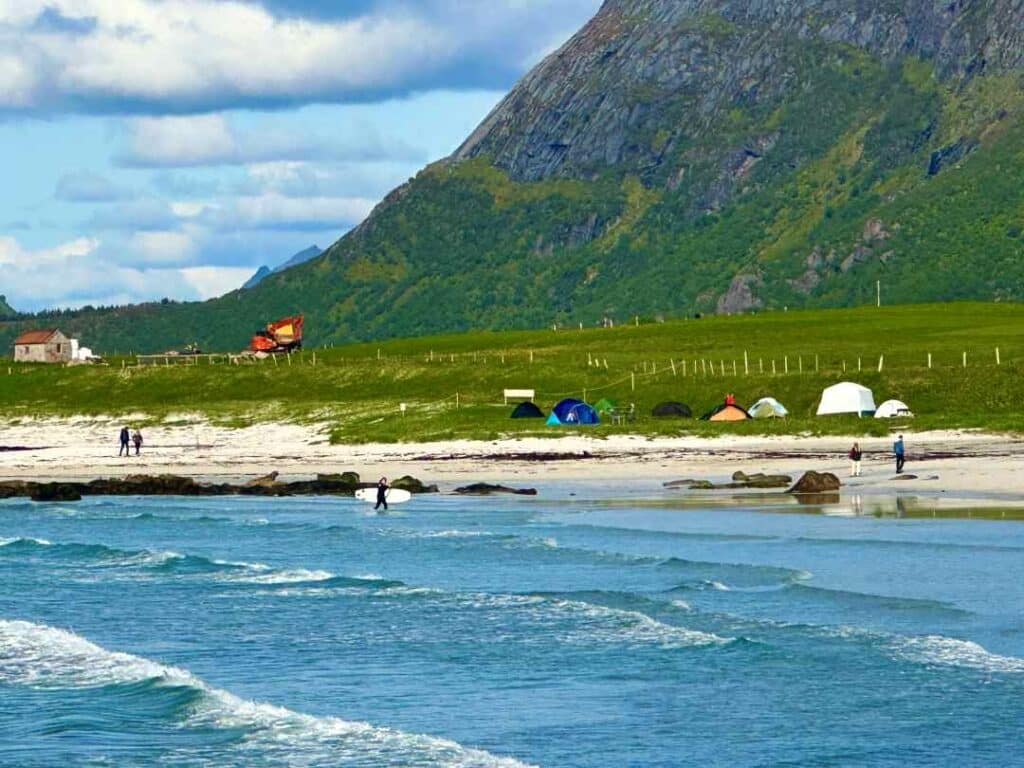
Tucked beside the turquoise waters and powdery sands of Skagsanden Beach, Lofoten Beach Camp is a paradise for surfers, campers, and laid-back spirits. Although not really a “destination”, I want to mention it as a popular place for anyone looking for a fresh and quite unique experience with a surfboard.
Whether you’re riding Arctic waves in a wetsuit under the midnight sun or watching the northern lights dance above your tent, this spot offers a rare blend of raw nature and a chilled-out community vibe.
It’s more than a traditional campsite, with bonfires, beach yoga, and morning coffees that come with front-row views of some of Lofoten’s most spectacular coastline. This place is packed with tents and camper vans during summer, so you will meet loads of like-minded travelers here.
Eat: No restaurant, but a beach bar that is open in the summer season
7. Ramberg Village
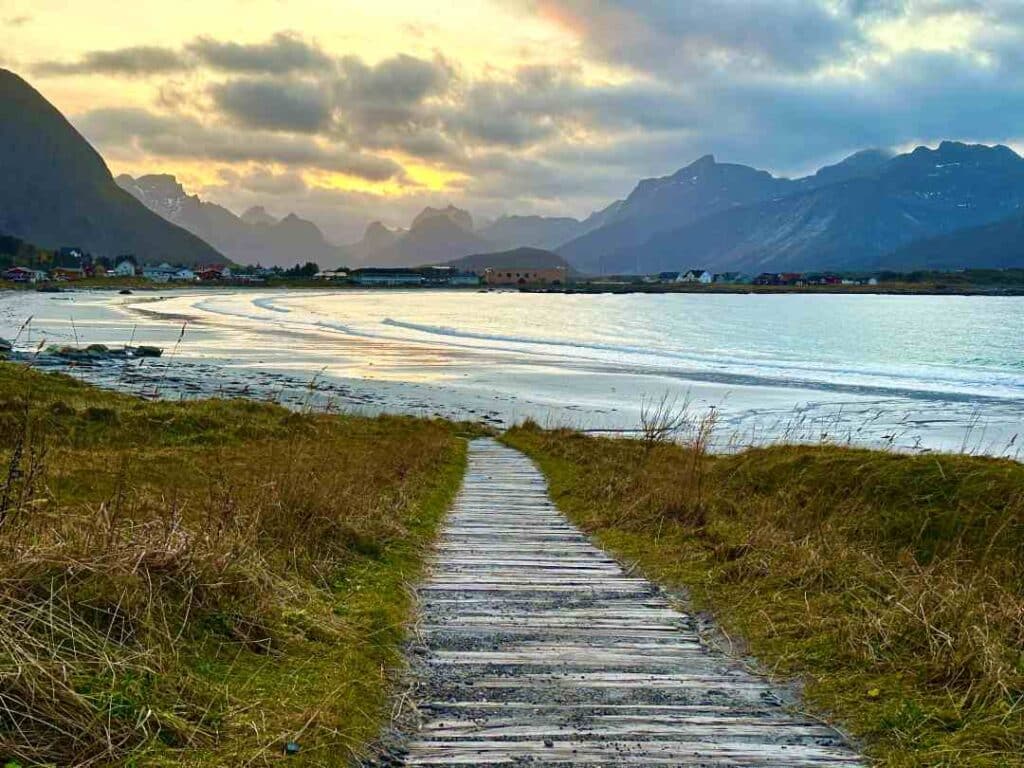
Ramberg is the kind of place that makes you pull over just to catch your breath. On your way west, the first thing you see is its dazzling white-sand beach, backed by rugged peaks and lapped by Caribbean-blue waters, is straight out of a dream.
The village itself is quiet, with a strong local community and a surprisingly good café and bakery that locals swear by.
You will never forget taking a barefoot stroll along the beach here, or simply soaking in the view from the roadside. There is also a cafe and a small supermarket in Ramberg, which might be worth a stop.
Eat: Ramberg Resort and Restaurant
8. Fredvang
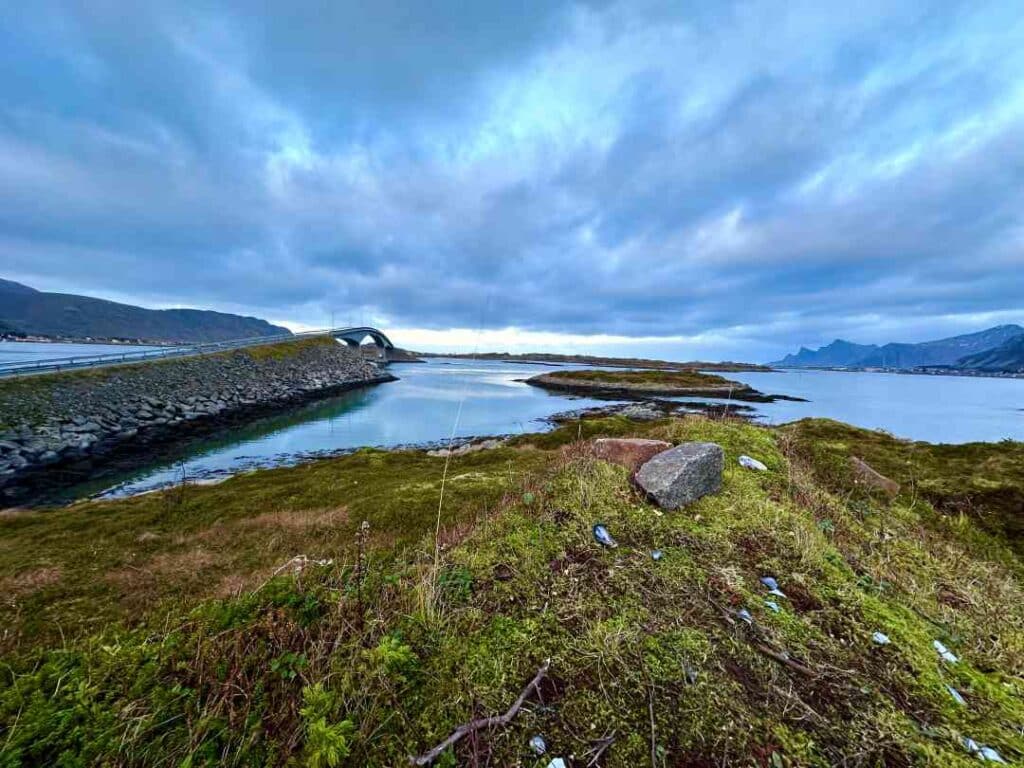
Fredvang is a tiny, scattered coastal community rather than a traditional village, but what it lacks in urban density is that it more than makes up for in natural grandeur.
Located slightly off the beaten path (like 10 minutes off the E10) and accessed via two iconic curved bridges, Fredvang feels a bit like a secret—one that opens up to breathtaking beaches, coastal trails, and epic views.
From here, you can hike to Ryten, one of Lofoten’s most famous viewpoints, or explore the hidden sands of Kvalvika Beach. It’s peaceful, wild, and utterly spellbinding here.
Eat: Kvalvika Cafe (seasonal)
9. Reine Village
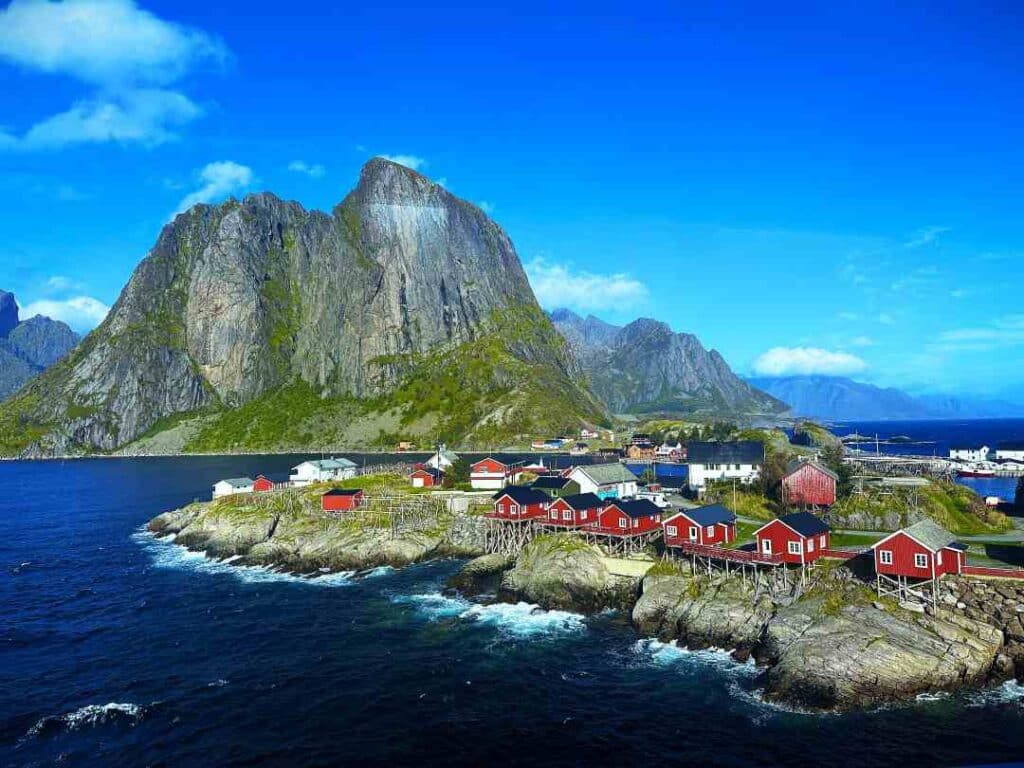
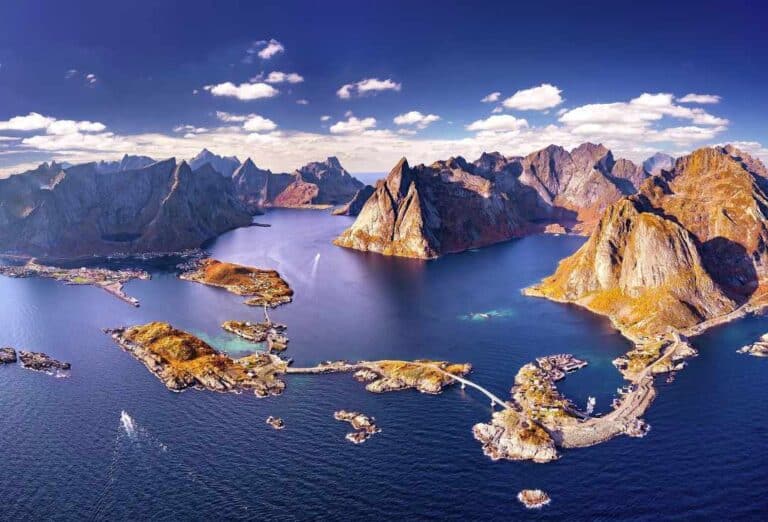
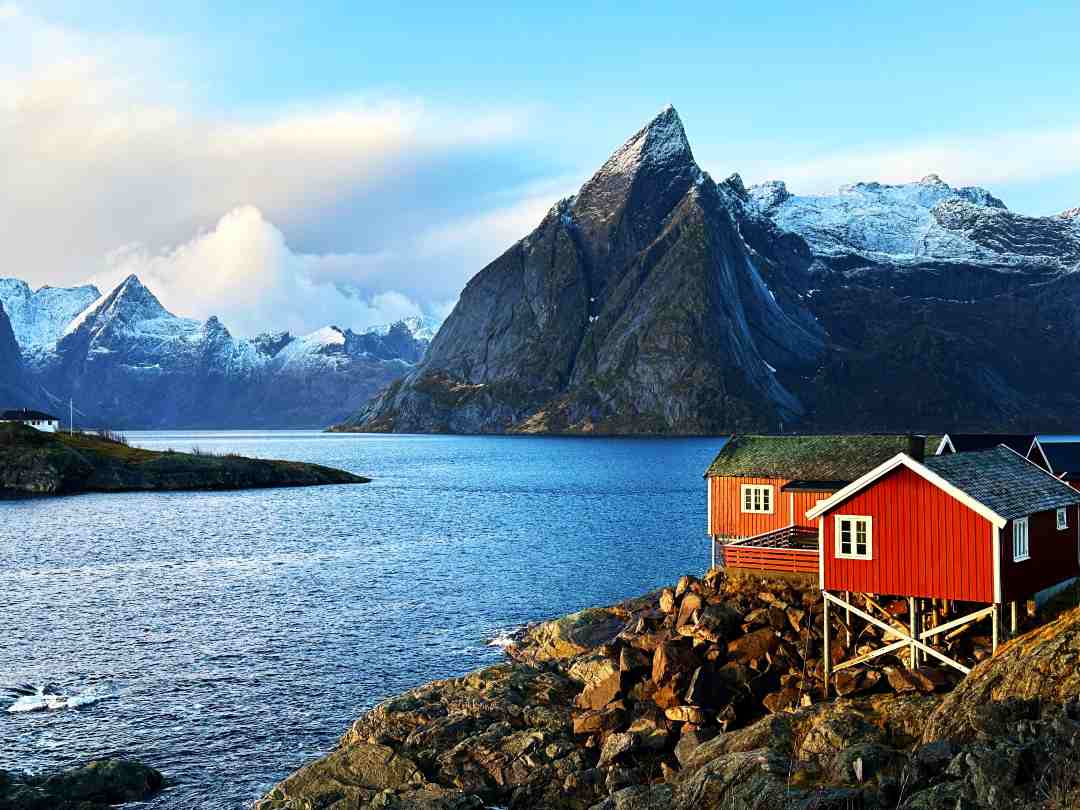
Reine might just be the crown jewel of Lofoten—arguably the most photogenic village in all of Norway. With its crimson cabins clustered along the fjord and sheer granite peaks rising behind them, it’s hard to believe this place is real.
And this is where I live!
Though popular with tourists, Reine retains its charm, offering kayaking, mountain hikes like Reinebringen, great dining, and boat trips deep into the Reine Fjord. A small ferry takes you to Kirkefjorden (trail start to Horseid Beach) or Vindstad (trail start to Bunes Beach).
Reine is the kind of place where you wake up to mirror-still waters or a complete whitewater storm, and fall asleep with the midnight sun (or northern lights) on your doorstep. Wild, beautiful, and priceless.
Eat: Gadus, Anita’s Seafood, Underhuset, Tapperiet, or Gammelbua.
Also read: 7 Best Restaurants in Reine Lofoten From A Local
10. Sørvågen Village
Sørvågen is a hidden gem often overlooked in favor of its more famous neighbors, but locals know better. This is where the locals settle.
This scenic village offers a laid-back vibe, beautiful waterfront views, and an unexpected claim to fame—it was one of the first places in Norway to use wireless telegraphy. You can explore the little museum dedicated to this history, or simply enjoy a meal by the sea.
This is also the starting point for several day hikes and multi-day hikes, like the hike to Munkebu Hut for jaw-dropping panoramas,
Sørvågen is authentic Lofoten: quiet, charming, and deeply connected to both land and sea.
Eat: Maren Anna Restaurant or Holmen Restaurant.
11. Å In Lofoten – The End Of Lofoten
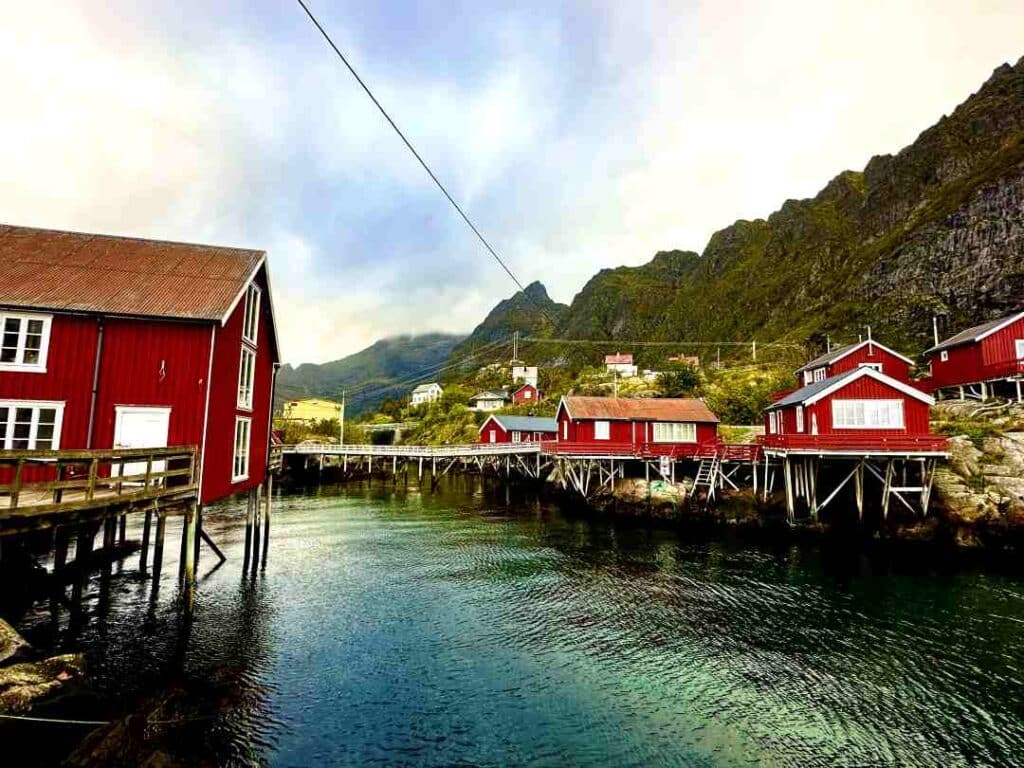
Yes, that’s really its name—just one letter, but Å marks the end of the road in Lofoten and the beginning of a deeply immersive experience in fishing heritage.
This tiny village is home to the Norwegian Fishing Village Museum, where you can wander old boathouses, taste stockfish, and see how cod has shaped the culture for centuries.
Surrounded by steep mountains and wild seas, Å feels like the edge of the world, in the most magical way. You only need about an hour to see it all, but come here early to be sure to get a famous cinnamon bun from the old-fashioned bakery (they sell out).
Eat: Brygga Restaurant
6 Amazing Hikes In Lofoten
Svolværgeita
This legendary twin-peaked pinnacle above Svolvær is a must for experienced climbers. “Anyone” can hike 90% of the way to the bottom of the “goat” part, so to speak (Svolværgeita means “the Svolvær goat”.
If you want to summit the last part, it is a vertical rock climbing experience where you need the necessary equipment.
The summit is famous for the daring leap between its “horns.” Svolværgeita offers not just adrenaline, but jaw-dropping views over the town and the sea. A guided climb is essential for safety and bragging rights!
Festvågtinden
Festvågtinden is close to Henningsvær (the place with the famous football field covering a whole small island).
This hike is well known among hikers for its incredible panoramic views. The hike is considered challenging with some quite steep parts, and you should probably have a minimum fitness level to be comfortable on this hike.
Mannen
Close to Leknes, you find Mannen, which is popular because of its spectacular views of Uttakleiv and Haukeland beaches.
It is not a very long hike, but quite steep, and although not “scary airy”, you will still have breathtaking views along the way. There is a ridge where you might feel the drop a bit, so you need to be able to handle some sense of air.
Ryten og Kvalvika Beach
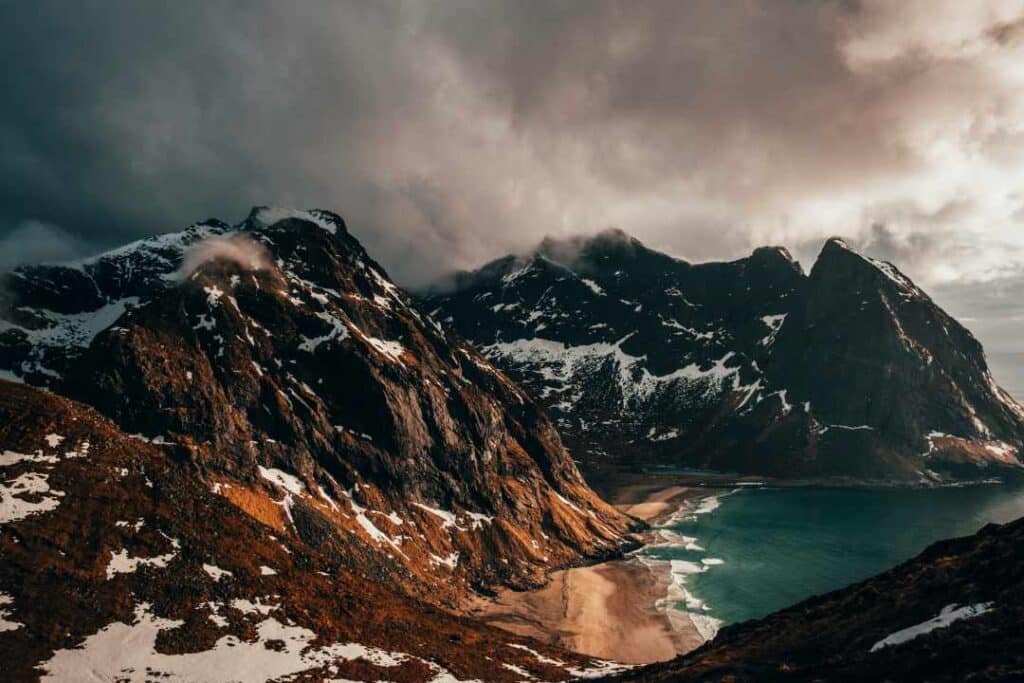
This popular hike combines coastal beauty with a slight bit of alpine drama just south of Ramberg, starting at the trailhead in Fredvang.
Hiking Ryten is considered a year-round hike, and is airy with stunning views without any risk to health and limbs.
The hike to Ryten also rewards you with iconic views over the golden sands of Kvalvika Beach far below from the summit. It’s a relatively moderate trek, perfect for those wanting stunning scenery without technical difficulty.
Reinebringen Sherpa Stairs
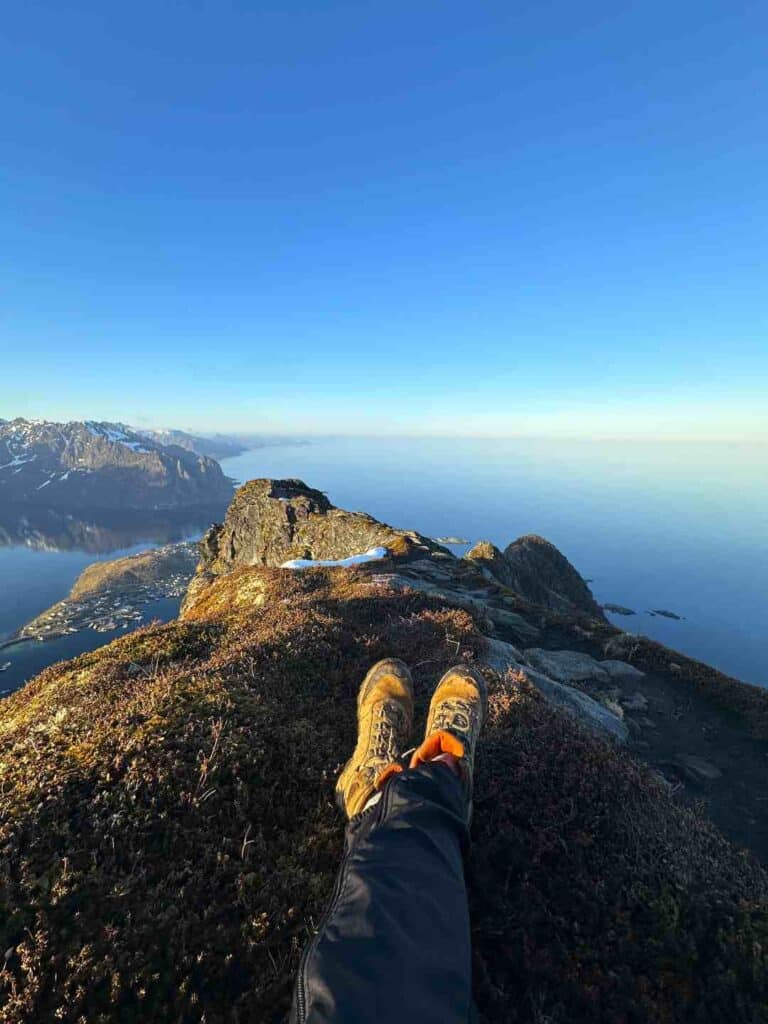
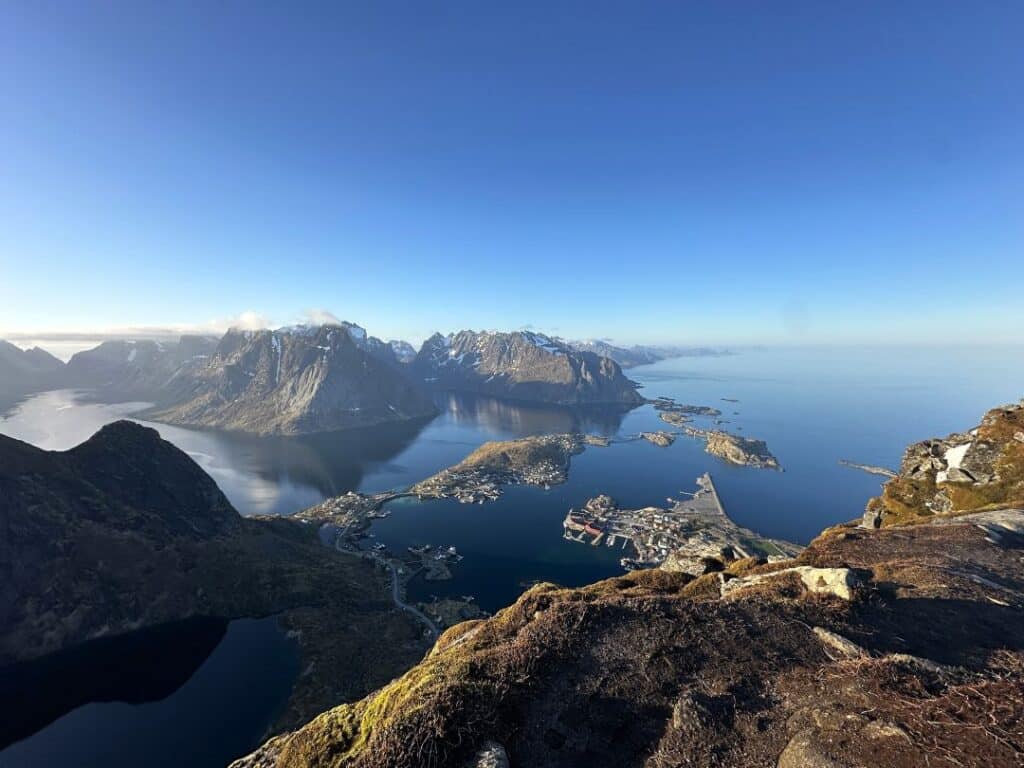
Reinebringen’s 1,560+ stone steps, built by Sherpas from Nepal, lead to one of Lofoten’s most photographed viewpoints in Reine, Moskenes Municipality. The steep climb can be challenging (dont underestimate the short distance), but it is well worth the effort.
From the top, you will have unforgettable panoramic views of Reine and the surrounding fjords, as well as the entire Lofoten Wall in the distance, which is especially magical in the midnight sun during summer.
Be aware, this is the most famous and popular summit hike in Lofoten, and you will not be alone on the stairs during high season.
Munkebu
The hike to Munkebu Hut begins in Sørvågen and winds through alpine lakes and rocky terrain to a remote mountain cabin. The distance is just over 5 kilometers, and will probably take you 5-6 hours round trip.
With stunning scenery the entire way, it’s a moderately tough but peaceful trek that gives you a true sense of Lofoten’s wild heart.
How To Get To Lofoten
- Fly to Svolvær or Leknes from Bodø with Widerøe
- Take the ferry from Bodø to Moskenes Ferry Dock
- Fly to Evenes, and do a longer road trip towards Lofoten from the north of the islands
- Drive down from Tromsø (about 6 hours, or 8+ hours via Andenes) or from Bodø via Harstad and Narvik (about 5,5-6 hours).
You can also find everything you need to know about traveling to Lofoten in this article.
Public Transport
You can find information about local and regional buses driving E10 through Lofoten on the Reis Nordland website (they also have an app where you can buy bus tickets)
For information about the ferry departures, see the Torghatten website.
You can rent cars in Svolvær, Leknes, and Reine. The car rental in Reine will drop the car for you to pick up at the ferry quay if you take the boat over.
NOTE: During the high summer season, it can be smart to book your ticket beforehand (drop-ins showing up on the ferry dock are free). A lot of people travel by ferry to Lofoten in the summer, especially during July and August.
When To Visit Lofoten
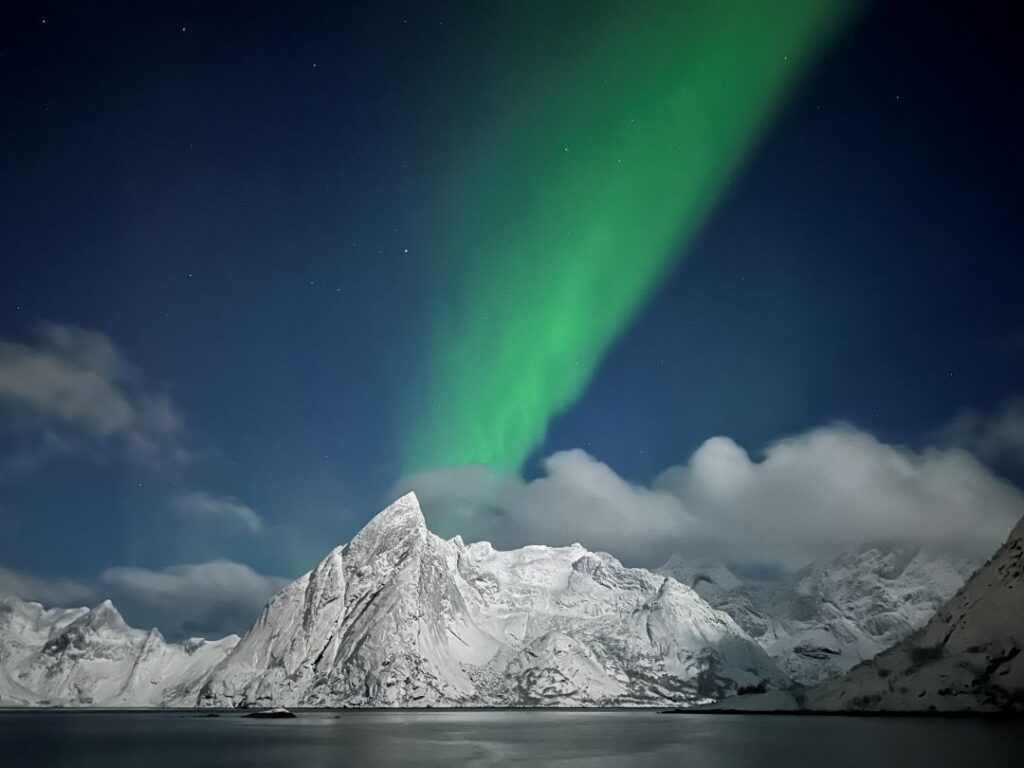
For Northern Lights: Between September and March
For summer and midnight sun: from June through August.
Summer high season runs from June through September, but bare in mind that several hundred thousand people visit Lofoten during this period. With only one road, it can get crowded.
For a more solitude experience, travel in the shoulder seasons, but then you must also expect fierce weather and storms.
To Experience the Polar Night, come between December 4th and January 10th – when the sun does not rise at all in Lofoten.
Wrap Up Best Destinations In Lofoten
With only one road along the entire Lofoten Archipelago, the E10, you will not exactly get lost in Lofoten.
It does not take more than two and a half hour to drive from Svolvær to Å in Lofoten, but you definitely dont want to do that. There are lots of things to see and do, so I recommend you plan well, and take your time.
With this guide, you should have a much needed insight into the different destinations off the E10 along Lofoten, so you know what to prioritize to get your perfect Lofoten experience.