
How to Get to Lofoten from Tromsø — Ferry, Drive & Flight Options (2026)
Traveling from Tromsø to Lofoten is one of the most beautiful journeys you can take in Northern Norway, and I am happy to share with you the pros and cons of the various ways to get to Lofoten from Tromsø. Sharing is caring!
As someone who lives in Lofoten (and has lived in Tromsø for years), I know what I am talking about here.
Whether you choose to fly, drive, find a bus, or travel by ferry, all these routes pull you deep into the Arctic landscape — toward sharp mountains, deep turquoise fjords, tiny fishing villages, and the slow rhythm of northern Norway island life.
Below you’ll find the best ways to travel from Tromsø to Lofoten from a local, what to expect in each season, and the pros and cons of each option so you can create your own perfect journey.
Overview — the Best Ways to Travel from Tromsø to Lofoten
Travelers are often surprised to learn that Tromsø and Lofoten aren’t actually close to each other – at all. They are located in the same Arctic region but are separated by mountains, fjords, islands, and quite a distance.
The good news? Well, lucky for you, every route is breathtakingly scenic.
Main ways to travel:
- Flying (fastest)
- Driving (most flexible + scenic)
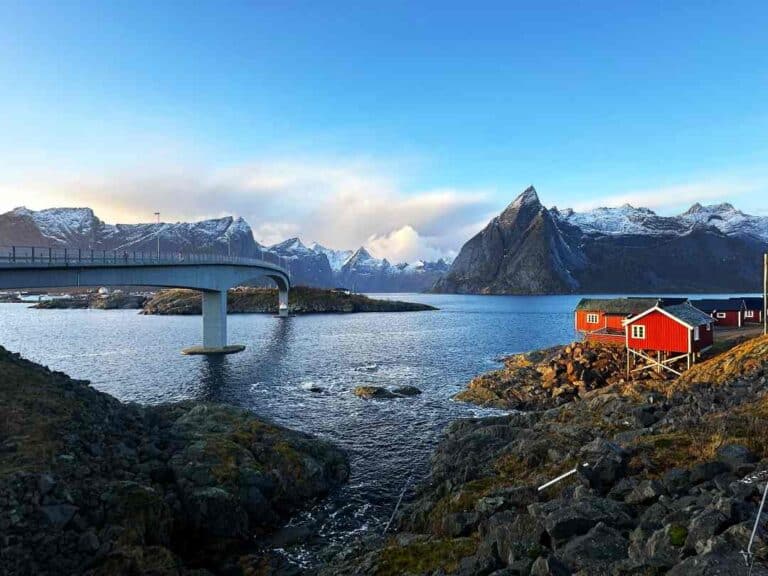
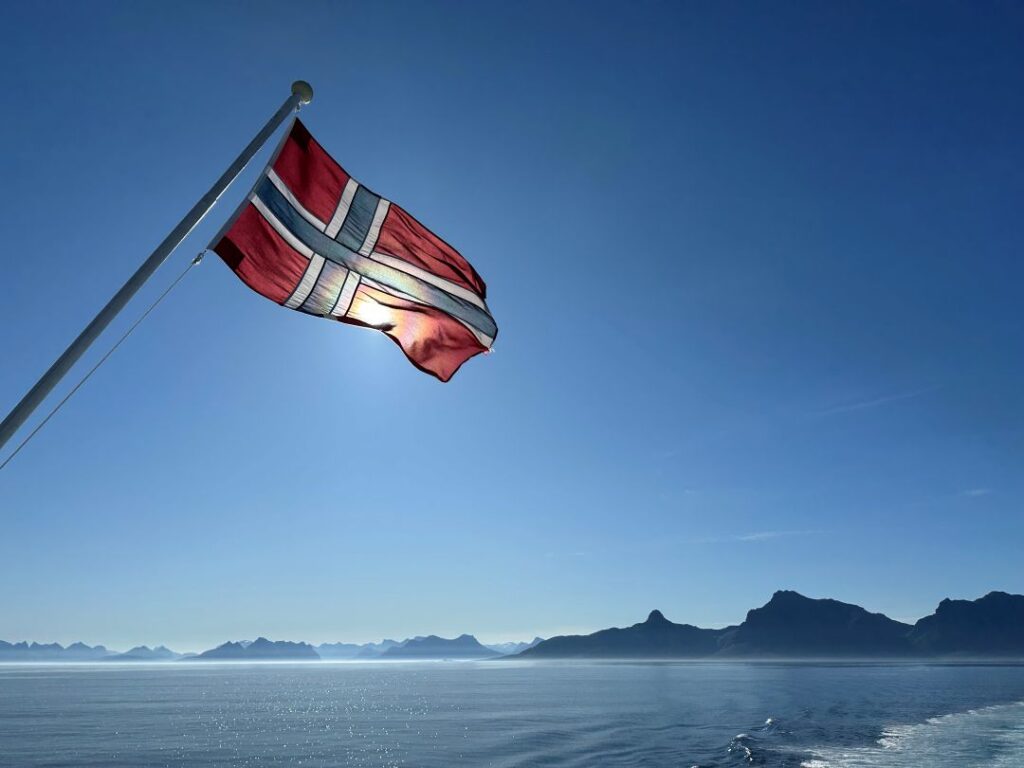
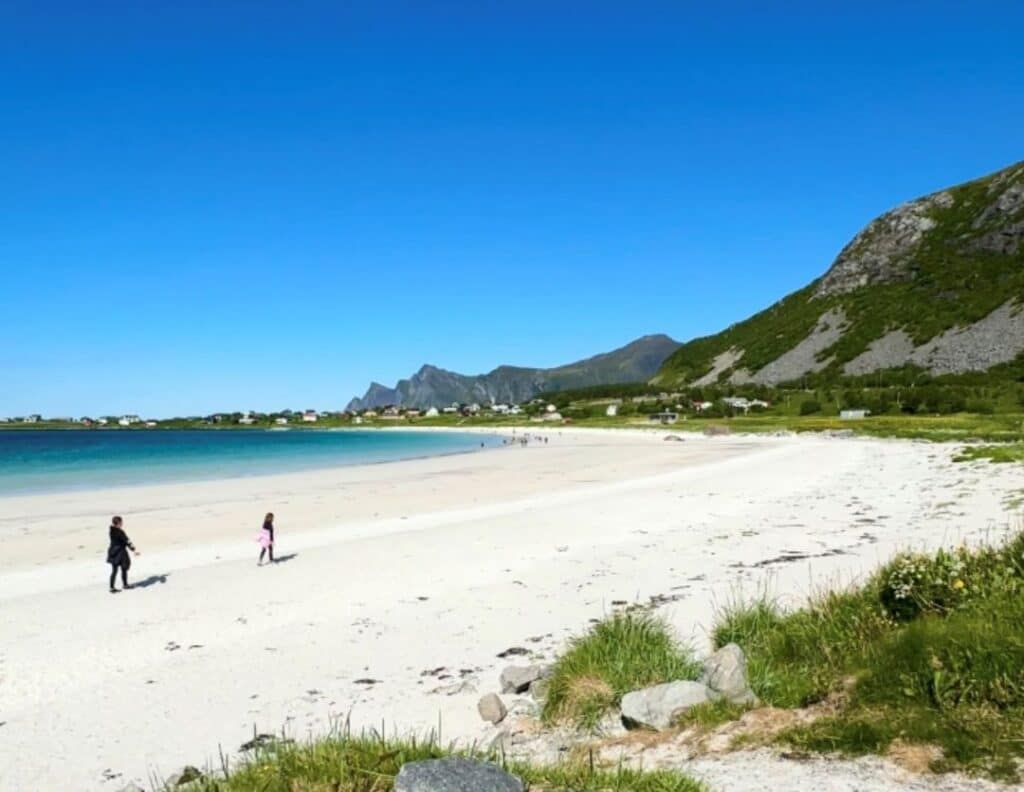
- Ferry combinations (unique and adventurous, see the photo above?)
- Bus options (budget-friendly, takes longer)
Distance at a glance:
- By air: 40–45 minutes (direct flights)
- By road: 420–500 km depending on route and season (7–8 hours)
- Ferry combinations: 5–9 hours, depending on the schedule and season
If you want the fastest possible connection, choose flying.
If you want a scenic, memorable journey and have time, choose driving.
If you want a true Norwegian coastal experience, choose ferries or a mix.
Let’s break them down.
Option 1 — Flying from Tromsø to Lofoten
Flying is by far the quickest and easiest way to reach Lofoten from Tromsø. Flights are also far less likely than ferries to be cancelled during fierce weather, which is a plus.
Widerøe offers direct flights from Tromsø to both Lofoten airports, while the rest operate via Bodø airport on the mainland.
If you go to my favorite flight app, Skyscanner, choose departure and arrival airports, and choose “direct flights”, you will get the Wideroe options.
Direct and connecting flights
Depending on the season, you may find:
- Direct flights Tromsø → Svolvær (SVJ) in Lofoten
- Direct flights Tromsø → Leknes (LKN) in Lofoten
- Direct flights Tromsø → Evenes (EVE), between Harstad and Narvik towns
- Connecting flights via Bodø on the mainland across the West Fjord
Leknes and Svolvær are the two main airports in Lofoten. Svolvær is the northernmost town and is considered the “capital” of Lofoten, while Leknes is the second-largest town (which, FYI, does not mean “big”).
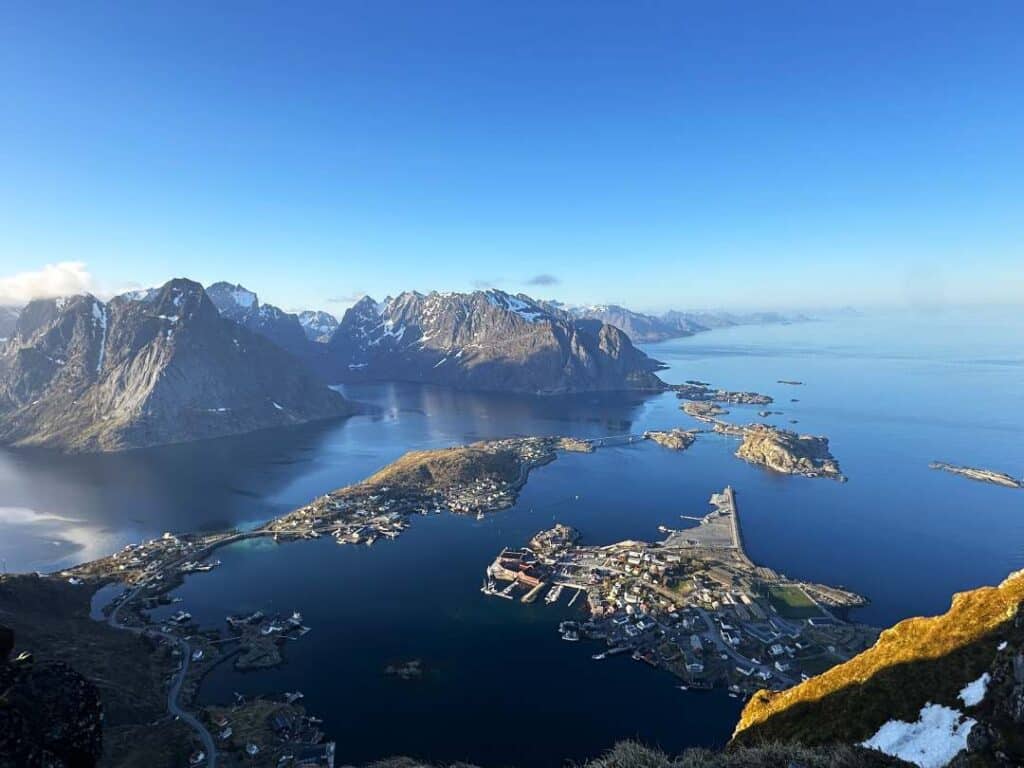
Once you arrive in the Lofoten Islands, distances are not overwhelming. Both Svolvær and Leknes airports put you right in the middle of the Lofoten Islands, within easy reach of cute villages, spectacular beaches, and breathtaking hiking trails.
From Svolvær to Å in Lofoten, the southernmost little village at the very tip of the archipelago, it will take you around 2-2,5 hours to drive, depending on weather and season.
You can also travel to Evenes Airport, located north of the Lofoten Islands (about 2,5 hours north of Svolvær, the northernmost town in Lofoten).
Flying to Evenes is a great starting point if you also want to explore other destinations in the region, like Vesterålen and Andøya Island north of the Lofoten archipelago.
You can check the best flight option for you on the Skyscanner flight app, which is my favorite. Choose “only direct flights.”
Typical flight times and prices
- Direct flights: 40–45 minutes
- Via Bodø: 1.5–3 hours total
Prices vary, but expect anything between €70–€180 depending on season and how early you book.
Airlines
- Widerøe flies directly from Tromsø to Svorvær, Leknes, and occasionally to Evenes airports
- SAS and Norwegian fly via Bodø, and you still need to get a Widerøe flight over to Lofoten
- NOTE: There are more flights from Bodø to Lofoten, so flying via Bodø creates more flexibility
Pros of flying
- Fastest way by far
- Ideal in winter when storms make driving challenging
- Best for short trips or weekend getaways
- Perfect if you’re tired after exploring Tromsø!
Cons of flying
- Limited luggage allowances on smaller planes
- You’ll still need a rental car or local transport in Lofoten
- You miss out on the scenic travel experience
Best for: Travelers short on time, winter visits, or those who prefer effortless travel.
Option 2 — Driving from Tromsø to Lofoten
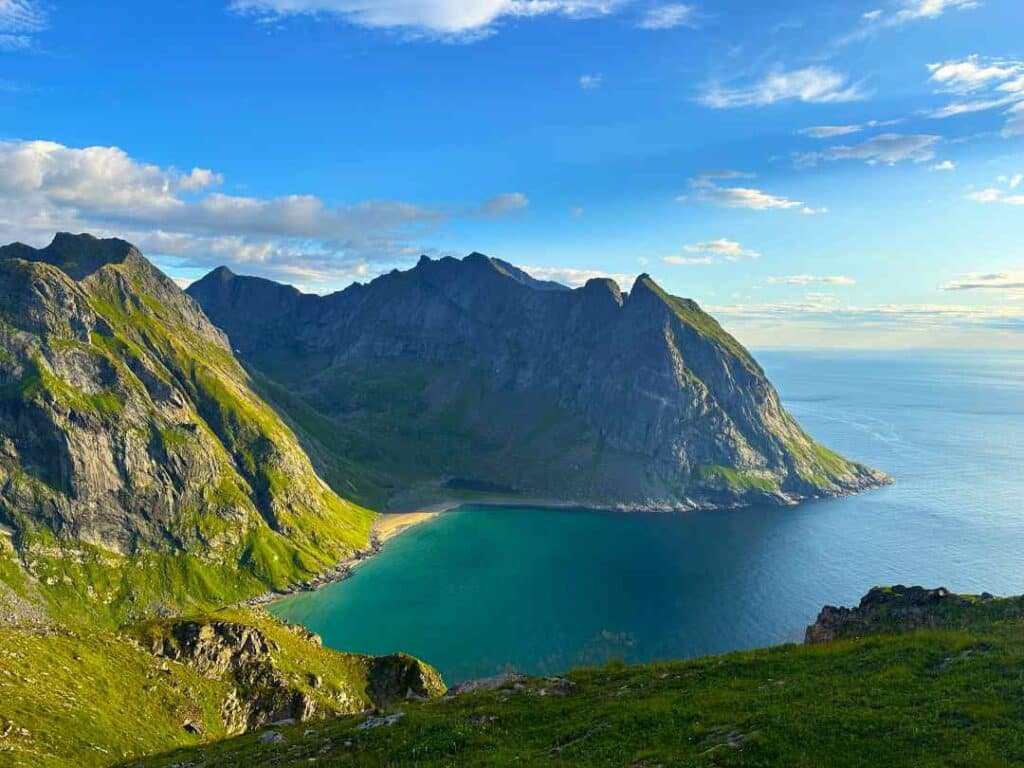
Driving is the most popular way to get from Tromsø to Lofoten — and the most scenic.
This is the Arctic road trip many travelers dream about: sweeping mountain passes, blue fjords, fishing cabins along the sea, and long, empty roads.
Be aware, though, that this dream is only partly attainable. You are not the only one dreaming about road tripping in Lofoten, unfortunately. So expect that there will be lots of other travelers on the road, especially during the summer high season.
Remember, there is only one road winding through the Lofoten Islands: the E10. And it is often narrow, and with lots of twists and turns.
The main driving route

The classic route follows:
- E8 south from Tromsø
- E6 through the mountains
- Lastly, E10 across to Lofoten and down the Lofoten Islands
Travel time from Tromsø to Svolvær is typically 7–8 hours, depending on weather and breaks. And then there is another two hours plus all the way to Å, the last little village in Lofoten.
During winter, it might not be lots of traffic, but then it is, you know, winter. Narrow winding roads with snow and ice, poor lighting (remember Lofoten has Polar Night for a period, and dark winters) will impact your travel time as well.
Trust me — summer or winter, you will want to stop for photos.
What to expect on the road
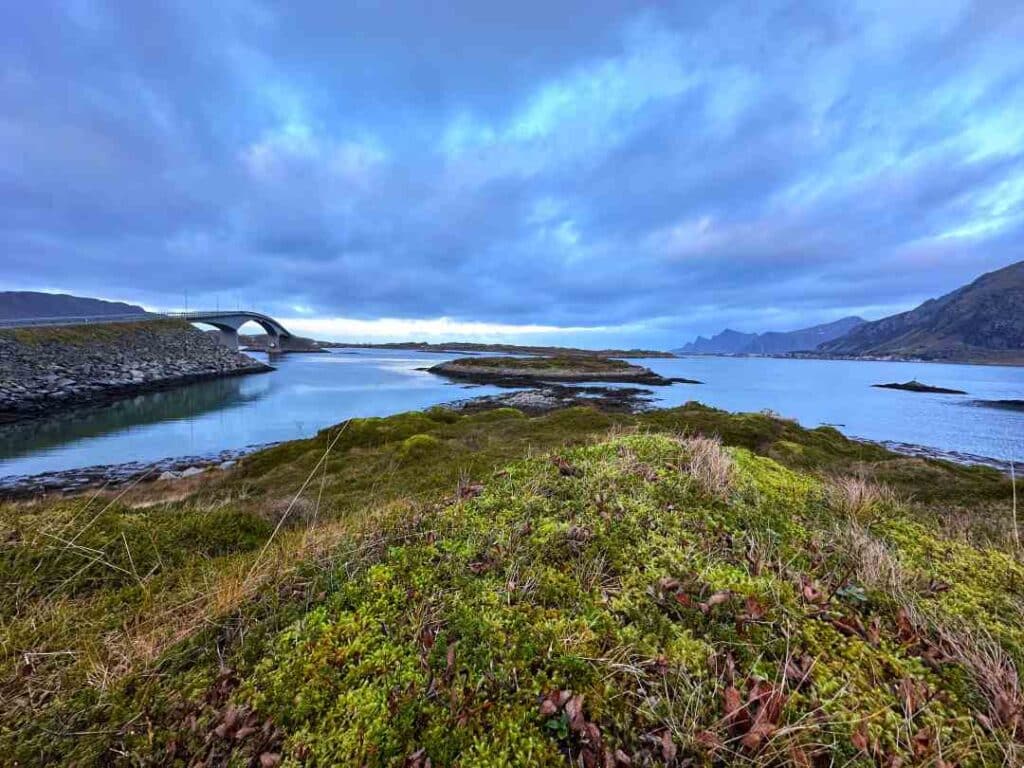
Driving here is driving through nature. You’ll pass:
- Tall peaks dropping into fjords
- Reindeer roaming across the fields
- Open Arctic landscapes with few signs of people
- Tiny villages and traditional red rorbuer
- Narrow mountain tunnels and bridges across turquoise water
Bonus: Alternative route via Andøya Island
If you want something more adventurous, add a detour via Andøya Island north of Lofoten.
This route is incredible in summer — quiet roads, white-sand beaches, whales off the coast, and glowing midnight sun. It may take longer, but it’s unforgettable.
- Tromsø → Senja (the largest island in Norway)
- Senja → Andøya
- Andøya → Lofoten (via ferry from Andenes)
Important Winter Driving Tips from a local
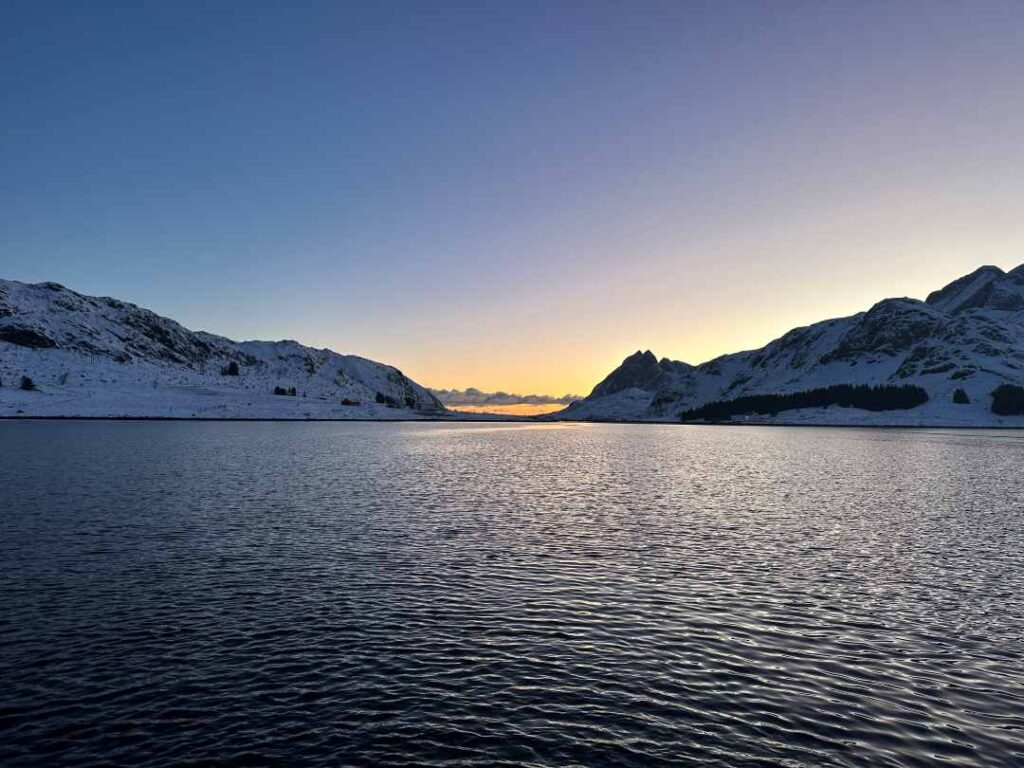
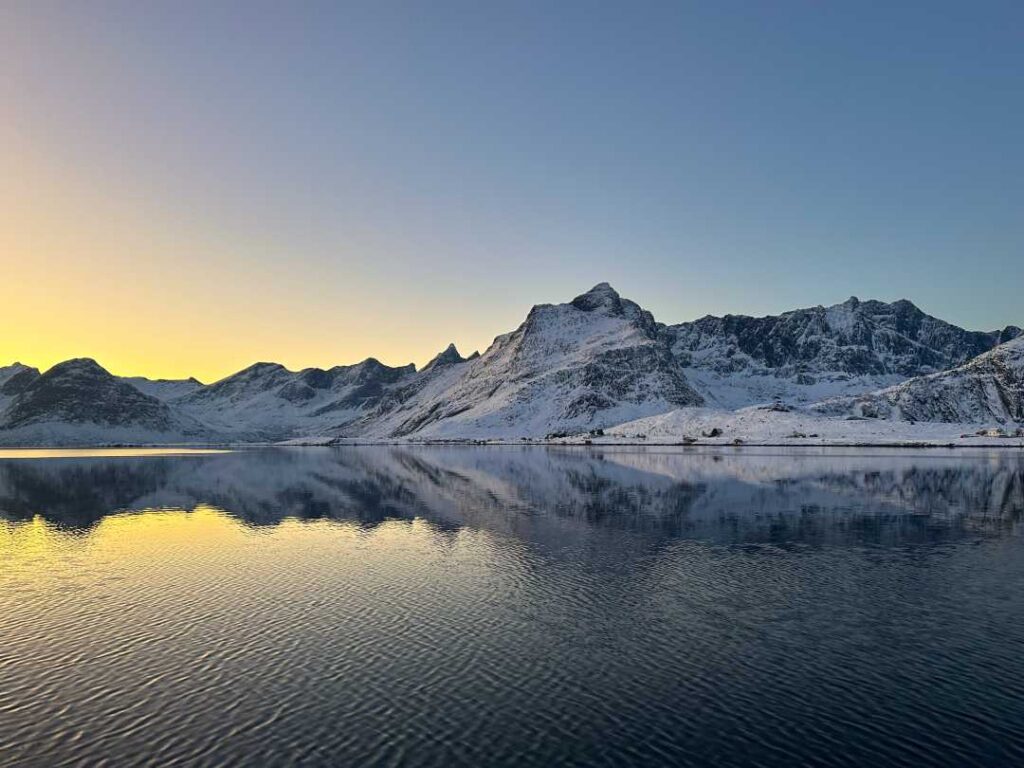
Winter is magical, but it’s also serious business here up north – especially on the road. Some days are like the photo above, stunning, clear days with the sun right below the horizon.
But it can also be fierce snowstorms, hail, and winds up to and beyond 30 meters per second.
As a minimum, you need:
- A car with studded tires
- A flexible schedule (storms can delay you)
- Daylight planning (limited hours in winter)
- Preferably experience driving on snow and ice
If you are an inexperienced winter driver, read my essential winter driving tips, which might save you from some rookie mistakes.
If you really don’t feel confident driving in winter, choose flying instead.
Parking in Lofoten
This is important, when you road trip in Lofoten, do not “wild park”, along the road or anywhere else. Lofoten has designated parking areas in most villages and trailheads, and if you park wherever, you will be part of an increasing problem Lofoten is trying to solve.
So please, be part of the solution; respect parking regulations, pay for your parking (which helps the municipality), and dont block traffic or private property.
Some scenic spots also have small free parking areas, but if you see one, make sure it is a public area and that you dont block traffic or private property.
In summer, you need to arrive really early to get free parking for popular hikes like Reinebringen Sherpa Stairs.
Pros of driving
- Most scenic and immersive
- Unlimited flexibility for photo stops
- Perfect if you’re doing a Lofoten road trip anyway
- Great in summer under the midnight sun
Cons of driving
- Long journey
- Winter weather can be unpredictable
- Fuel adds up
Best for: Travelers who love road trips, photographers, summer adventures, and those who want to feel the landscape as they travel through it.
Option 3 — Ferries from Tromsø to Lofoten
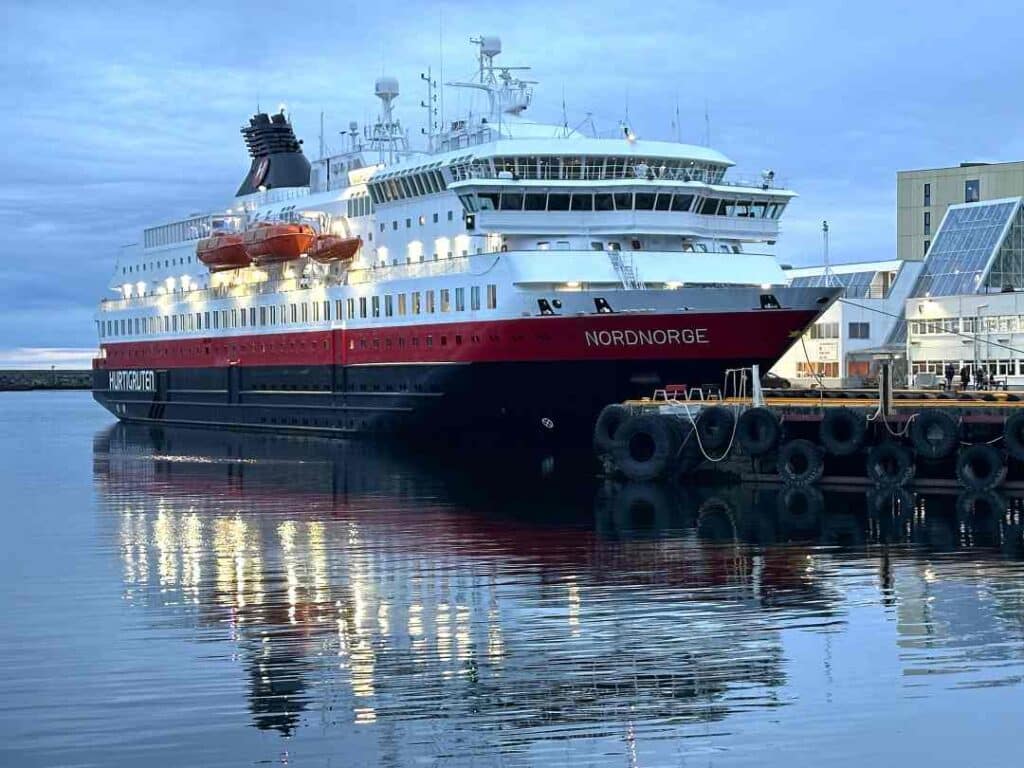
There is no single “Tromsø to Lofoten ferry,” but you can combine ferries to create a coastal journey that feels very Norwegian.
Common ferry combination
- Tromsø → Svolvær (Hurtigruten coastal ferry journey)*
- Tromsø → Harstad (express boat)
- Harstad → Svolvær or Stokmarknes (regional ferry connections)
This option offers a mix of open-sea views, island landscapes, and the slower rhythm of ship travel.
* The coastal ferry in Norway that sails between Bergen and Kirkenes is operated by two companies. One is Hurtigruten, and the other is Havila. Be aware that only Hurtigruten allows you to bring your car on board from Tromsø.
Seasonal ferries
Some ferries operate only in summer, when demand is high, and the seas are calmer. Schedules change year to year, and it’s important to check them before planning.
Pros of ferries
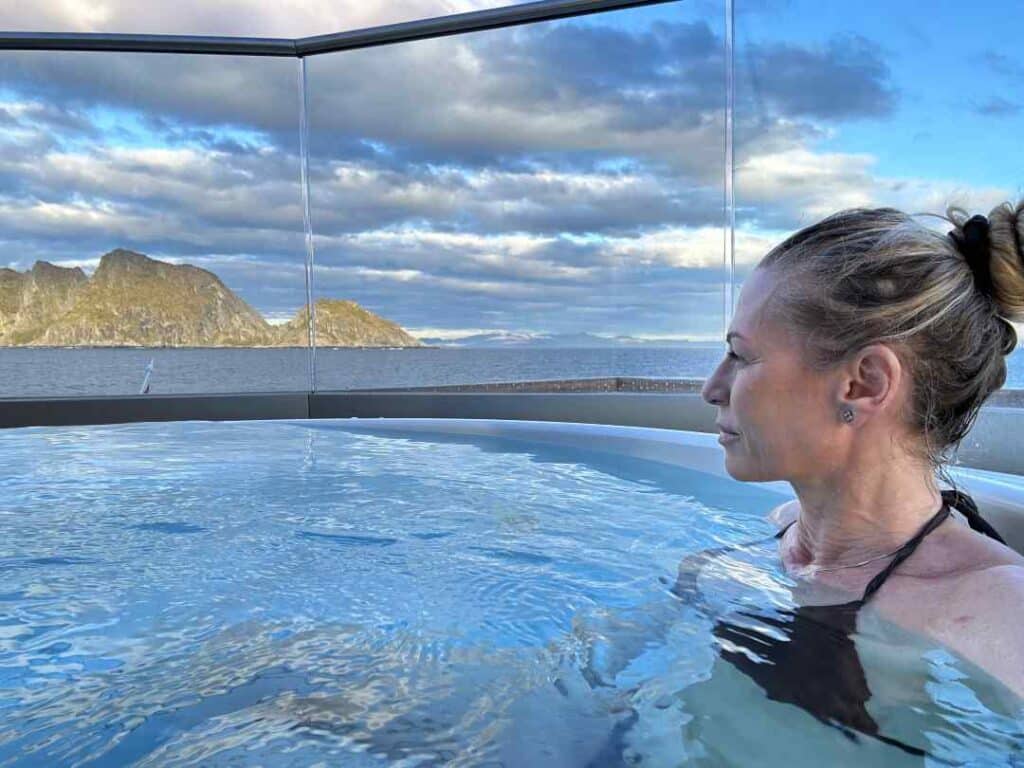
- A peaceful, scenic coastal experience
- No driving required
- Good for travelers who enjoy slow travel and the sea
- A very local way to travel
Cons of ferries
- Limited schedules
- Longer total travel time
- Weather-dependent
- Requires coordination with local transport or a car rental afterward
Best for: Those who want a unique, non-driving experience and enjoy slow travel.
Option 4 — Taking the Bus from Tromsø to Lofoten

If you’re on a tighter budget or prefer not to drive, the bus is absolutely possible — and more comfortable than many expect.
However, expect to change buses; no single bus runs the entire route.
Typical route
- Tromsø → Narvik (express bus)
- Narvik → Svolvær (now you are in Lofoten)
- Svolvær – Leknes (regional bus, often Line 300)
- Leknes – Å in Lofoten
You can usually reach Svolvær in 8–10 hours, with one or two transfers. Buses have comfortable seats, big windows, and surprisingly good views.
Pros of taking the bus
- Budget-friendly
- No winter driving stress
- Beautiful scenery from the window
- Frequent departures
Cons of the bus
- A long journey in a bus seat all day
- Not much flexibility for stops
- Often busy in summer
- Requires planning around timetables
Best for: Budget travelers, backpackers, and winter travelers who don’t want to drive.
Combined Options — the Most Scenic Ways to Travel

If you want the most beautiful journey possible, here are two unbeatable combinations:
Fly to Harstad/Narvik + Drive the E10 into Lofoten
A smart middle-ground option:
- Fly Tromsø → Harstad/Narvik Airport Evenes
- Rent a car
- Drive 2-3 hours along the stunning E10 into Lofoten to reach Svolvær
This route is fast, easy, and incredibly scenic.
Tromsø → Senja → Andøya → Lofoten
If it matters to you, Andøya Island (or the small settlement Andenes) is where you can catch a whale watching tour, or even go snorkeling with whales!
This is the “secret” scenic route — especially in summer.
- Ferries and coastal roads
- Endless sea views
- Tiny fishing villages
- White-sand Arctic beaches
It’s slower, but maybe the most beautiful of them all.
How Far Is Lofoten from Tromsø?
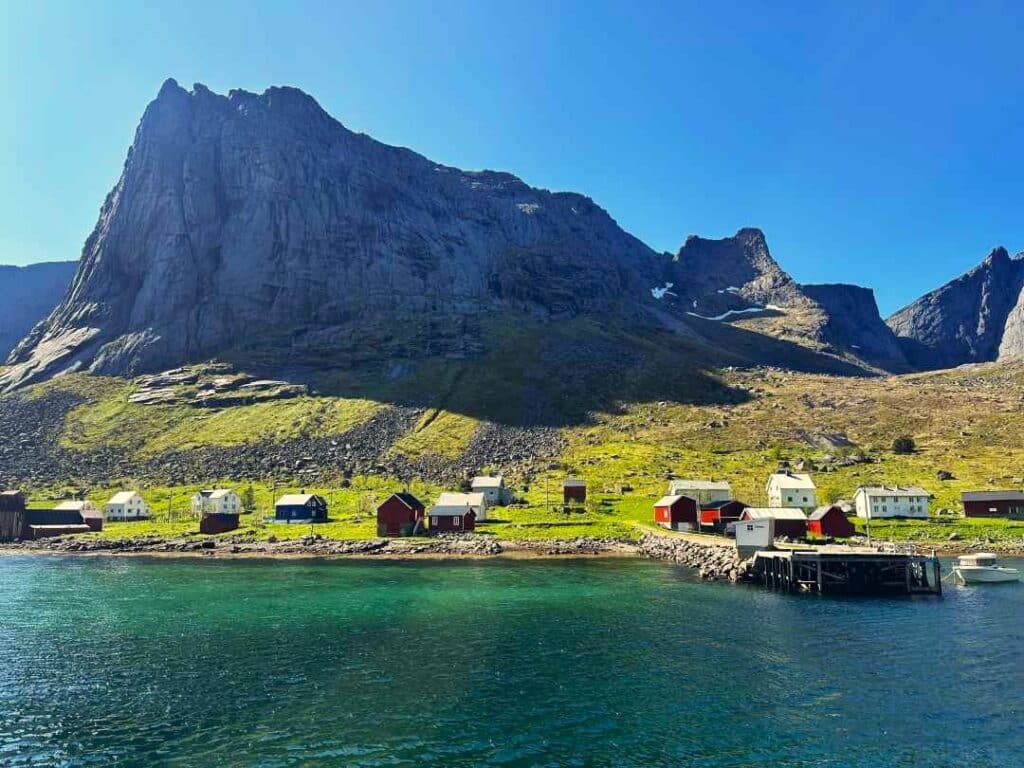
In the north, distances can be measured in miles or kilometers, but here in the Arctic, it is just as important to measure distance in time. The time it takes to drive the distance is NOT the same in summer and winter.
Distance by road
Approx. 420–500 km, depending on which route you choose. During summer, expect 8-9 hours depending on traffic. During winter, with the worst-case-scenario weather gifting you snow and ice-covered roads, expect 12+ hours.
Distance by air
About 260 km (as the crow flies). Direct flight, about 45 minutes, via Bodø, expect at least three hours.
Distance by ferry combinations
Varies, but typically 200–300 km of combined sea routes.
This can take “any time”, if you are lucky (or just planning amazingly well), and just want to reach Lofoten as fast as comfortably possible, it can take down to 10-12hours.
What’s the Best Way to Get to Lofoten from Tromsø?
Here’s a quick summary:
Fastest:
- Flying directly to Svolvær or Leknes
Most scenic:
- Driving the E10
- or Tromsø → Senja → Andøya → Lofoten
Best for winter:
- Flying (safest and most predictable)
Most budget-friendly:
- Bus via Narvik
Tips from a Lofoten Local
These are things I wish more travelers knew before coming.
The season changes everything
- Summer: Midnight sun, easy driving, ferries, and long days
- Autumn: Storms, beautiful deep colors, dramatic skies
- Winter: Northern lights, icy roads, unpredictable weather
- Spring: Quiet, peaceful, and often underrated
If you are going to drive during winter, please read my advice on winter driving here before you arrive.
Book early
Flights, rental cars, and rorbuer book out fast in high season. Truly — book ahead.
Give yourself time
Rushing through Lofoten is a waste. These islands deserve slow travel.
The weather is part of the adventure
Here, weather changes every hour or more — that’s part of the magic.
Respect our nature
Lofoten is fragile. Stick to marked trails, park legally, and support local businesses.
FAQs About Traveling from Tromsø to Lofoten
Can you do it in one day?
Yes — flying is easy in one day, and even driving is possible if you start early.
What’s the cheapest way?
The bus is usually the cheapest.
Is the drive dangerous in winter?
It can be challenging. If you have no winter driving experience, choose flying.
Do ferries run year-round?
Some do, some don’t. Always check seasonal schedules.
Can you reach Lofoten without a car?
Yes — by plane, bus, or ferry. But a car gives you much more freedom once here.
Final Thoughts
Traveling from Tromsø to Lofoten shouldn’t just be a transfer — make it part of the adventure.
Every option brings you through wild landscapes, Arctic coastlines, and mountain silhouettes that rise straight from the sea.
Whether you choose to fly, drive, take the ferry, or hop on the bus, you will end your journey in one of the most extraordinary places in Norway.
Lofoten has a unique energy — a mix of raw nature, quiet beauty, and deep serenity. It’s a place that stays with you long after you’ve gone home.
If you want help planning your route once you arrive, I also have guides on: