Coolcation in Lofoten Islands: Your Ultimate Local Guide to Norway’s Cool Summer Escape (2026)
While Europe’s Mediterranean beaches swelter under 40°C heatwaves and the Acropolis closes its gates to protect visitors from overheating, we are still chilling quite comfortably up here above the Arctic Circle during the summer months.
So much so that the Lofoten Islands in Norway have become a top-rated summer destination for a particular group of travelers: the Coolcation crowd.
As a Norwegian native living all the way west in Lofoten, I should know, and I also know why traveling here during summer is an excellent idea.
In July and August in Lofoten, I can sit by the window of my old white fisherman’s house, watching the midnight sun pour golden light over the West Fjord at 11 pm, fishing boats heading out, wearing a light sweater.
That, right there, is the definition of a coolcation (except, you know, that I live here).
In this guide, I will tell you everything you need to know to plan the perfect Lofoten coolcation this summer, from what the weather is really like to the best experiences, where to stay, and the best way to get here.
This article contains affiliate links. If you book through these links, I may receive a small commission at no extra cost to you. I only recommend services I know and trust.
What Is a Coolcation — And Why Lofoten Is the Answer
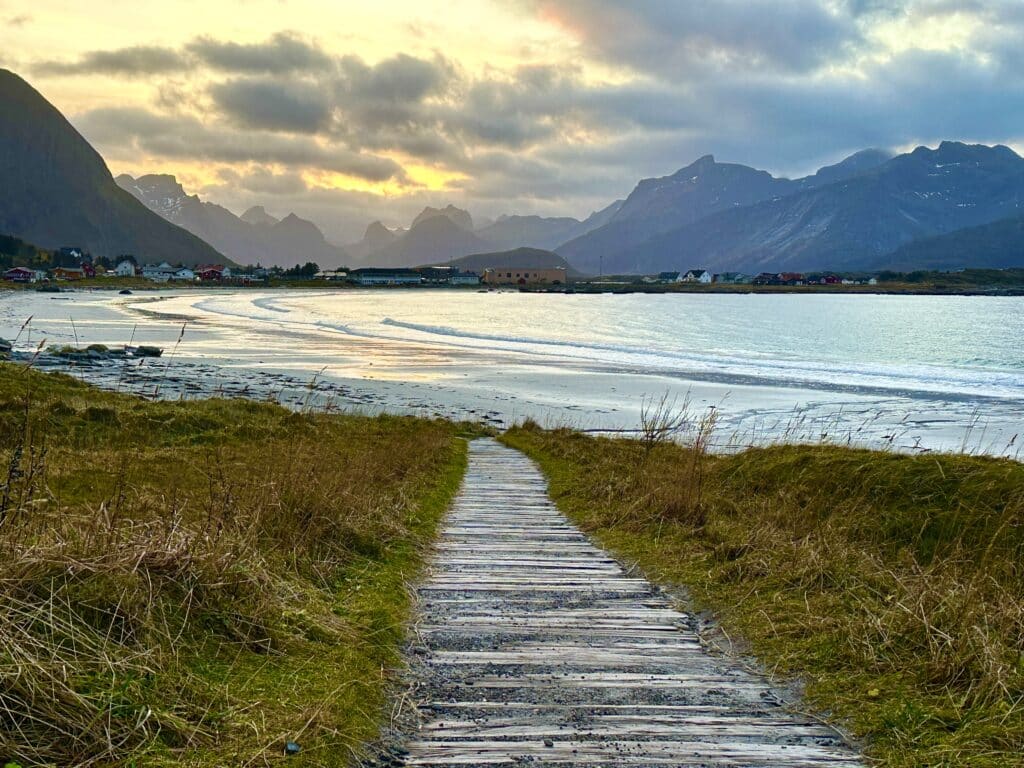
A coolcation is a trip to a destination deliberately chosen for its cooler, more comfortable climate, usually during the summer as an alternative to a traditional sun-and-sand destination.
The term “coolcation” was coined by Condé Nast Traveler in 2023, and since then, it has exploded into one of the defining travel trends of the decade.
Norway has become the poster child for the coolcation movement, with Northern Norway right up there at the top of the list.
In fact, bookings to Norway rose 131% in a single year (hopefully not just because it got trendy), and the Lofoten Islands are at the very heart of that surge.
Travelers from across the world are trading their sun loungers for kayak paddles and hiking boots, choosing Lofoten as their destination.
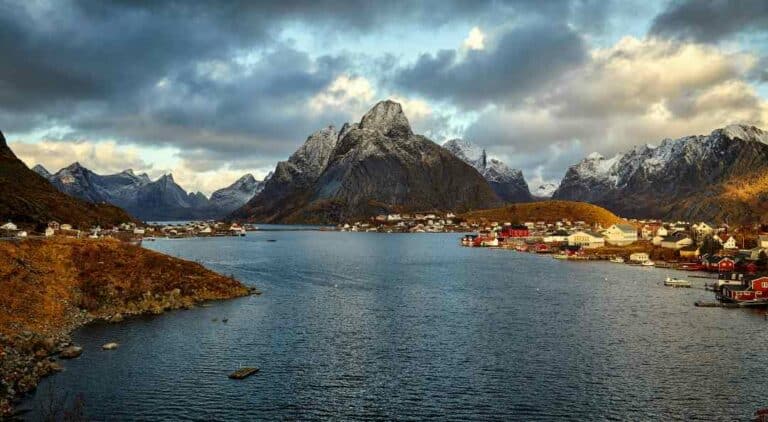
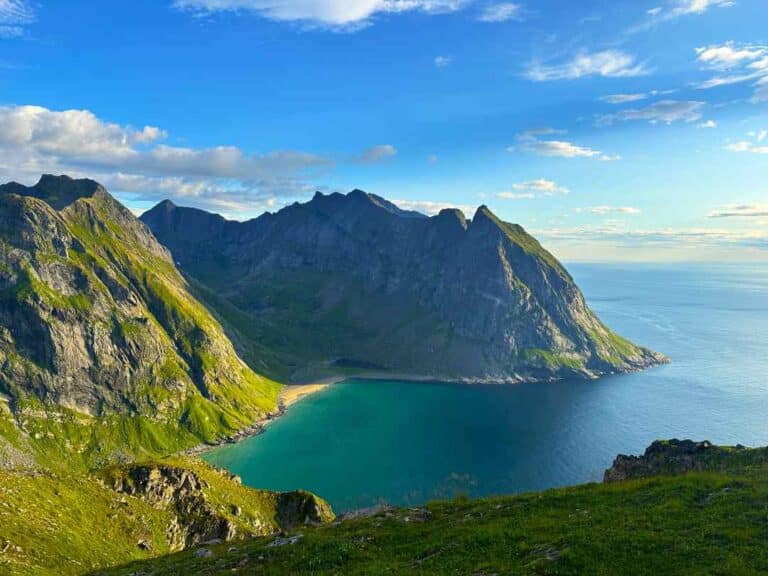
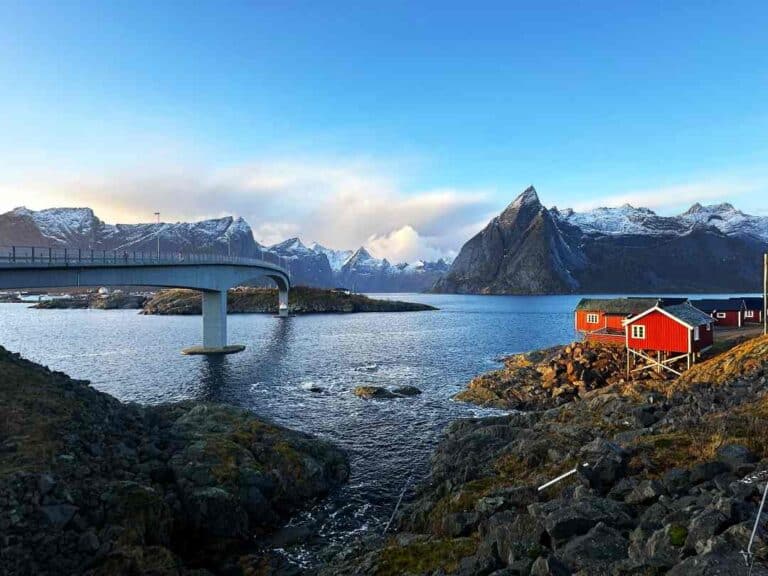
Here, sharp, dramatic mountain peaks rise directly from the Arctic sea. White-sand beaches glow beneath the midnight sun. Brightly colored fishermen’s cabins, the iconic red and yellow rorbuer, line the harbors of small villages.
And the light up here in summer? There is simply nothing like it anywhere else on Earth. That is why Lofoten is not just a coolcation destination. It is the coolcation destination.
Lofoten in Summer — What the Weather Is Really Like
Temperature in Lofoten in Summer
I want to be clear about what you are signing up for, because this is important to know that a Lofoten summer is not warm by Mediterranean standards (Or even Oslo standards), which is precisely the point, but still worth mentioning.
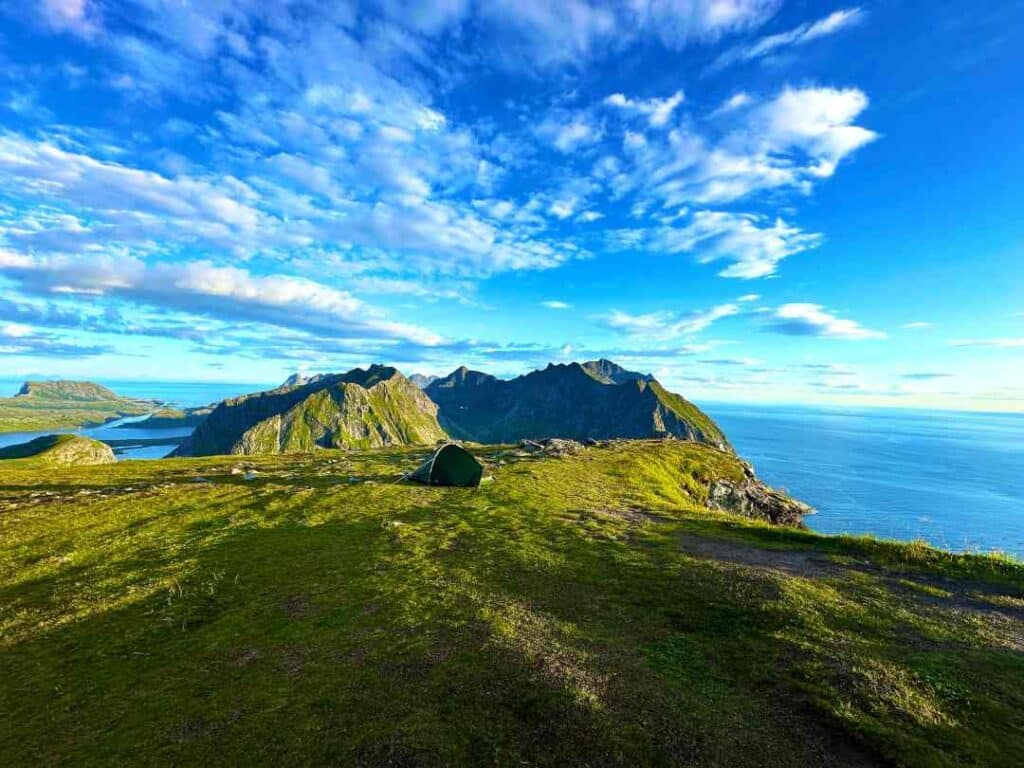
Summer temperatures in Lofoten typically range from 12–18°C (54–65°F), with occasional colder days or warmer days reaching the low 20s. On rare occasions, we touch 30°C, but that is not what you should plan for.
You will not be sweating, except maybe when summiting one of our mountains super fast. You will not need to seek shade or carry a fan. You will be able to actually move — hiking, kayaking, cycling — without melting.
That said, the weather in Lofoten can change quickly at any time of year; our standing joke is that it changes every 15 minutes up here.
Sunny and warm in the morning, a shower in the afternoon, and back to golden light by evening.
The Norwegian saying “det finnes ikke dårlig vær, bare dårlige klær” — there is no such thing as bad weather, only bad clothing — was essentially written for Lofoten.
So pack layers. A windproof and waterproof jacket is non-negotiable. Warm sweaters, comfortable hiking shoes, and quick-dry fabrics will be your best friends. Leave the sandals at home — or bring them as a secondary option.
And if you want to be a sustainable traveler in Lofoten, educate yourself before you come.
What to Pack for a Lofoten Coolcation
Last summer, there were a lot of fun memes apologizing to travelers in Northern Norway for advising them to “pack layers!”, because we had a couple of weeks of indian summer, very uncharacteristic for the region and season.
Temperatures actually touched 30, but rest assured, that is not the norm. So I say the advice still stands: please pack layers, wool, waterproof, and windproof clothing.
- Windproof and waterproof jacket (essential)
- Warm fleece or wool sweaters (2–3)
- Thermal base layers for early mornings and evenings
- Hiking boots or sturdy trail shoes
- Quick-dry trousers and layers
- A warm hat and gloves (even in July — mountain hikes can be cold)
- Sunscreen — yes, really! The midnight sun is still the sun
- Swimwear! You want to use this moment to prove you can be Vikingish!
- A sleep mask for the midnight sun (highly recommended, especially for first timers)
And dont worry, even in the best restaurants in Lofoten, you will be welcome wearing hiking clothes, totally normal.
Also read: Buying Alcohol in Norway: A Complete Guide to Norwegian Alcohol Laws
The Midnight Sun in Lofoten
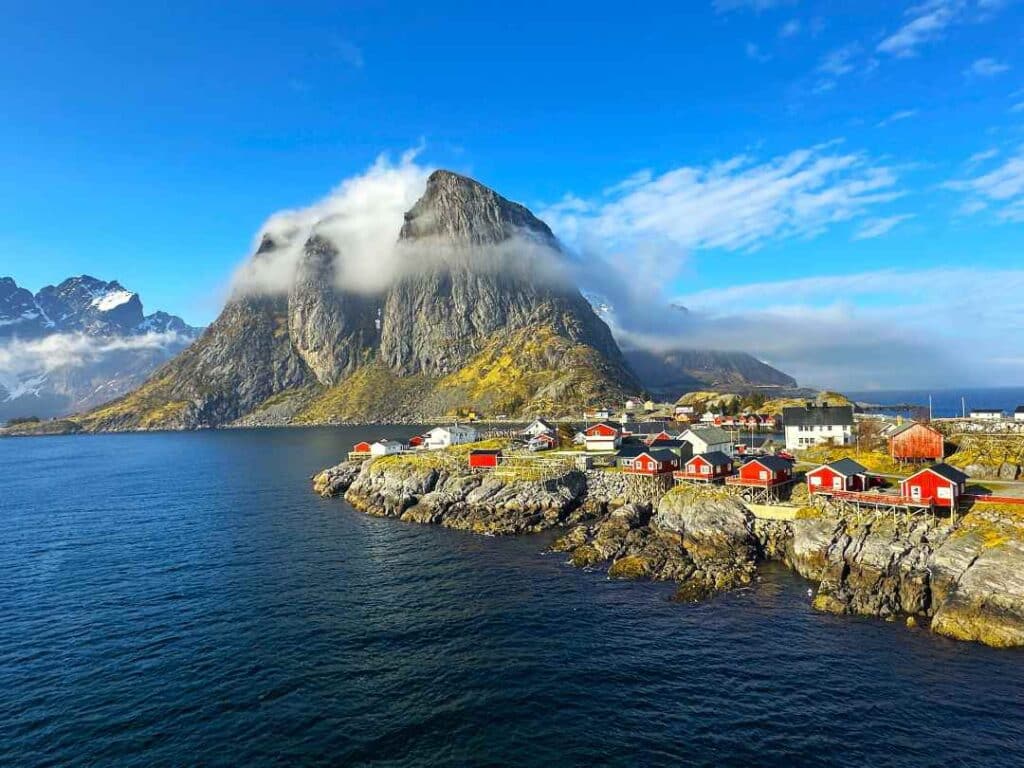
If you visit us between late May and mid-July, you will experience one of the most extraordinary natural phenomena on the planet: the midnight sun.
Technically, the midnight sun season starts on the 28th of May and ends on the 14th of July in Lofoten. I addition, we have bright summer nights from April through to early September, when the sun barely dips below the horizon before rising again.
The light at 1 am during summer is warm, soft, and a bit surreal to your senses. You might lose track of time entirely, and you probably will not care. People hike at midnight or 4 am, wearing sunglasses, totally normal.
The midnight sun gives your coolcation a magical twist; you will find yourself hiking, paddling, or simply sitting by the water at midnight in full sunlight, wrapped in a sweater, completely at peace. That is not something you will find in Mykonos.
How to Get to Lofoten for Your Coolcation
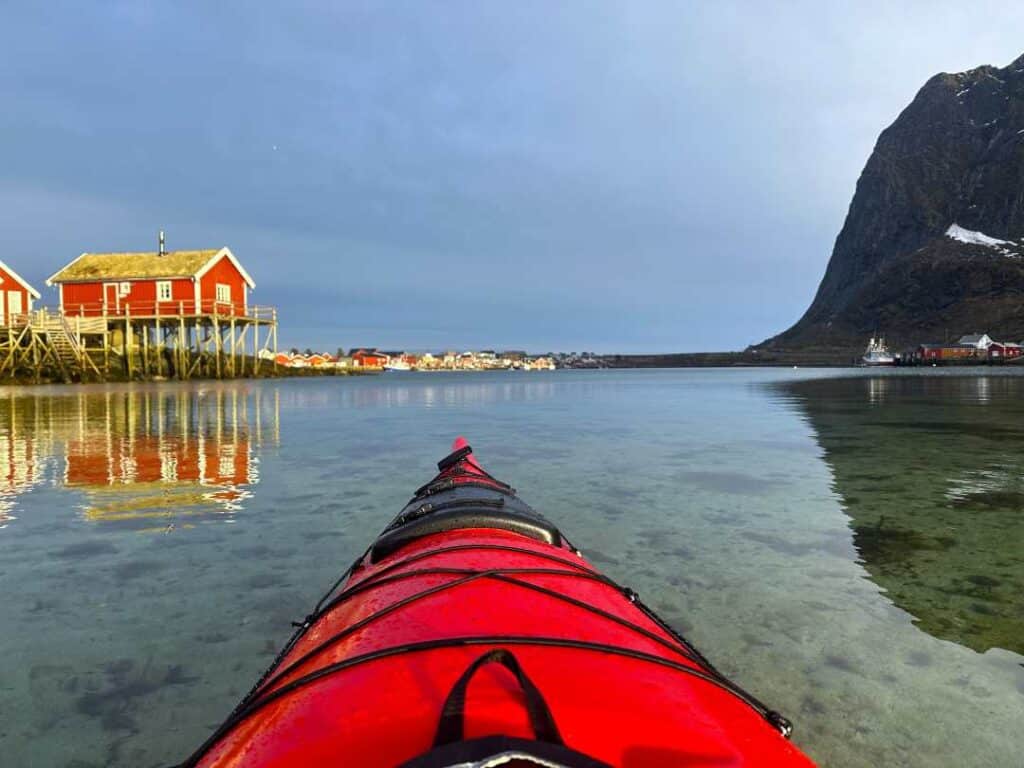
Flying to Lofoten
There are three main airports that give you access to the Lofoten Islands:
Svolvær Airport is a good option if you want to start your Lofoten journey in the north of the archipelago. From Svolvær, it is roughly a 2.5-hour drive to Å at the southern tip.
Widerøe Airlines has direct flights here from several Norwegian cities, the majority from Bodø.
Leknes Airport sits in the middle of the archipelago, about one hour from both Svolvær and Å. If you are focusing your time on western Lofoten (Reine, Hamnøy, Nusfjord), Leknes is your best bet.
Most flights to Leknes depart from Bodø, but a few also from Tromsø.
Harstad/Narvik Evenes Airport is for those who want to combine Lofoten with a longer road trip through Northern Norway, perhaps including the islands of Senja or Andøya.
Evenes is located north of the Lofoten Islands, so it is a longer drive to Lofoten, but also with flexibility to nearby amazing destinations.
Taking the Bodø–Moskenes Ferry
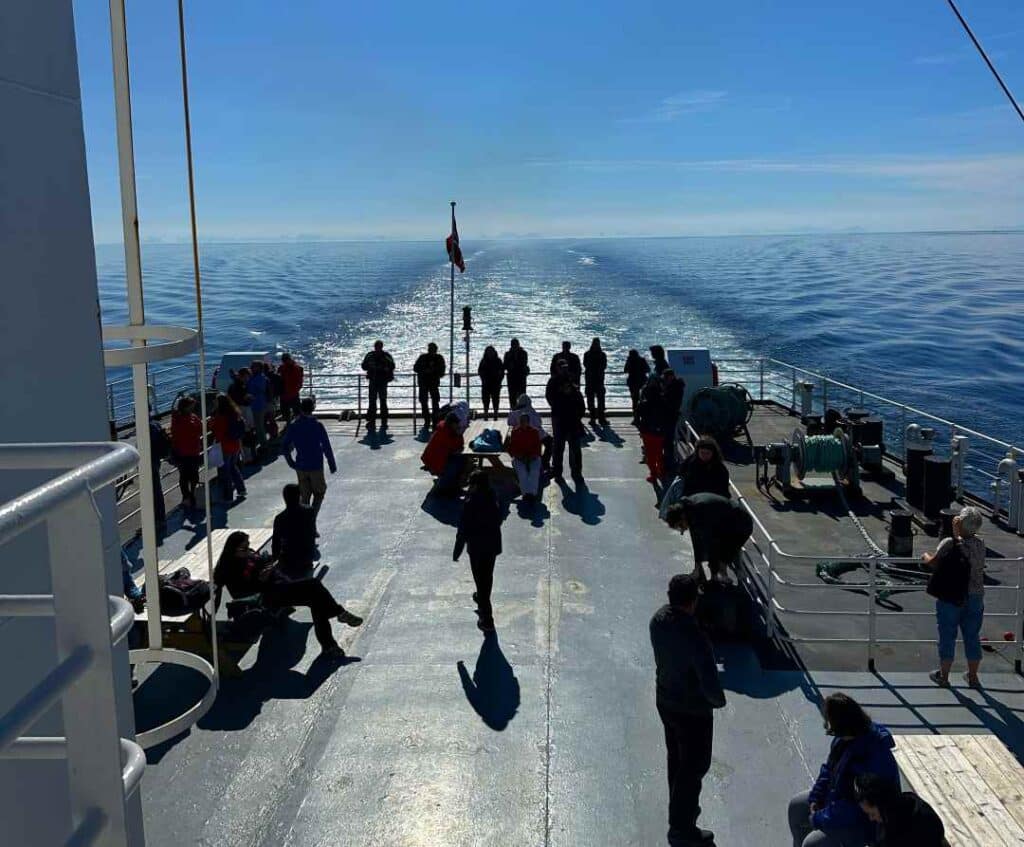
For a truly epic arrival, take the car ferry from Bodø on the mainland across the West Fjord to Moskenes in western Lofoten, close to Reine and the famous Reinebringen Sherpa stairs.
The crossing takes around 3.5 hours and drops you directly into the heart of the most dramatic scenery in the archipelago.
This is wildly popular in summer, so pre-book your ticket well in advance on the Torghatten website if you have a car. If you are traveling as a pedestrian without a car, the ferry is completely free. Yes, free. Some things in Norway still are.
Note: In stormy weather, this ferry is the first thing to be canceled. If you are traveling in the shoulder season, build a weather buffer into your plans.
Road Tripping Through Lofoten
One road only, the E10, winds its way through all of the Lofoten Islands, connecting every village and viewpoint along the way. A road trip is the most popular way to explore, and it is genuinely spectacular.
However. Plan for traffic in July and August; Lofoten has become seriously popular. If you want the roads to yourself, June and the second half of August or September are your best bets.
NB: If you are traveling in winter, please research winter driving conditions before you go. Narrow, icy roads require confidence and preparation, and if you are not an experienced winter driver, please read my guide to safe winter driving here.
How To Have The Best Coolcation Experiences in Lofoten
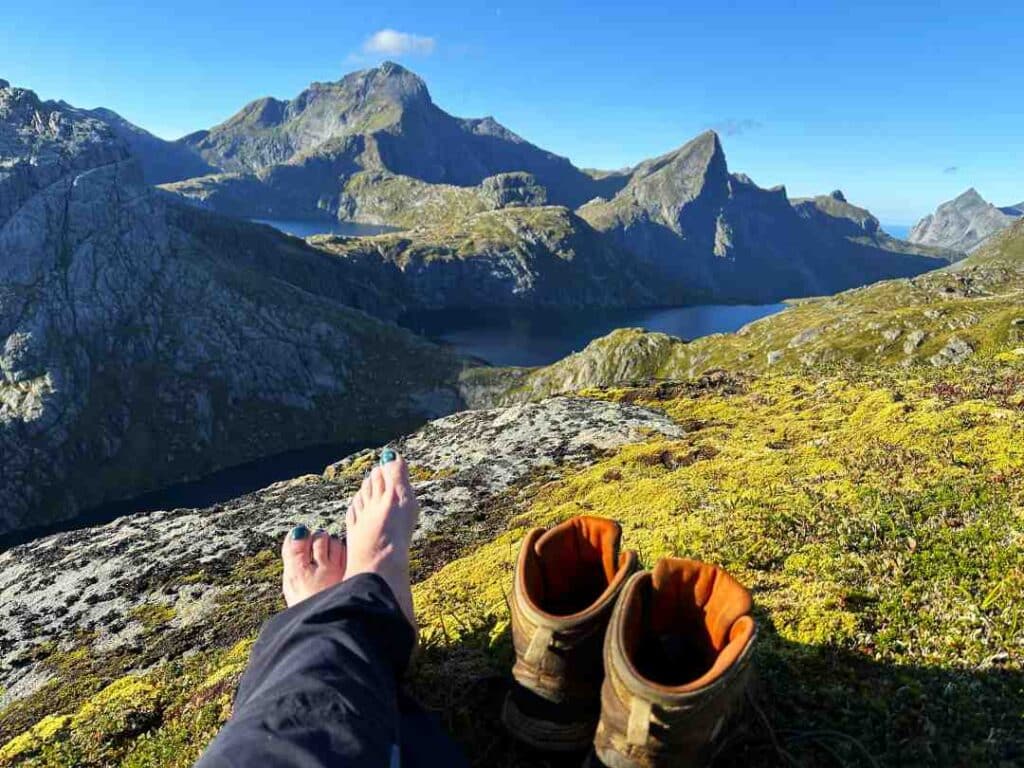
Where Lofoten truly shines is in all the outdoor activities, the nature!
The cool thing about coolcations in Lofoten (pun a little bit intended) is that you can be outdoorsy, adventurous, and active without risking a heat stroke halfway through your day.
Hiking Under the Midnight Sun
Hiking is the single most popular thing to do in Lofoten, and for good reason. The mountains here are extraordinary — dramatic, accessible, and rewarding in a way that few places in the world can match.
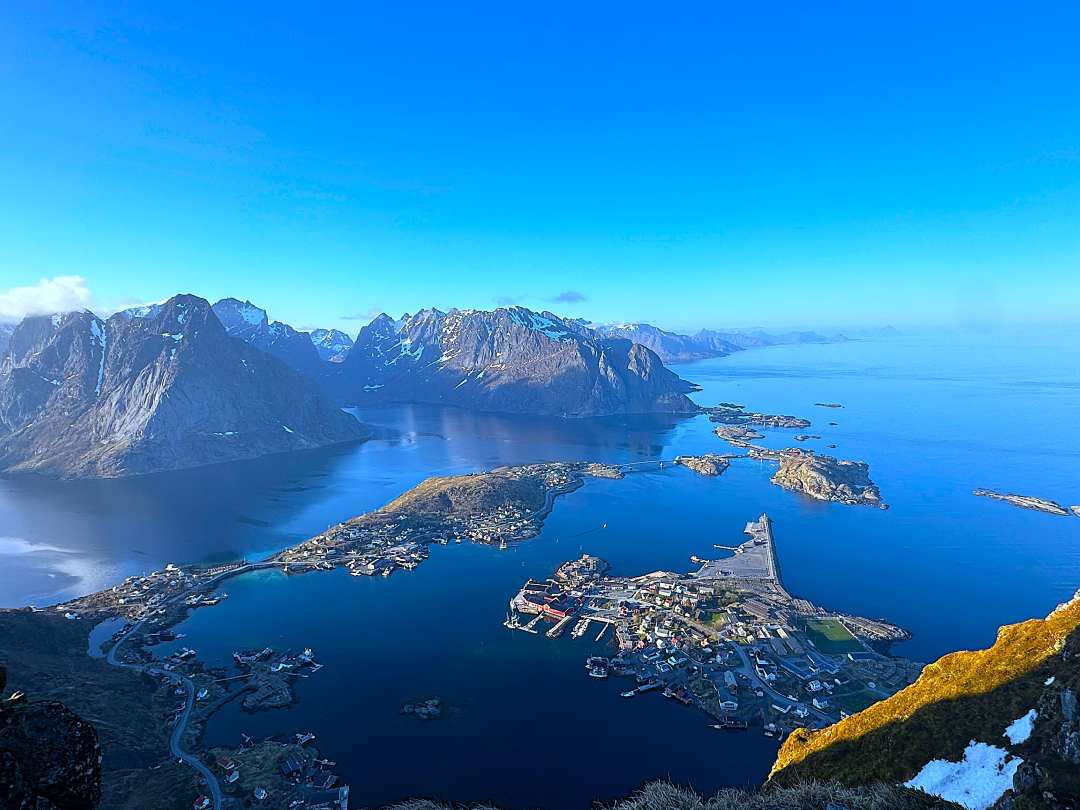
One of the most famous hikes is Reinebringen in Reine, where almost 2,000 stone Sherpa stairs lead you up to a summit with views that will stop your breath.
I did this hike on the Norwegian national day (May 17th) last year when it had just opened (aka, was deemed safe after winter), and blessed with clear skies and infinite views, it was incredible.
Other iconic hikes in western Lofoten near Reine (Moskenes municipality) include Ryten with views over Kvalvika Beach, Munken, and the longer, wilder trek from Kirkefjorden to Horseid Beach (you need to take the ferry from Reine to Kirkefjord).
Further north, you have Festvågtind near Kabelvåg, and Svolværgeita (the Goat, you may have seen the photo of people jumping between two small plateaus at the top).
In summer, when you can hike at any hour, many people choose to set out at 10 pm to catch the golden light at the summit or on a beach, hiking through the night.
Note: I just want to mention that Reinebringen is closed in winter due to dangerous snow and ice conditions. Only hike it when the mountain is clear of snow.
Kayaking the Fjords

Getting onto the water in Lofoten on a kayak tour with a local guide is an experience unlike any other. The Arctic sea here is crystal clear, the visibility underwater is extraordinary, and you may well see starfish, sea urchins, and, if you are very lucky, orcas.
Guided kayak tours operate out of Henningsvær, Svolvær, Hamnøy, and Reine.
In Reinefjorden, the fjord that stretches beneath Reinebringen mountain, you can join guided kayak tours through Saga Adventures, a small local operator with great guides I have personally used and recommend.
Paddling between the mountains in perfect silence, with cold, clean air on your face, is as close to perfect as travel gets. And if you are really lucky, you get to meet the orcas, as we did!
Arctic Sauna and Sea Bathing
This is one of the most uniquely Norwegian experiences you can have, and Lofoten does it beautifully. Reinefjorden Sjøhus, just outside Hamnøy, has two wooden saunas right on the water’s edge.
You heat up in the sauna, then plunge into the Arctic fjord. Then back into the sauna. Then into the fjord. It sounds extreme, but a better word is exhilarating. And it is one of those experiences you will not forget any time soon.
You should probably call ahead to pre-book (no online booking); these saunas are popular and do not always advertise openly. Drop-in guests are welcome when there is space, but only for same-day bookings.
My tips: Best places to stay in Reine:
- Eliassen Rorbuer: iconic red fishermen’s cabins under the majestic Festhælen mountain
- Catogården: Charming boutique hotel & activity center in the center of Reine
- Manor House in Sakrisøy Island, a venerable old villa with a view
Sea Eagle and Whale Spotting
Lofoten is one of the best places in Europe for wildlife encounters at sea. Sea eagle safaris depart from Henningsvær and Svolvær, and these magnificent birds with wingspans of up to 2.5 meters are almost guaranteed sightings.
Humpback whales, orcas, and sperm whales also occasionally visit Lofoten, although we do not have any whale safaris, as such.
Whales are generally more common further north, but they do follow the fish. So, especially in autumn and winter, they stop by, but you can get lucky in spring and early summer, too.
For wildlife on the water, I recommend the RIB safaris out of Svolvær into the Trollfjord, a narrow, dramatic canyon of a fjord that takes you up close and personal to the steep mountain sides plunging into the water.
Cycling the E10
For the adventurous coolcationer, cycling the E10 through Lofoten is a dream.
Empty roads at 2 am bathed in midnight sunlight, mountain peaks on one side and the sea on the other, and small fishing villages every few kilometers.
Be aware, though, that the cycling here is not easy. This is a mountainous area with lots of ups and downs, and the weather is unpredictable.
But it is one of the most beautiful cycling routes in the world.
Arctic White Sand Beaches
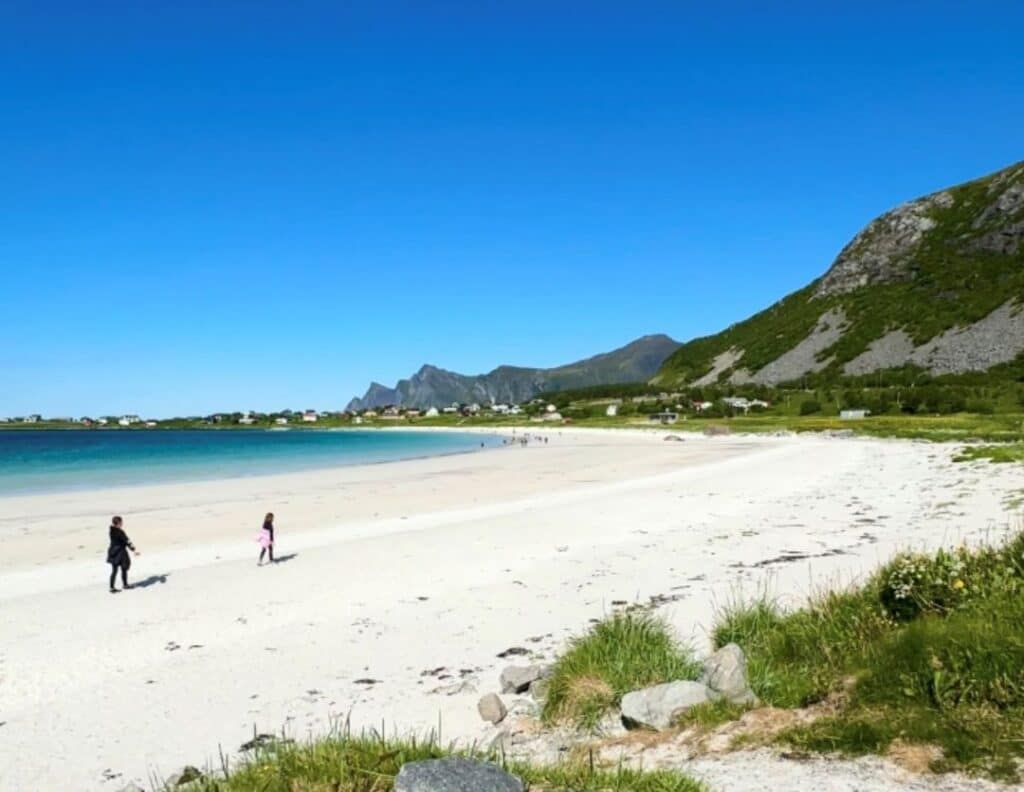
One of the most surprising things about Lofoten for first-time visitors is the beaches. These are not tropical beaches, but they are breathtakingly beautiful.
Beaches you should consider visiting:
- Haukland Beach
- Uttakleiv Beach
- Hov Beach
- Rørvik Beach
- Ramberg Beach
- Bunes Beach (ferry from Reine, and a short hike)
Just north of Ramberg is where Lofoten Beach Camp is based, a super popular surf spot year-round. This is a wonderful base if you want a more laid-back, beach-focused coolcation experience.
PS: Unstad Arctic surf is also a well-known and popular surfing spot.
This is also a camping, so you are welcome with your van or your tent. White Arctic sand, turquoise water, dramatic mountain backdrops, and almost no one else there.
Local Food Experiences
A Lofoten coolcation is not complete without eating like a local. This is one of the great fishing regions of the world, and the food reflects that.
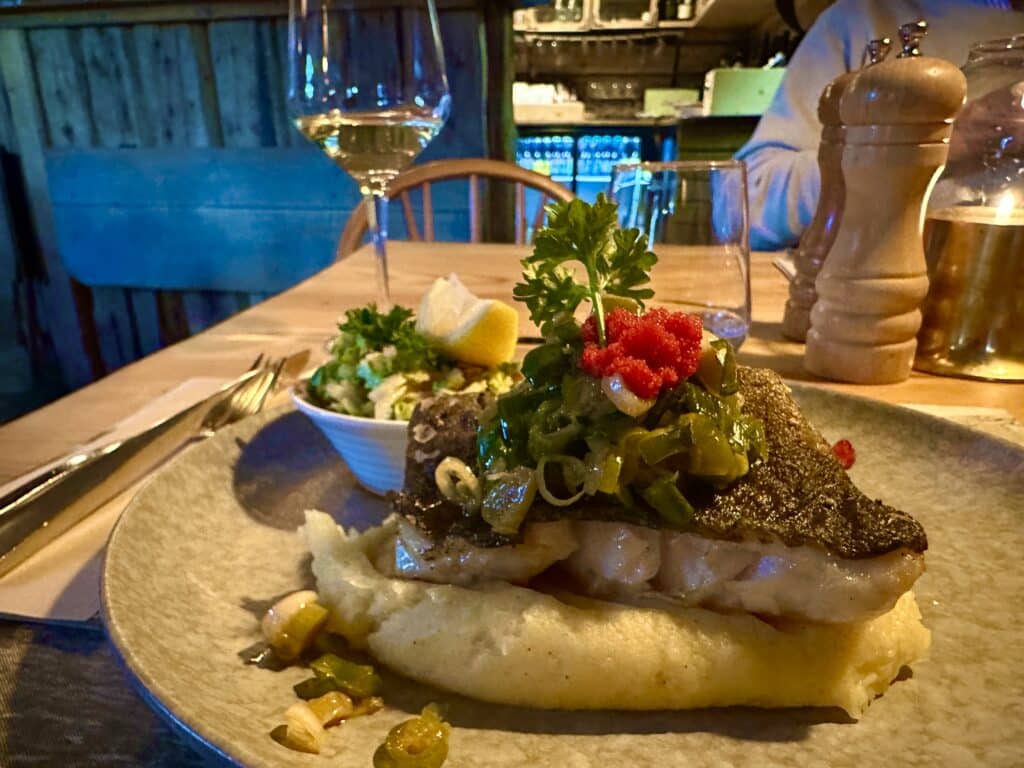
Try stockfish (dried cod — the original Lofoten export, sent to Italy and Portugal for centuries), fresh Arctic cod, king crab, and the famous cinnamon buns at the old bakery in Å.
Here is my “unmissable” list for eating in Lofoten.
- Baccalao in Svolvær
- Vind Brasserie in Henningsvær
- Restaurant Gadus in Hamnøy Island
- Underhuset on Sakrisøy Island
- Anita’s Seafood on Sakrisøy Island (mostly daytime)
- Maren Anna in Sørvågen
For a special dinner, Holmen Lofoten restaurant in Sørvågen, western Lofoten, offers a spectacular seven-course tasting menu featuring locally sourced produce, beautifully presented, from an open kitchen.
It is not a budget option, but it is a genuine gourmet experience at the edge of the Arctic.
Best Destinations for Your Lofoten Coolcation
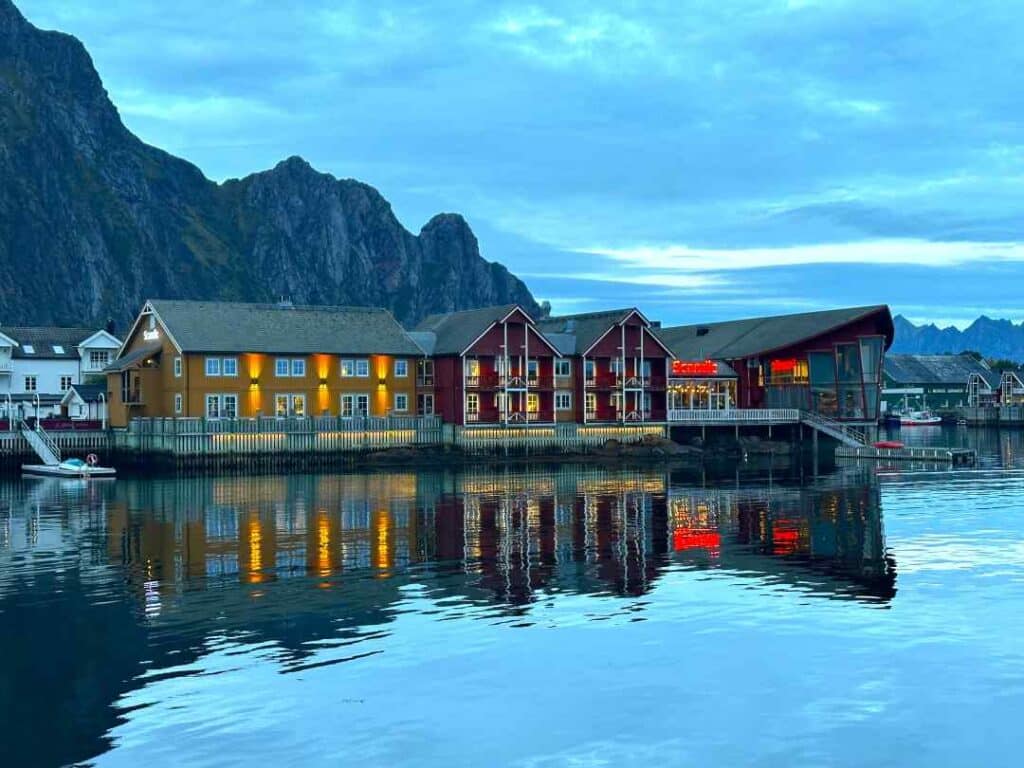
Svolvær — The Arctic Lofoten Capital
Svolvær is the closest thing Lofoten has to a proper town, with a population of around 4,700, a town square, good supermarkets, excellent restaurants, hotels, and a buzzing harbor. It is the best base if you want easy access to services while you’re on your adventures.
The most iconic landmark is Svolværgeita — “the Svolvær Goat” — a mountain formation whose twin rock columns attract rock climbers from around the world.
The summit jump between the two columns is one of the most daring and famous moves in Norwegian climbing.
Svolvær is also where you can board the Hurtigruten coastal ferry, take a floating fjord sauna session, or visit the Lofoten War Memorial Museum. It has its own airport, making it the easiest entry point to the archipelago.
Henningsvær — The Coolest Village
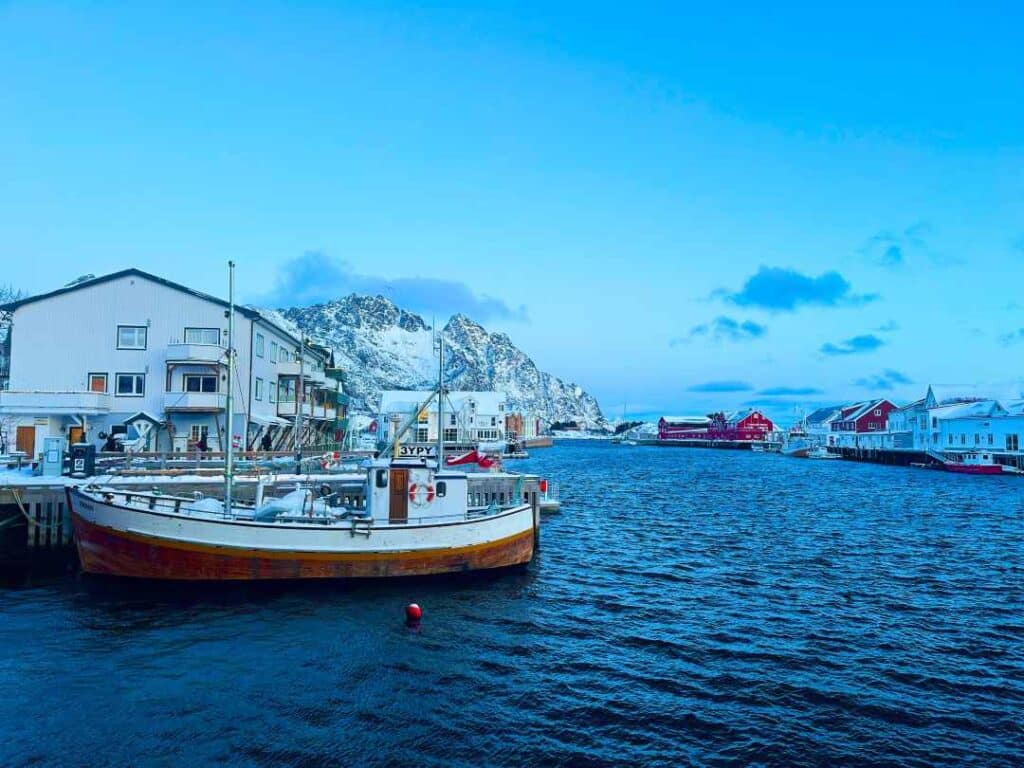
If Lofoten has a soul, many people believe it lives in Henningsvær.
This tiny village, sitting on a cluster of small islands connected by bridges, is famous for its iconic football pitch perched at the water’s edge, its vibrant arts scene, its charming alleys, and its irresistible chill vibe.
Stop here for lunch at Klatrekafeen (the climbers’ café), Trevarefabrikken (that has become an icon of Henningsvær) browse art at Kaviar Factory (a former caviar factory turned world-class contemporary gallery), or join a sea eagle and seal safari.
In the evenings, there is a quiet magic to sitting outside with a cold local beer from Lofotpils brewery, watching the light change over the mountains.
Reine and Hamnøy — The Most Dramatic Scenery

I may be biased, since I live here — but Reine and the neighboring islands of Hamnøy and Sakrisøy offer the most concentrated natural beauty in the archipelago, and arguably in all of Norway.
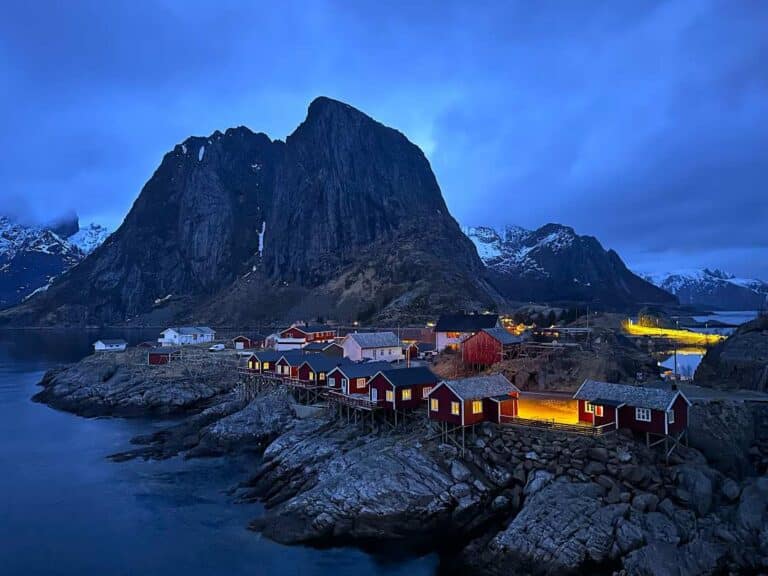
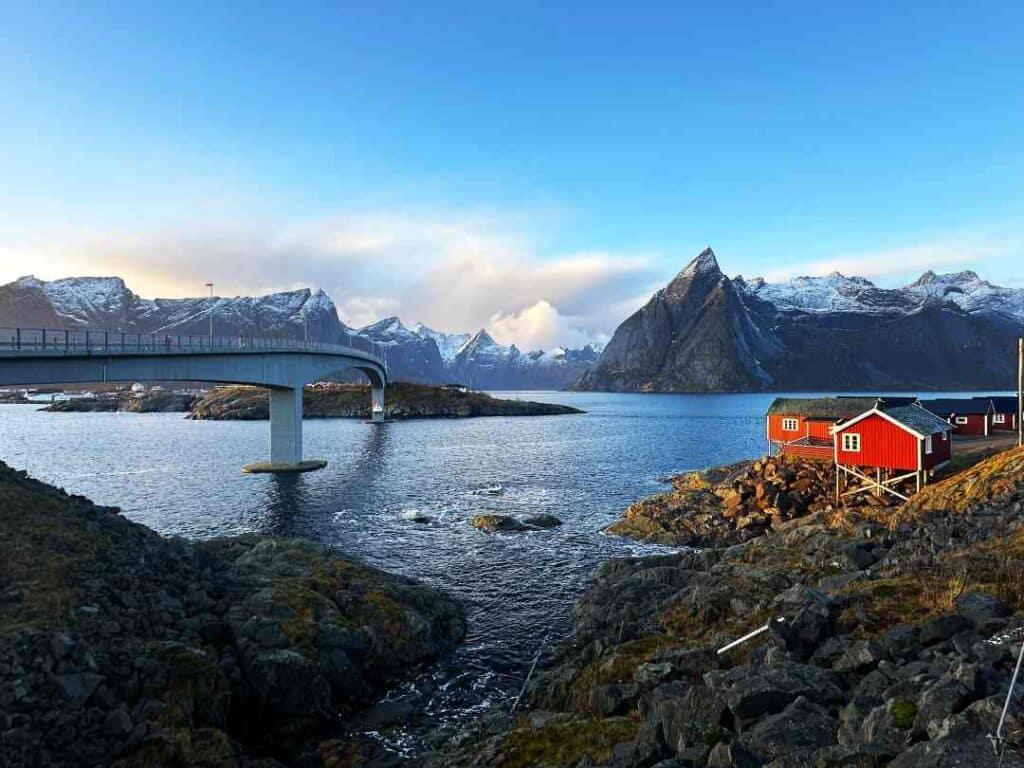
The views over Reinefjorden from the top of Reinebringen are breathtaking. The iconic red rorbu cabins of Hamnøy, reflected in still water beneath snow-capped peaks, are among the most photographed scenes in Europe.
And the access to wilderness here, boat trips to Bunes Beach, hikes to Horseid Beach via Kirkefjorden, kayaking just centimeters from the rugged shore, are unmatched.
If you only have a few days, spend at least one or two here.
Nusfjord — The Hidden Gem
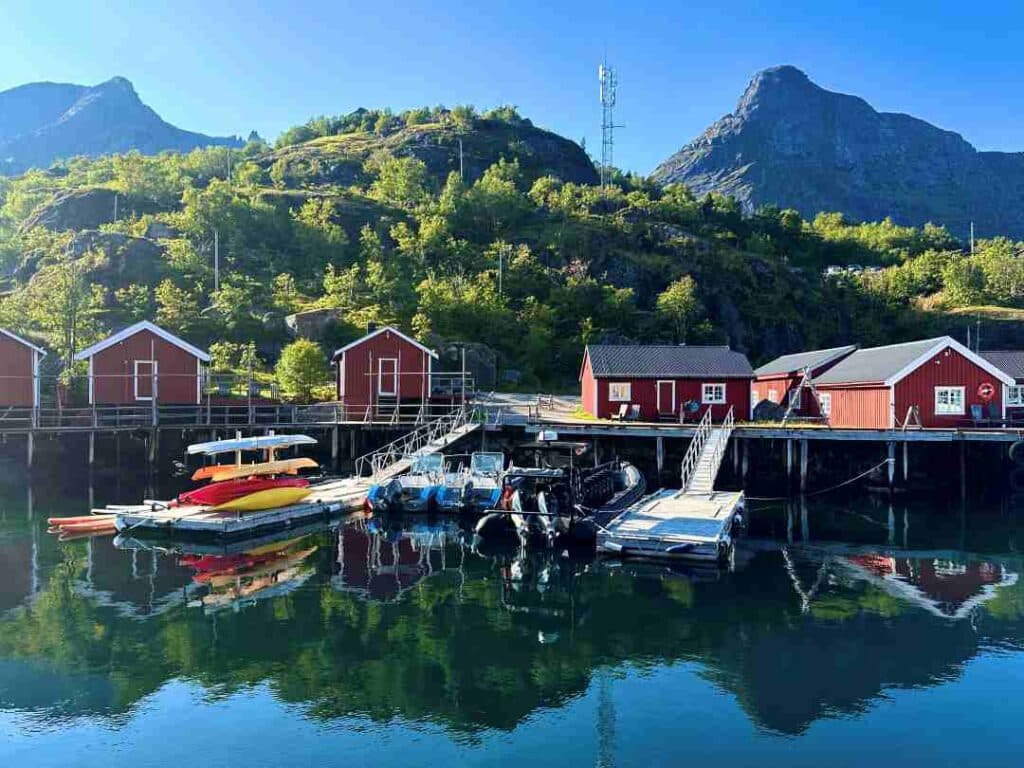
Tucked away in a narrow bay off the main road, Nusfjord is one of the oldest and best-preserved fishing villages in Norway.
Walking through it feels like stepping back in time — yellow and red rorbu cabins, an old boathouse, a 19th-century watermill, and absolute tranquility. It is especially beautiful at night, when the cabin lights reflect in the harbor water.
Nusfjord has its own rorbu resort, making it an exceptionally atmospheric place to stay.
Å in Lofoten — The End of the World
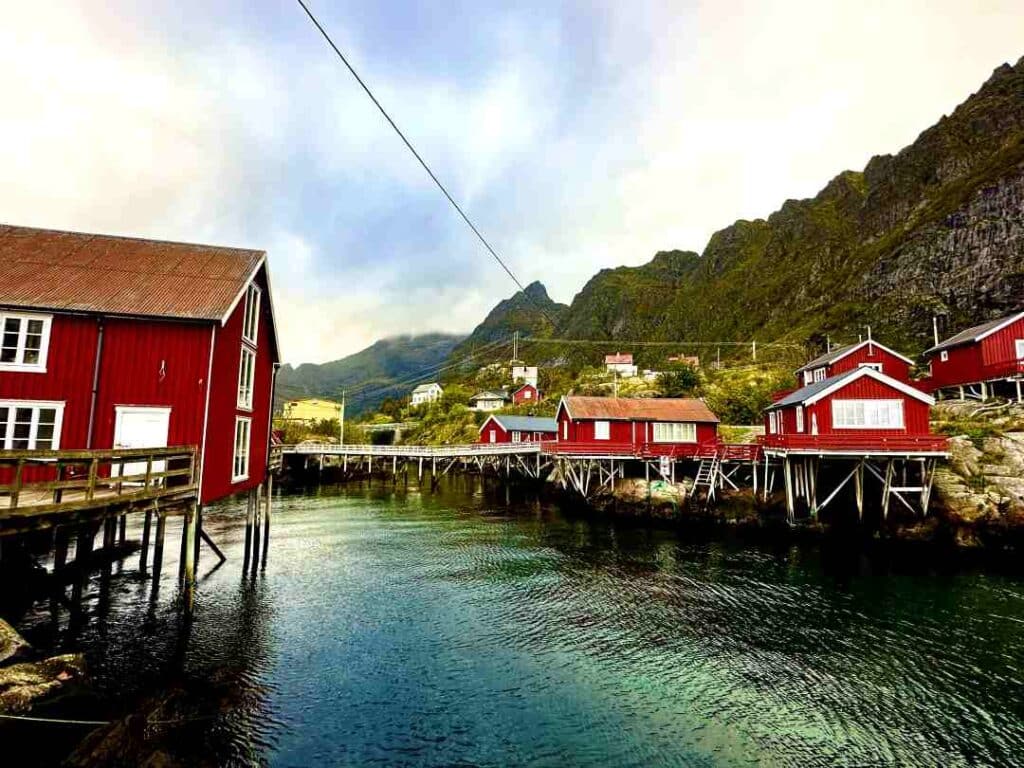
Or at least the end of Lofoten, at the very tip of western Lofoten, sits the tiny village of Å — almost an open-air museum of old fishing life.
Here you will find the legendary old bakery with what may be the best cinnamon buns in Norway (get there early — they sell out fast), a Norwegian Fishing Village Museum, and views south toward the distant islands of Værøy and Røst.
Standing at the end of the road in Å, with nothing between you and the Arctic horizon, is one of those quietly powerful travel moments.
Where to Stay on Your Lofoten Coolcation
Rorbu Fishermen’s Cabins
Staying in a rorbu is the quintessential Lofoten experience, and no coolcation here is complete without at least one night in one.
These traditional red wooden fishermen’s cabins, built on stilts by the water, have been beautifully restored with modern comforts while keeping their authentic character.
Top rorbu options include Sakrisøy Rorbuer in Sakrisøy, Eliassen Rorbuer in Hamnøy, Reinefjorden Sjøhus near Hamnøy, and Svinøya Rorbuer in Svolvær.
Be aware that these are not budget options, rorbu stays typically run between €200–500 per night in summer, but the experience might be worth it.
Hotels and Modern Stays
If you prefer a hotel, Thon Hotel Svolvær is a modern, well-rated option right by the harbor in Svolvær, with stunning views, a great restaurant, and full amenities.
In Kabelvåg, Nyvågar Rorbuhotel offers a charming middle ground between rorbu atmosphere and hotel comfort.
For a unique stay with a social atmosphere, Trevarefabrikken in Henningsvær (an old refurbished woodwork factory turned B&B) is one of the most characterful places to sleep in all of Lofoten.
Camping and Budget Options

Lofoten has several well-equipped camping sites, the best known being the aforementioned Lofoten Beach Camp in Ramberg, right on one of the most beautiful beaches in the archipelago.
Basic facilities, incredible location, and the kind of sunrise that makes you feel genuinely lucky to be alive.
Hammerstad Camping, north of Svolvær, is another good option with cabins, mobile home pitches, and tent sites.
Lofoten Coolcation: Practical Planning Tips
Best Time to Visit Lofoten for a Coolcation
For a classic coolcation experience, June to mid-August is the sweet spot. You get the midnight sun, the most comfortable temperatures, and the widest range of activities and boat tours available.
Late May and late August offer slightly fewer crowds and lower prices, while still delivering spectacular conditions. September brings the start of the northern lights season alongside lingering warmth, an extraordinary combination.
You also need to be aware that the longer into the shoulder season you visit, the fewer activities and restaurants are open. The people of Lofoten use these quieter periods to rest and recuperate.
Side note: Winter in Lofoten is wild, dramatic, and genuinely spectacular, but it is a different kind of trip entirely, suited to those seeking extreme nature and northern lights rather than a refreshing summer escape.
How Long Should You Stay?
A minimum of 5–7 days allows you to experience both eastern and western Lofoten properly. If you can manage 10 days, you will be able to slow down, get off the beaten track, and really feel the rhythm of life here.
Do not try to rush Lofoten. The roads are narrow, the weather is changeable, and the best moments often come when you stop for something that was not in your plans.
Is Lofoten Expensive?
Norway, in general, and Lofoten, in particular, have a reputation for being expensive.
That reputation is not entirely unearned, but also not completely accurate. Accommodation and dining in Lofoten are comparable to other popular European destinations like Santorini or the Amalfi Coast.
Ferry crossings are often free for pedestrians. Hiking is free, and the beaches are free. Public transportation is acceptable in the summer, but not abundant, so plan well ahead.
You can stay on camping sites to keep costs down, or Airbnb, which is generally lower priced than rorbuer and hotels. Buy most of your food at supermarkets instead of eating out.
Bottom line, you should budget a minimum of €150–250 per person per day (a bit more if you travel solo), including accommodation, meals, and public transport. If you sleep in your tent, cook for yourself, and use only public transport, maybe a bit lower.
Getting Around Lofoten
A rental car gives you the most flexibility and is the most popular way to explore. Book early for summer travel, demand is high, and be aware that so are prices.
If you are traveling without a car, public buses connect the main villages along the E10, but service is infrequent.
Reis Nordland is the regional transport authority — check their website and app for routes and tickets. Note that west of Leknes, there are no taxis and no ride-sharing services of any kind.
For island hopping and access to remote beaches, the local passenger ferries are essential. The Reine–Kirkefjorden–Vindstad ferry is a must for accessing Bunes Beach and the Horseid hike.
Frequently Asked Questions About a Coolcation in Lofoten
What is a coolcation in Lofoten? A coolcation in Lofoten is a summer holiday taken in the cool Arctic climate of the Lofoten Islands in Northern Norway, typically chosen as a refreshing alternative to hot Mediterranean destinations.
With temperatures of 12–18°C, the midnight sun, dramatic fjords, and world-class outdoor activities, Lofoten offers everything a summer holiday should, just without the heat.
What is the temperature in Lofoten in summer? Summer temperatures in Lofoten typically range between 12–18°C (54–65°F), with occasional days in the low 20s. It is cool, fresh, and ideal for outdoor activities. Pack layers and a waterproof jacket regardless of the forecast.
When is the best time to visit Lofoten for a coolcation? June through mid-August is the prime coolcation window, when the midnight sun is present, and all activities and tours are fully operational. Late May and late August offer a good balance of pleasant conditions and fewer crowds.
Does the sun actually not set in Lofoten? Yes — between late May and mid-July, the sun does not set in Lofoten. This is the famous midnight sun. It is disorienting, magical, and one of the most extraordinary experiences available to travelers anywhere in the world. Bring a sleep mask!
Is Lofoten worth visiting in summer? Absolutely — summer is one of the best times to visit Lofoten. The midnight sun, the long days for hiking and kayaking, the white sand beaches, the wildlife, and the full schedule of tours and activities make it a spectacular destination. Just book accommodation and the Bodø ferry well in advance.
How do I get to the Lofoten Islands? You can fly into Svolvær or Leknes airports via Widerøe airlines, take the car ferry from Bodø to Moskenes, drive from the north via the E10 road, or arrive on the Hurtigruten coastal ferry, which docks daily in Svolvær. The Bodø ferry is the most scenic arrival option.
Is Lofoten good for families? Yes, Lofoten is excellent for families. The nature-based activities — beaches, easy hikes, boat trips, wildlife — are well-suited to children. The archipelago is safe, the pace is relaxed, and the accommodation options (including spacious rorbu cabins) work well for families. Just be prepared for changeable weather and limited services in the western villages.
What are the best things to do in Lofoten in summer? The top summer activities include hiking Reinebringen, kayaking in Reinefjorden, visiting Bunes Beach by ferry, cycling the E10, taking a sea eagle safari, swimming in the Arctic (if you are brave enough), exploring the villages of Reine, Henningsvær, and Nusfjord, and sitting outside at midnight watching the sun hover above the horizon.
Phew!
Wrap-Up: Why Lofoten Is Your Next Coolcation
The coolcation trend is definitely real, it is growing, and Lofoten is at the very center of it. Not because it has been packaged and marketed as a trend destination, but because it genuinely delivers everything that tired, overheated travelers are looking for.
Our summers consist of cool, fresh air, extraordinary nature, and meaningful experiences. Plenty of space to breathe and a sun that never sets.
Even though I live here, every time I watch the midnight sun pour gold over the fjord from my window, I am still flooded with gratitude for my incredible fortune that I ended up here (I grew up around Oslo, the capital), with my own house.
So you will not regret coming north. The water is cool, and the light is golden.
Happy travels, and welcome to Lofoten! If you have questions, you can find me on Instagram @ladylofotennorway. I also offer an itinerary service, and I am happy to help you plan.