Sustainable Travel in Lofoten: How to Visit Without Being Part of the Problem (2026)
One million tourists visited the Lofoten Islands in 2025.
The islands have a total permanent population of 25.000. In Reine, where I live, the population is 296 souls, and in the municipality, 969. You do not need a degree in mathematics to see that this creates pressure.
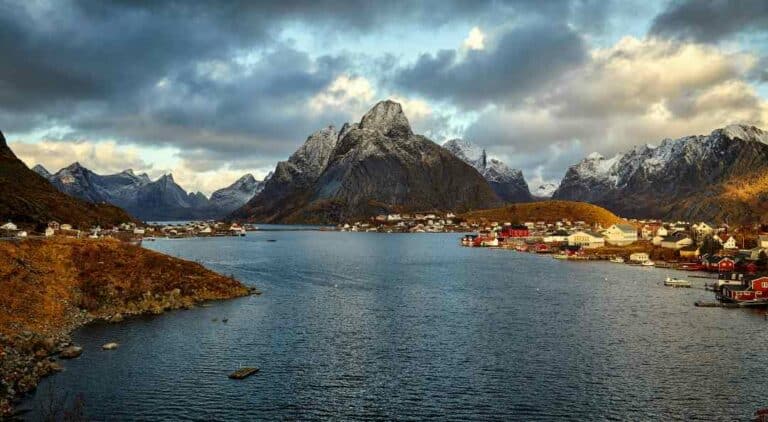
Here in Reine, at the far western end of Lofoten, we watch the fairytale unfold every summer. The illegal parking on narrow roads (a real traffic and safety problem). The hikers cutting corners across private land. Trash left in nature along the trails.
Camper vans often pull over wherever the view is good, regardless of whether it is legal, safe, or welcome. And believe it or not, people actually stop their cars in the middle of the road, even in the middle of a curve, to take photos of the (breathlessly stunning) views.
This often surprises drivers coming behind them, and not in a good way.
Inadvertently, this sparks the same conversation among locals year after year: how do we protect this place without destroying the tourism economy that 1 in 5 jobs here depends on?
This is not an article telling you not to come to Lofoten. It is the opposite; please come. But come knowing what kind of visitor you want to be, and what kind of impact you want to leave.
This article contains affiliate links. If you trust my advice and book something through these links, I may get a small commission at no extra cost to you.
The Lofoten Code of Conduct
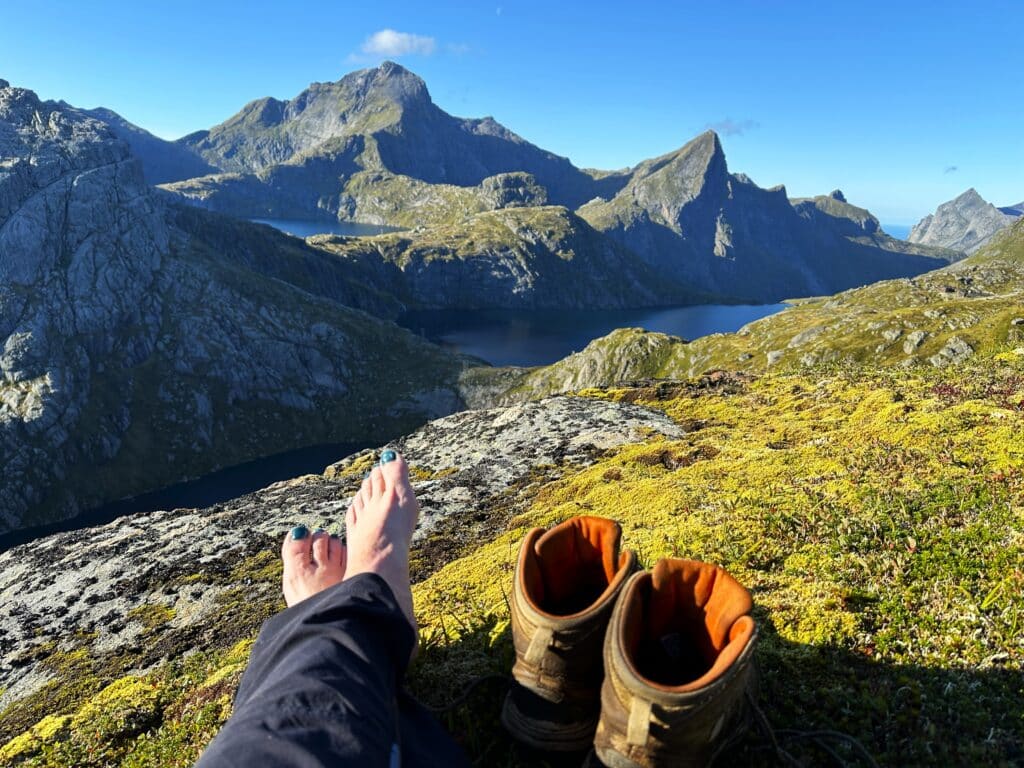
Local authorities have worked with residents and tourism stakeholders for years under the “Destination Lofoten” banner to establish new regulations and to understand how we can inform and influence visitors’ behavior.
Including promoting cultural norms such as “leave no trace” and the mountain guidelines developed from the Lofoten Code of Conduct.
The Code of Conduct is not exactly complicated, but it needs to be shared, read, and understood by visitors to work. Here are the 6 bottom-line bullets:
- Stay on marked trails
- Pack out everything you pack in
- Respect private property
- Pay for parking where payment is required
- Do not disturb wildlife, particularly during nesting season
- Keep noise levels appropriate for a place where people actually live
None of this is particularly radical; rather, it is just basic respect dressed in a specific nature-travel context.
TravelToNorway tips: Best places to stay in Reine:
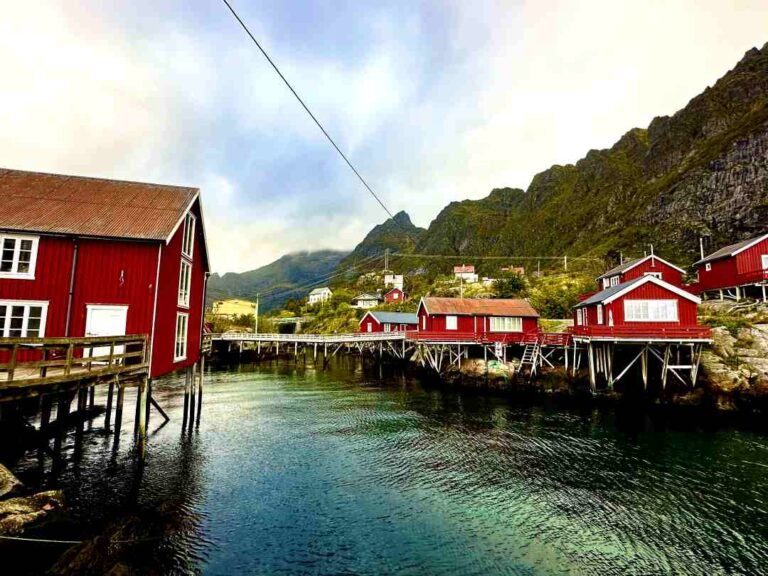
- Eliassen Rorbuer: iconic red fisherman’s cabins under the majestic Festhælen mountain
- Catogården: Charming boutique hotel & activity center in the center of Reine
- Manor House in Sakrisøy Island, a venerable old villa with a view
Parking: The Repeated Issue Locals Talk About
If you ask locals what the single most frustrating tourist behavior in Lofoten is, illegal parking comes up immediately.
The roads here are narrow, sometimes super narrow. Some of them are sooo narrow that two cars passing each other requires one to reverse to a wider section.
When visitors park on the road shoulder, on private land, or directly block passing places to get a photo, it not only annoys people; it also delays emergency vehicles, blocks farm access, and poses genuine safety risks.
So, as you are here, let me share with you how not to be a part of this particular problem:
Pay for your parking. At popular trailheads like Reinebringen, Ryten, and Kvalvika Beach near Fredvang, there are paid parking areas. Use them. The fee goes toward maintaining the infrastructure you are about to walk through.
Do not park on the E10. Ever. There is almost always a proper parking area within a reasonable walking distance. Use the map, plan ahead, and add ten minutes to your walk to the trailhead.
Reinebringen also has a designated parking area in Reine village. Not on the road. Not on the bridge. In the village.
You might walk a bit longer, but you are hiking anyway, and the views are stunning everywhere, so be a part of the solution and park responsibly. We all thank you!
Leave No Trace in the Arctic
The Arctic environment may look robust, surviving all the fierce weather up here, but it is not.
Vegetation that takes decades to establish can be destroyed in a single season of foot traffic. Soil erosion on popular trails is a real and documented problem in Lofoten (hence the construction of several Sherpa stairs to popular summits).
The practical version of Leave No Trace is as follows:
Stay on the trail. When trails get muddy, the instinct is to walk around the mud on the vegetation alongside. This widens the trail, kills the plants, and accelerates erosion. Walk through the mud. Your boots will dry.
Take your rubbish with you. Including cigarette ends. Including the orange peel you were told biodegrades, it does, eventually, but it takes months, and it is still litter in the meantime.
Do not pick the plants. At least moderately. Cloudberries, in particular, are a local resource and a significant part of Norwegian food culture.
Human waste. If you are hiking far from facilities, go at least 50 meters from any water source, bury it if possible, and pack out toilet paper. Yep, all of it, bring it back with you.
Wild Camping in Lofoten — Know the Rules
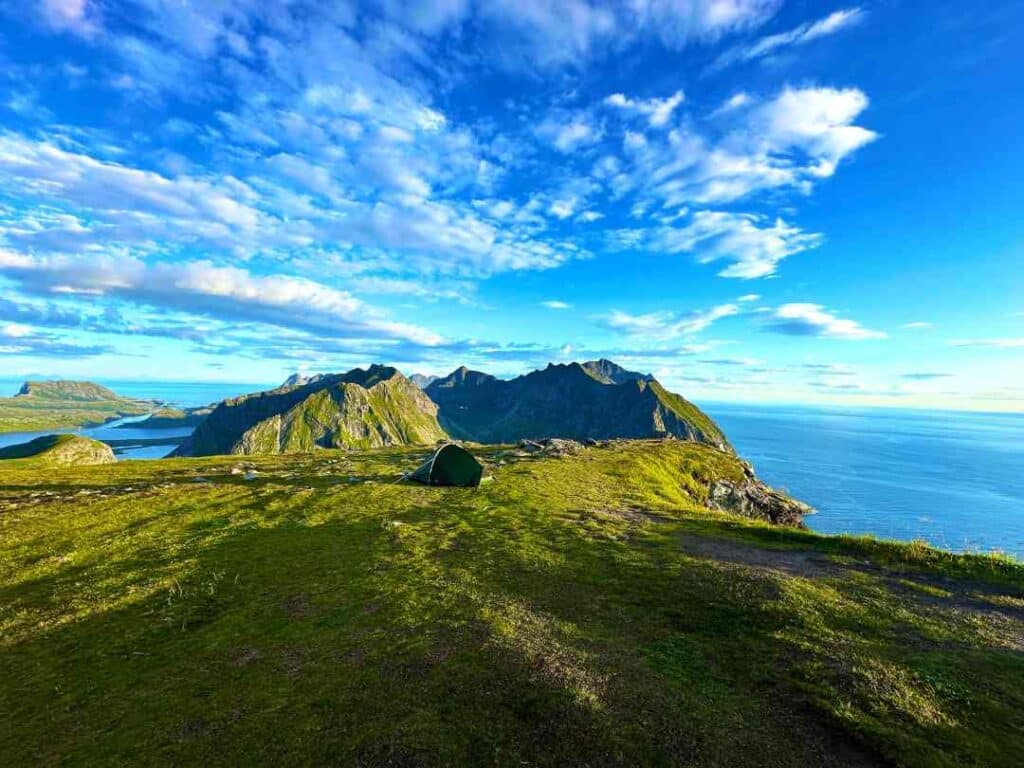
Norway has a right to roam called allemannsretten, which permits camping in uncultivated land for up to two nights in the same spot, as long as you leave no trace and respect private property.
This is a genuine and valued right in Norway, and it is also one of the most misunderstood rules among visitors to Lofoten. However, there are caveats, and not all visitors know about them.
What it does not permit:
- Camping within 150 meters of an occupied house or cabin without the owner’s permission
- Parking a camper van and treating it as a campsite wherever you choose
- Lighting open fires between April 15 and September 15 (Norway-wide ban)
- Camping in areas where local bylaws have introduced restrictions, and Lofoten has introduced several
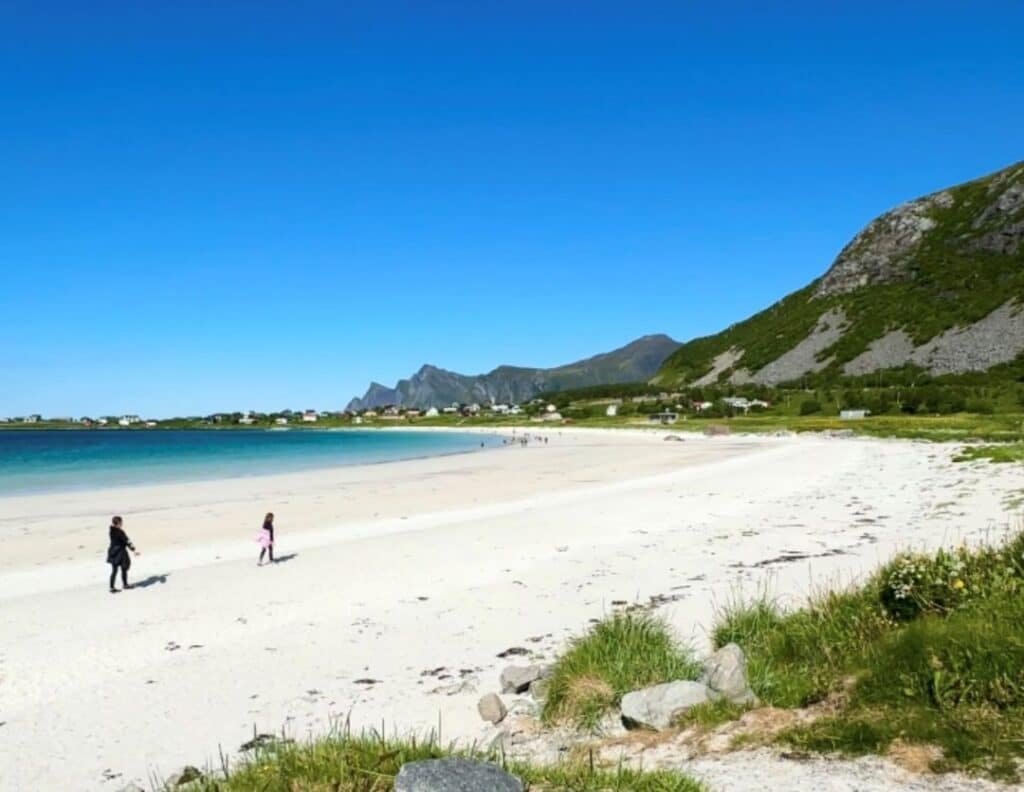
Lofoten has become very popular with campers, for very good reason, but there are several places where you are not allowed to pitch a tent or park a camper van.
Check Visit Lofoten’s website before you arrive, because the restricted areas have expanded in recent years and the information you read two years ago may be out of date.
Also, check the website listing the Lofoten camping map and tent regulations.
If you are traveling by camper van, please use designated campsites/parking sites. There are several good ones, including Lofoten Beach Camp near Skagsanden Beach, which is also one of the best surfing spots in Norway.
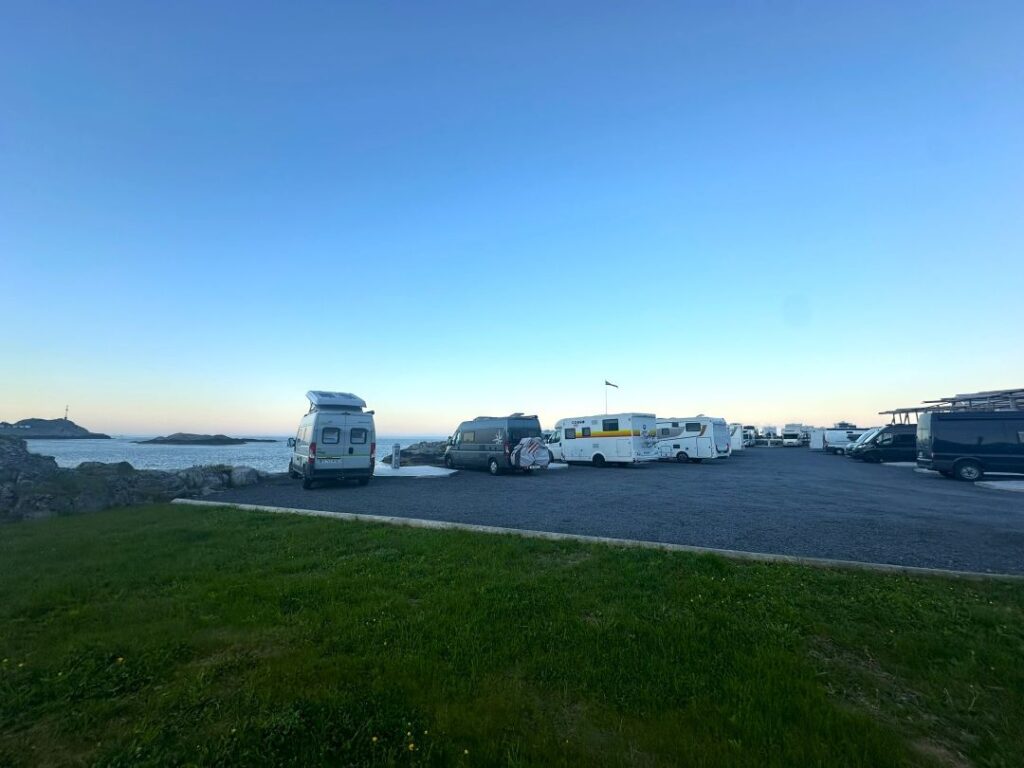
The photo above shows the camper van site in Sakrisøy Island, or you can drive to this place in Reine, with perfect views and amenities such as electricity and water right there.
Using established sites means you give back, the revenue stays in the local community, and the pressure on unmanaged areas decreases. It is a cheap way to give back to the community you visit.
Support Local, Not Just Lofoten-Branded
This one is more important to local communities than you might have thought. And we do know that for travelers, budget is important, and Norway is not on the cheap end.
However, here’s the thing: foreign tour operators and guides bring tourists into the region but contribute little back.
They do not pay the national taxes, insurance, and fees that Norwegian companies are required to pay to offer their services. They often don’t shop locally, and yet use the same roads, parking, and trails while undercutting the prices of local companies that actually follow the rules.
So when you book a tour, a kayak trip, a boat transfer to Bunes or Horseid beach, or a photography workshop, please try to choose one with a local operator with local staff.
Not any company that markets itself with Lofoten imagery but is registered and operated elsewhere.
The same goes for accommodation. A rorbu booked directly through a local family-run resort website keeps the money in Lofoten. A booking routed through a large international platform or large hotel chain that charges 20% commission keeps less of it here.
Eat at local restaurants, at least one or two. Buy stockfish from local producers. Get your coffee at the small cafe. None of this requires a particularly big sacrifice, and the local options are genuinely excellent.
It just requires a small amount of intentionality on your part and will be highly appreciated.
Travel Off-Season (Your Trip Will Be Better Anyway)
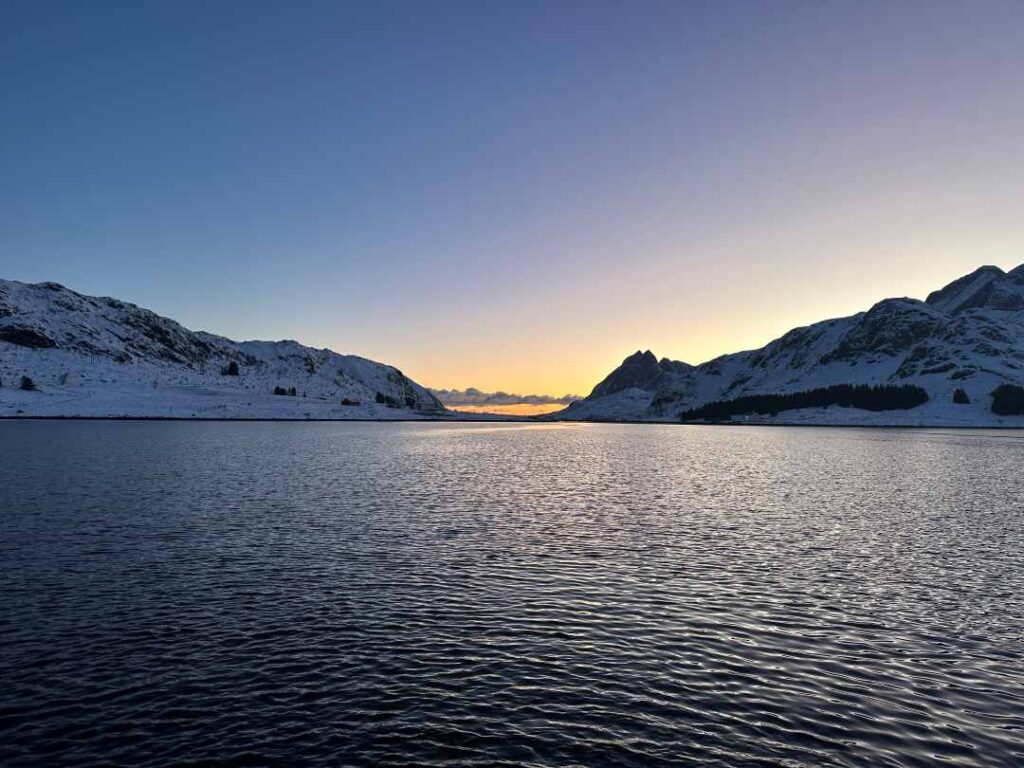
Summer is incredible in Lofoten with 24/7 daylight, midnight sun, and the most breathtaking scenery. This is also when the largest share of the million people shows up.
So know that visiting during spring or autumn means the weather is still pleasant most of the time, but the islands, rorbu’s, and hikes are far less crowded.
What you get in shoulder season that you do not get in July:
- Empty beaches
- Parking that does not require thirty minutes of circling
- Restaurants you can walk into without a reservation
- Locals who have time to talk to you
- Autumn light and weather, which is extraordinary
- The northern lights, from late September onward, until late March
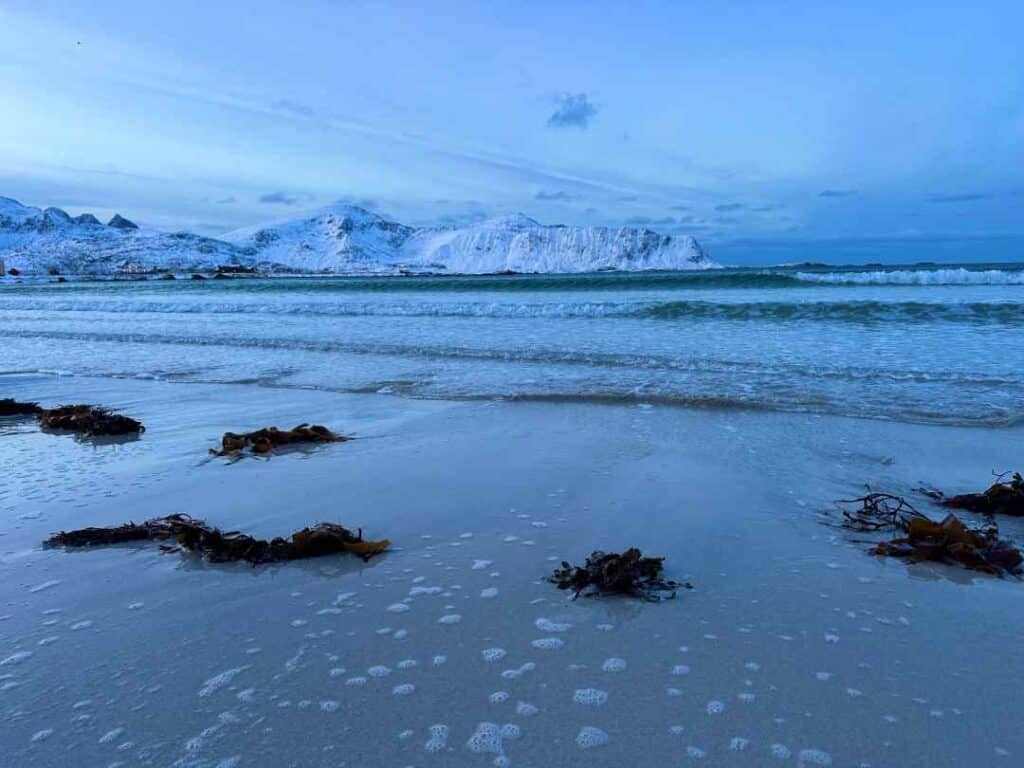
Winter in Lofoten is its own world entirely; it can be dramatic, quiet, or raging, cold, and genuinely spectacular if you are prepared for it (packing rules of thumb: layers, wool, rain and windproof, warm outerwear).
The mountains look completely different with snow-covered peaks in the blue winter light.
The winter light is very different from the glowing summer light, which makes the whole experience different. Although the Arctic winter is not for everyone, for the right kind of traveler, Lofoten in winter is one of the best things Norway has to offer.
To avoid the crowds, spreading tourism more equally across the year is one of the most concrete things you can do to contribute to reducing pressure on the islands.
We also encourage longer stays and slower travel, especially staying longer in one place (less traffic), and joining experiences outside the peak season to reduce pressure. This is a priority to promote for local operators who take sustainability seriously.
So just by intentionally choosing your travel dates, if you can, you are making a difference.
The Visitor Tax: What You Need to Know
Visitor tax has been normal in many popular destinations for years, but in Norway, this is about to be implemented in 2026/27.
The Norwegian government has introduced a visitor tax system from July 2026, where the revenue will go toward improvements in local infrastructure, including better parking facilities, toilets, and more trail maintenance and signage for hikers.
In Lofoten’s case, the revenue is specifically intended to fund the infrastructure that tourism itself creates demand for.
So please pay it without complaint (although Norway is not a cheap destination, we know). It is the right thing to do to be a conscious and regenerative traveler.
Sustainable Travel in Lofoten: The Short Version
If you have read this far, you are already the kind of traveler Lofoten needs more of. But here is the condensed version for easy reference:
- Park legally, and pay for parking where required
- Stay on marked trails, and yes, walk through the mud
- Pack out everything, including cigarette ends
- Know the wild camping rules before you pitch
- Book with local operators and stay in locally owned accommodation
- Eat at local restaurants, buy from local producers
- Consider traveling outside July and August
- Pay the visitor tax when it applies
Why Sustainable Travel in Lofoten Is Critical
Well, because Lofoten is not a man-made theme park.
It is a natural archipelago where people live, work, fish, raise children, and grow old. The mountains, fjords, and beaches that bring a million visitors a year are also someone’s backyard, someone’s fishing ground, and someone’s road to work.
The nature in Lofoten is also resilient in the sense that it “survives” fierce winter and seasonal storms, however. It is also a very fragile ecosystem that, once destroyed, takes a very long time to regrow (unlike destinations in warmer parts of the planet).
Lofoten has been designated a Sustainable Destination by Innovation Norway, a certification developed alongside the tourism industry, research institutions, and national authorities, and recognized by the Global Sustainable Tourism Council.
It is very important to understand that that is not a trophy pillow to rest on, but a commitment to keep working on a development that is not stopping and that does not have an easy solution.
What does Lofoten have to do to keep the certification?
The destination organization for Lofoten must regularly monitor things such as:
- Visitor numbers
- Local residents’ attitudes toward tourism
- Waste management
- Traffic and congestion
- Nature conservation
- Cultural heritage protection
- Local economic benefits
- Climate impacts
The pressure is real. During the peak summer season, cruise tourists and land-based tourists combined often outnumber the local population. Infrastructure built for a quiet fishing community is now handling traffic volumes it was never designed for. Nord.no
The good news: most of the damage is done by a minority of visitors. The conscious traveler — the one reading an article like this — is not usually the problem. But knowing the rules still matters, because good intentions without information are not enough.
Wrap-Up Sustainable Travel In The Lofoten Islands
Lofoten is, without exaggeration, one of the most extraordinary places on earth. The mountains, the beaches, the light, the villages — it earns every superlative it gets. Keeping it that way requires that visitors treat it accordingly.
Come. Stay longer than you planned. Spend your money here. Leave it exactly as you found it.
That is the deal.
Living in Lofoten and have questions about specific areas, trails, or responsible operators? Leave a comment below — I am happy to give you a straight answer.