Norway In December: What to Actually Expect (From A Lofoten Local)
Is traveling to Norway in December a good idea? As a native, I actually find December to be a really nice month to be in Norway. Not because I like walking like a penguin on icy sidewalks, but because after two months where days get shorter and darker by the hour, December kind of lights us up again.
This is the advent month; there are lights everywhere, restaurants serve traditional Norwegian food, and snow is beginning to fall, brightening our surroundings, making everything quiet and glowing.
If darkness and cold weather genuinely get you down, this might not be your month. However, if you want an Arctic winter getaway and don’t mind the short days (or, further north, no “days” at all), yet a lot of cozy vibes, December in Norway delivers.
Let’s break it down properly, region by region.
Quick Facts: Norway In December
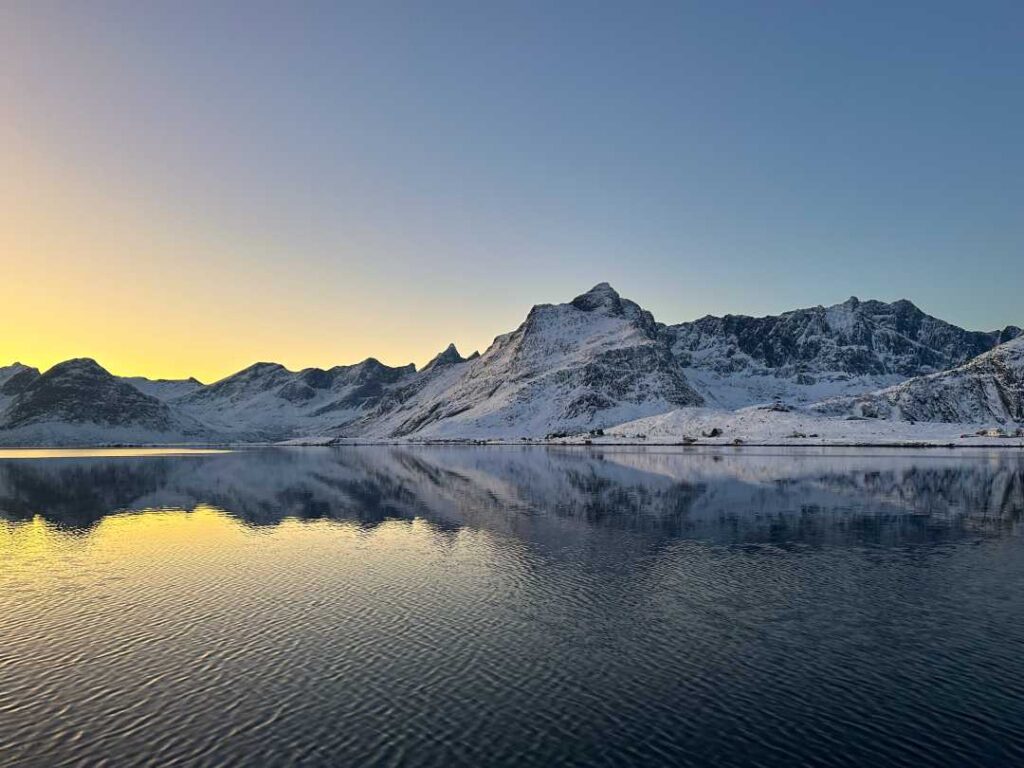
- Temperatures: roughly -7°C to 3°C (20-37°F), depending on region and how close you are to the coast
- Daylight in Oslo: about 5-6 hours
- Daylight in Tromsø: none! Tromsø is in polar night from late November to mid-January
- Snow: fairly reliable in the mountains and the north; hit-or-miss on the west and south
- Christmas markets: running in every major city throughout the whole month
- Traditional Christmas food: ribbe (roast pork belly), pinnekjøtt (salted lamb ribs), cod, and, if you’re brave, lutefisk (untranslatable, but it is white fish prepared in lye (!!).
Also read: Seasonal Work in Lofoten: Jobs, Housing, Visas and How to Apply
Ramping Up To December
October and November in Norway can feel a bit flat, to be honest. The autumn colors are long gone (September is the month for that), the leaves are down, and the autumn storms start rolling in.
Then December arrives, and the whole country seems to wake up in a muffled, soft way, protected by thick winter coats and hats, holding a steaming hot “gløgg” while exploring one of the hundreds of Christmas markets or parties.
Town centers fill with lights, the first snow falls, and everyone is either heading to or coming home from a julebord, a Christmas party. Norwegians take this tradition seriously, and going to one or two per week starting sometime in November is not uncommon (exhausting and fun).
December is, without competition, the most festive month of the Norwegian year.
Even with the short days, you’ll find koselig everywhere, a word that doesn’t translate cleanly into English but sits somewhere between “cozy” and “charming.” Think candles, wool socks, a crackling fire, hot drinks, warm lighting, red wine, food, and nobody apologizing for any of it.
Weather In Norway In December: Region By Region
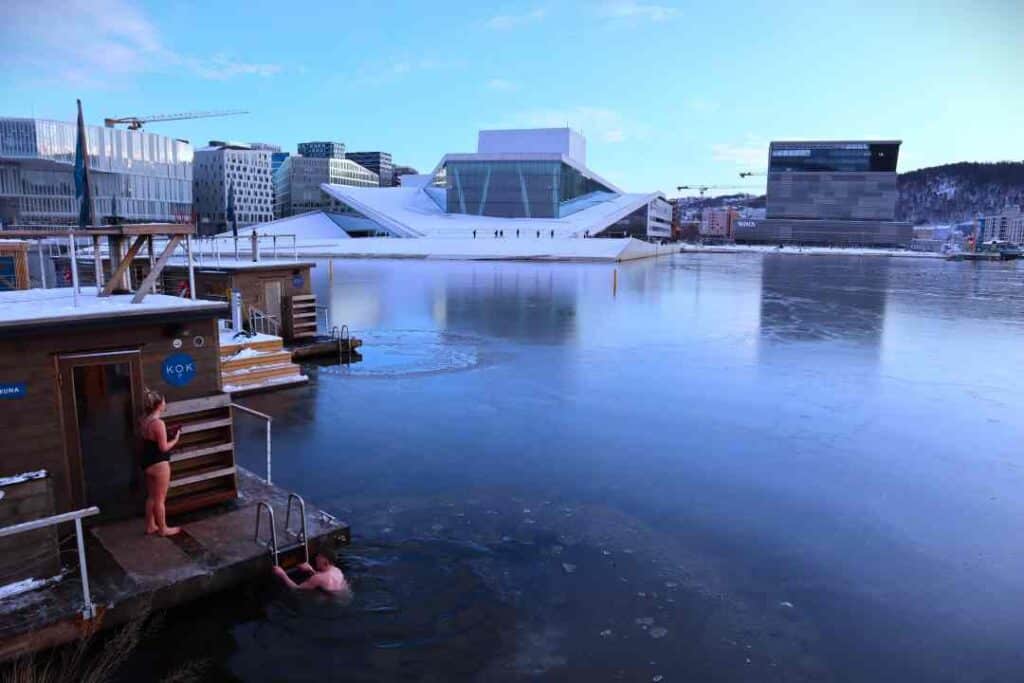
One thing you need to understand, though: Norway is roughly 1,650 miles (2655 km) from south to north, plus a few hundred more if you count the northeastern corner near Russia.
So, obviously, December in Oslo and December in Tromsø, above the Arctic Circle, are barely the same season.
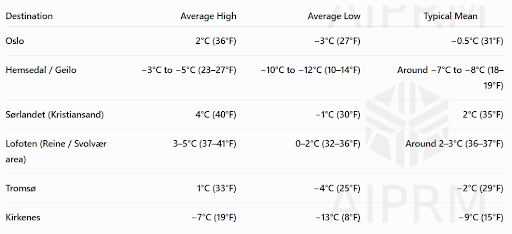
Northern Norway (Bodø, Lofoten, Tromsø, Alta, Kirkenes)
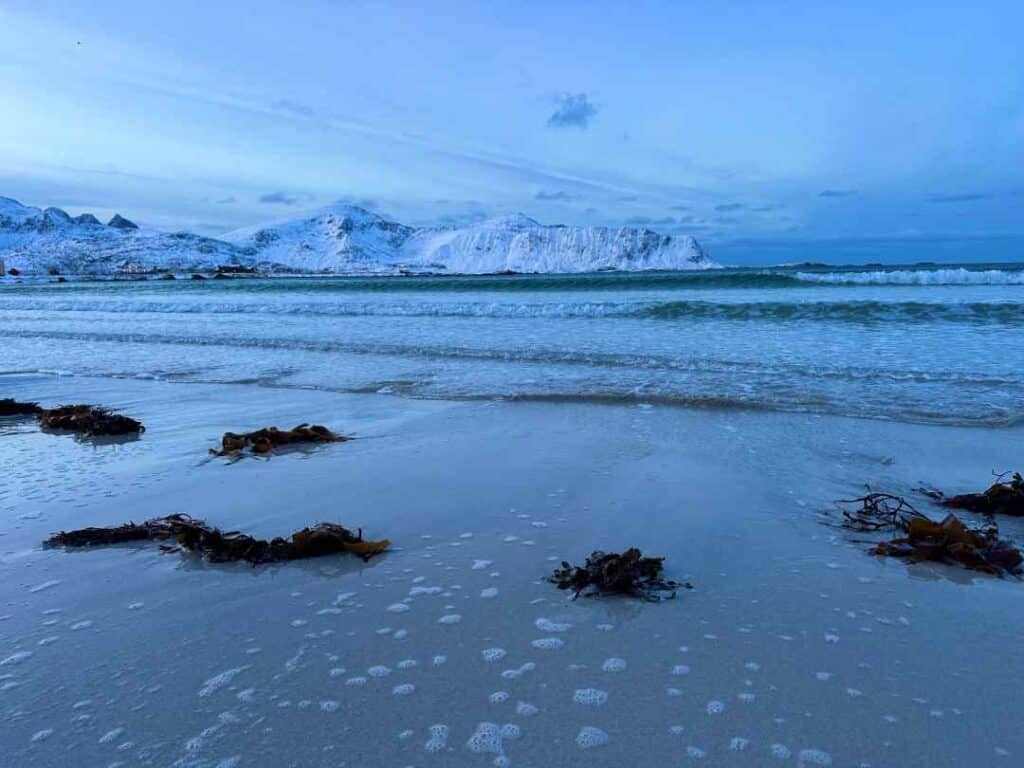
Snow is close to guaranteed inland and at higher elevations up north by December.
Coastal areas, Lofoten included, where I live, get snow too, but the Gulf Stream and its minions keep temperatures milder than you’d expect this far north, so rain is also part of the picture.
Don’t pack for Siberia (unless you go to Finnmark County), but definitely pack for the changeable weather. It can be cold and clear, cold and snowstormy, or cold and wet and rainstormy. So yeah.
Bring thick coats, hat and mittens, water- and windproof outerwear, warm boots, and layers of warm wool or thermal clothes (just like in summer. Layers are important any time of year.
Also think about the activities you want to do while here. In December, you can still go kayaking, and also go hiking in some mountains in the north, as well as go on fishing trips in Lofoten. High season for skrei, the huge seasonal cod, is January through April in the Lofoten Islands.
Whale watching is also very popular. So make sure you stay warm!
Eastern Norway (Oslo, Lillehammer, Geilo, Hemsedal)
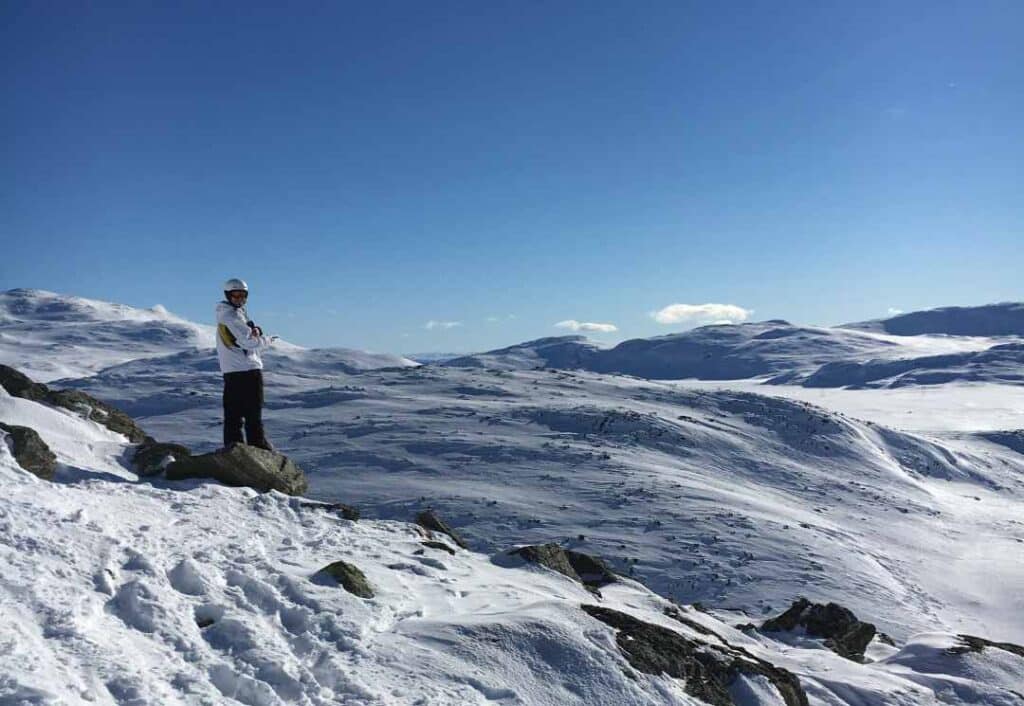
The term Østlandet in Norwegian means “Eastern Country”, but this term encompasses Oslo, the regions around Oslo, and also the mountain areas south of Trondheim, or south of the Rondane mountains, more like.
In December, you have good snow odds, especially in the mountains. Lillehammer, Geilo, and Hemsedal (above, my favorite alpine skiing destination) are normally reliable for skiing (but never guaranteed).
Oslo itself often gets snow later in the month, as the city sits close enough to the coast and is definitely not guaranteed early on.
Central Norway (Røros, The Mountains, Trondheim)
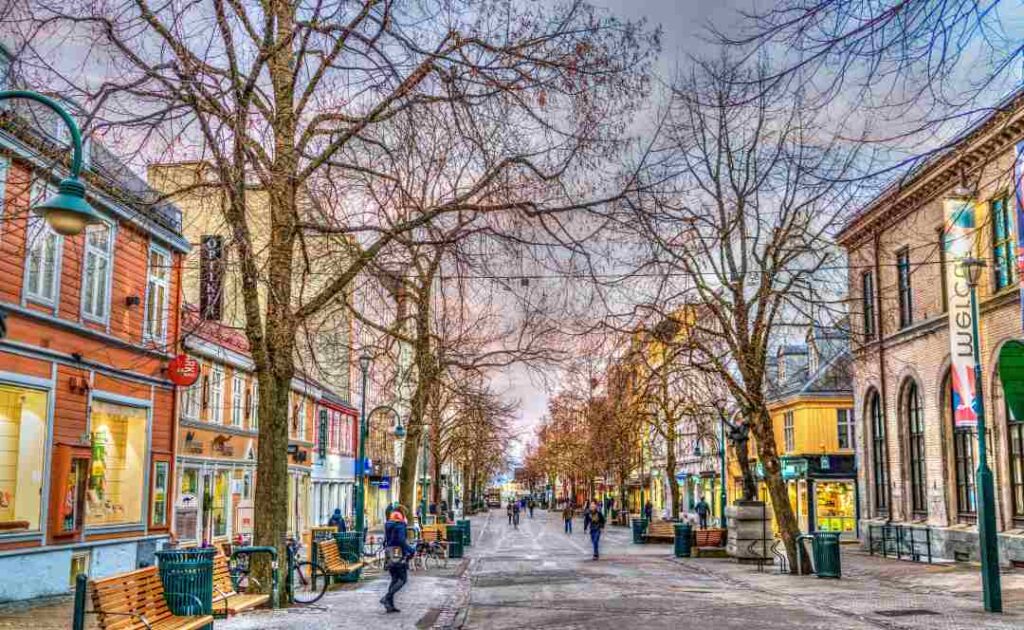
Midt-Norge translates to “central Norway”, but this area is the northern part of the west, the mid-country area just called “the mountain,” and all the way up to Trondheim (the Medieval town and old capital) and a bit beyond.
Røros, an inland historic town, tends to be genuinely snowy and holds cold-temperature records year after year. Røros also has a famous Christmas market, where warm clothing is not optional. It is, in fact, registered as the coldest place in Norway for decades.
Trondheim is located on the coast and typically can get both snow and rain in December.
Western Norway (Bergen, Ålesund)
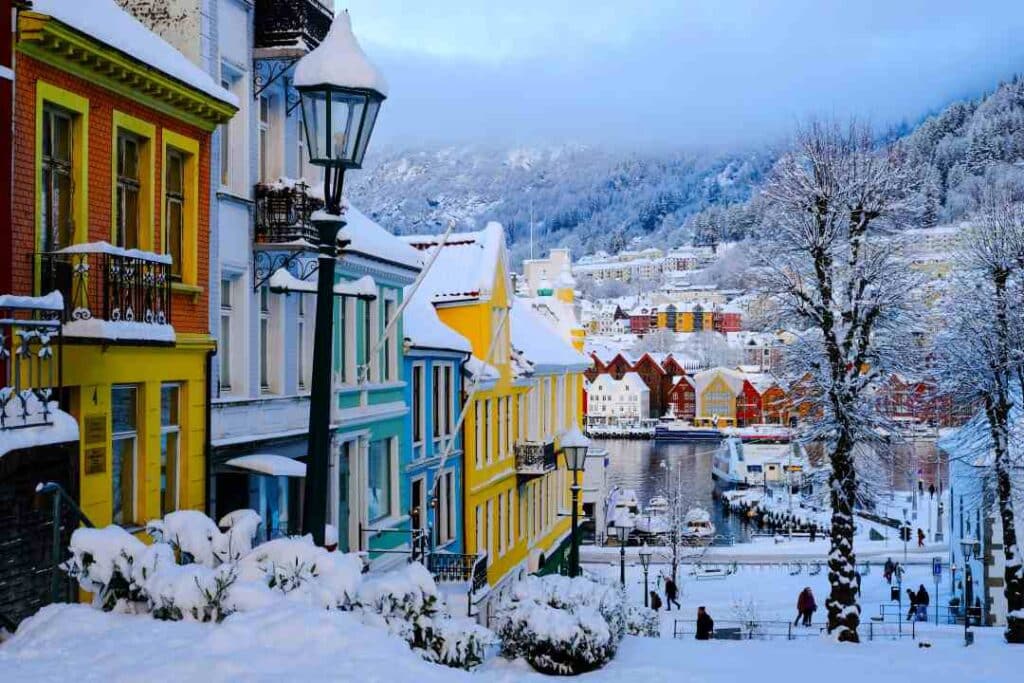
The mildest, wettest option is the western region of Norway. This is basically true any time of year, to be honest.
Bergen is the long-term record holder for the number of annual rainy days and will probably hold that record indefinitely.
Coastal cities like Bergen and Ålesund are less likely to see snow at sea level, though inland fjord areas and higher ground not too far away can still deliver real winter weather in December.
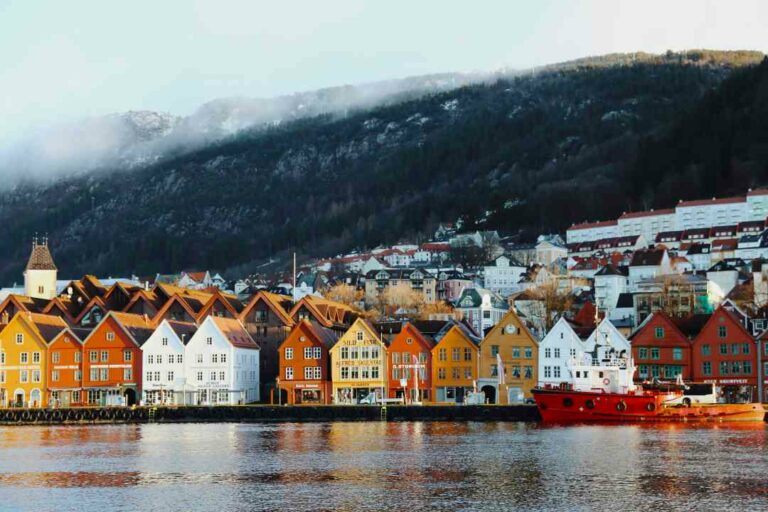
Bergen is super charming in December, but if you also want some real winter experience, consider nearby destinations like Voss and Myrkdalen, or even Geilo Ski Resort (where the east meets the west).
Southern Norway (Setesdal, Kristiansand, and the south coast)
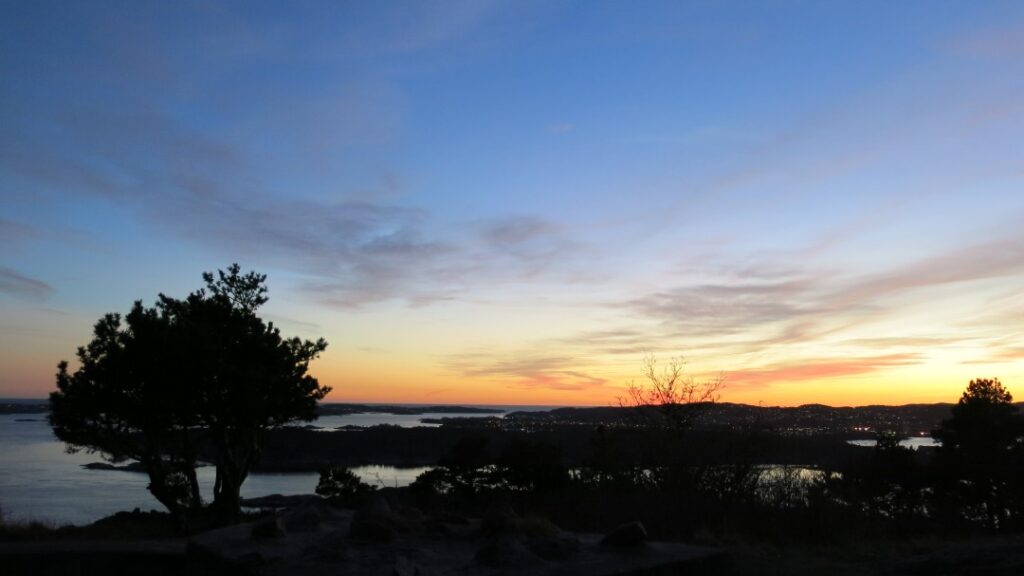
The south is the summer pearl of Norway, with charming, mellow destinations like Kristiansand, Mandal, and Arendal. All tucked in small bays by the sea, and the people here are smiling and “mellow”, too.
When it comes to snow and winter, there are lower odds of that sensation along the coast, but inland valleys and mountains like Setesdal might offer a proper snowy escape even in December without traveling all the way north. Maybe.
Bottom line: if snow is the whole point of your trip, go north or go up into the mountains. Don’t gamble on the coast or the south.
Northern Lights & Polar Night: What Are The Odds?
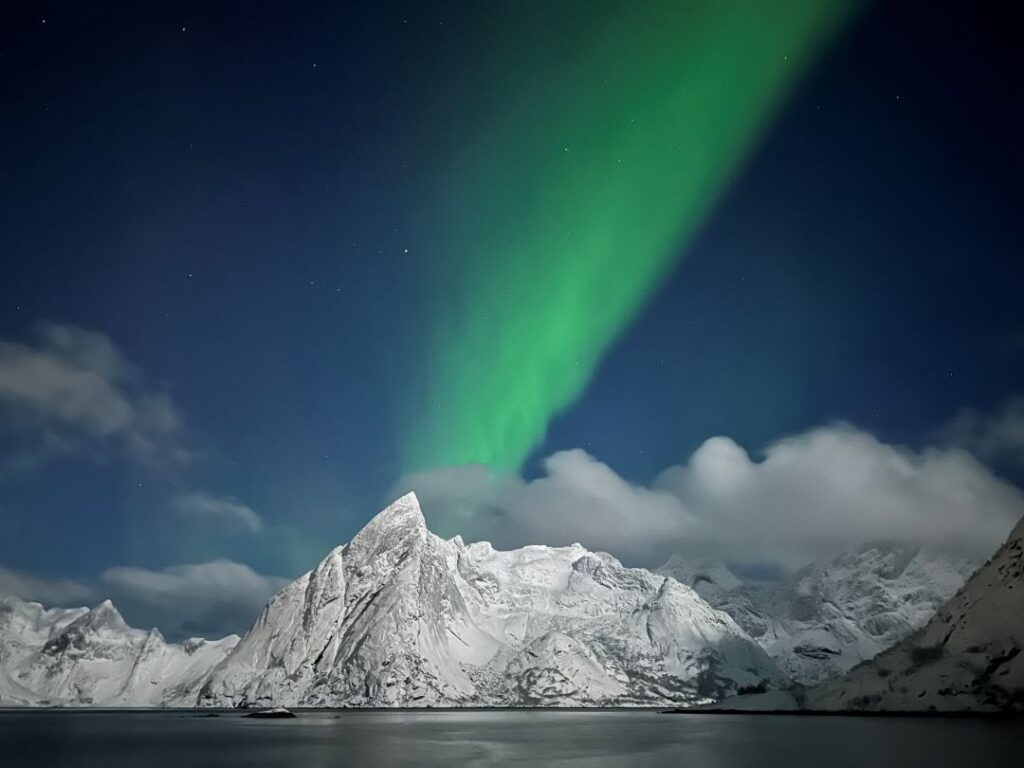
December is peak season for the Northern Lights, and this isn’t marketing; it’s pure physics.
Long, dark nights, Polar Night in the north, and clear, cold air are exactly what you need to see the aurora. The farther north you go, the better your odds.
Here’s the part people often misunderstand: the polar night doesn’t mean total darkness around the clock.
The Arctic Circle sits at roughly 66°33′ North, running through Nordland county, the same county my home, Lofoten, belongs to (and yes, the line technically shifts about 14 meters a year, which tells you something about how arbitrary these boundaries really are).
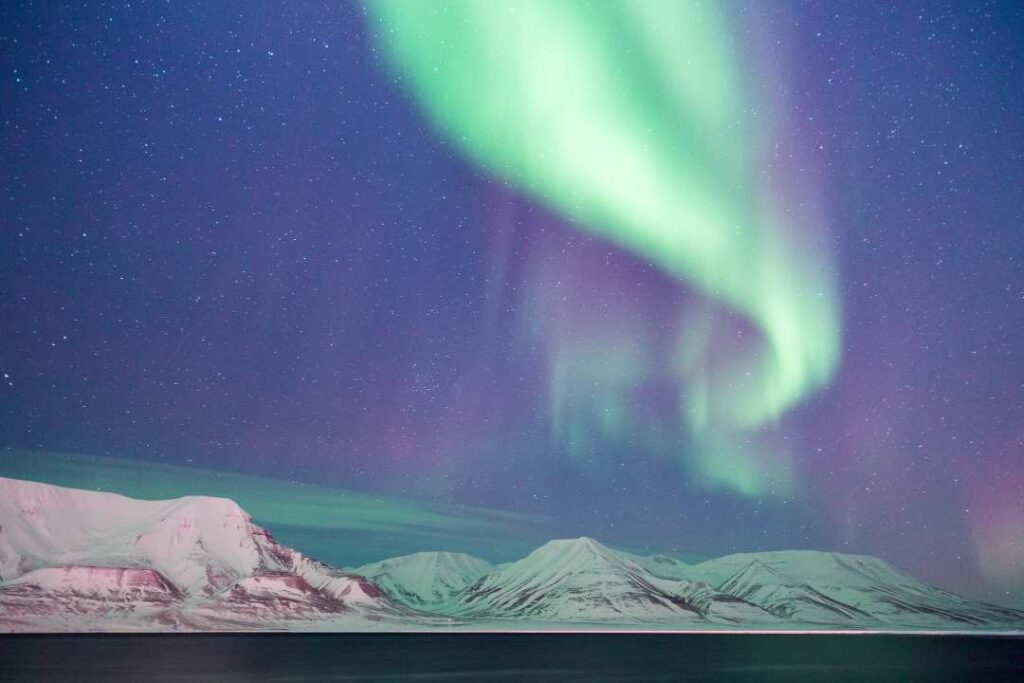
North of that line, the sun stops rising above the horizon for some stretch of the winter. The closer to the North Pole, the longer that stretch.
In Tromsø, that means no sunrise from late November to mid-January. But between roughly 10 am and 2 pm, the sky still runs through shades of blue, pink, and orange, a long twilight rather than true black.
It’s genuinely one of the more beautiful qualities of light you will ever see.
In Lofoten, where I live, the effect is softer. We’re well above the Arctic Circle, but the coast and the surrounding mountains mean the character of the darkness is more about missing direct sun for weeks than sitting in total black.
Oslo, further south, doesn’t experience polar night at all; you’ll still get your 5-6 hours of proper daylight there, and even see the sun
If you’re chasing the aurora specifically, Bodø, Lofoten, Tromsø, Alta, Kirkenes, and Svalbard (the island group north of the Norwegian mainland) are your best bets. In Oslo and the south, seeing the Aurora Borealis is pretty much just luck.
Also read: The 10 Commandments for Driving in Lofoten: A Practical Guide for Visitors
Oslo In December: What To Do?
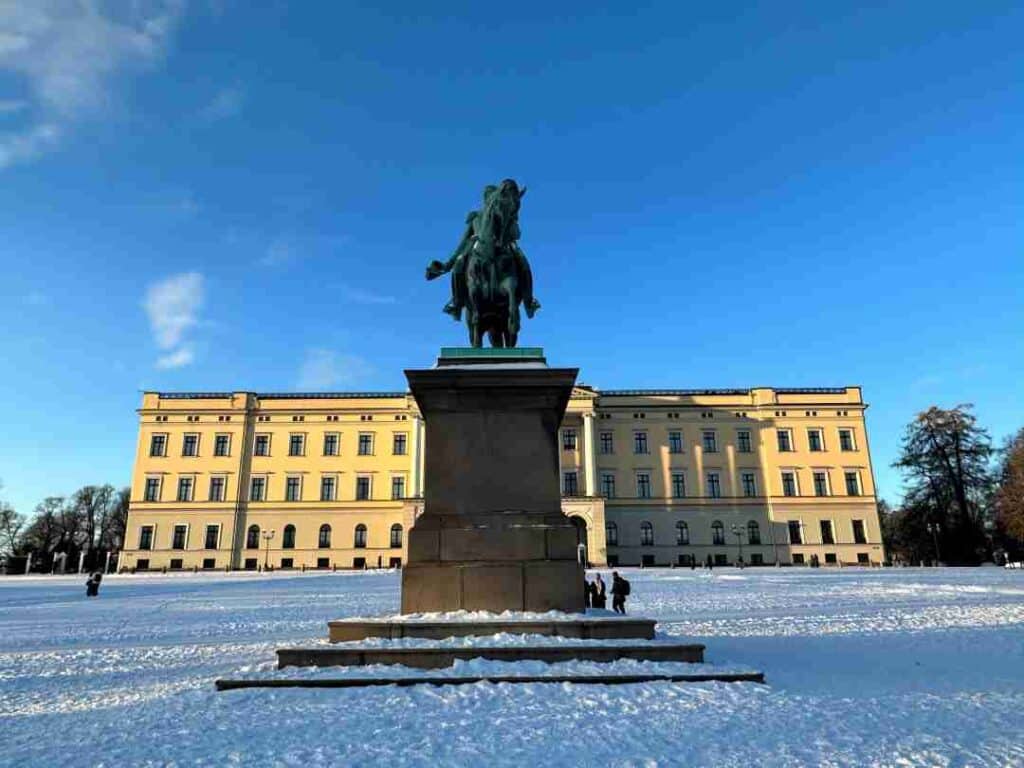
Oslo isn’t a guaranteed snow destination in December, but as a growing, trendy capital, it’s not short on things to do, indoors or out. I lived there for 20 years, so here’s the curated quick list, signed yours truly.
- Christmas markets — Spikersuppa, right in front of the Royal Palace, and Jul på Tollboden for crafts and food
- Ice skating at the outdoor rink at Spikersuppa
- Skiing or sledding at Holmenkollen — panoramic views, the ski jump tower, and groomed trails for every level
- A winter fjord cruise on the Oslofjord — quiet, snow-dusted, worth the extra layer
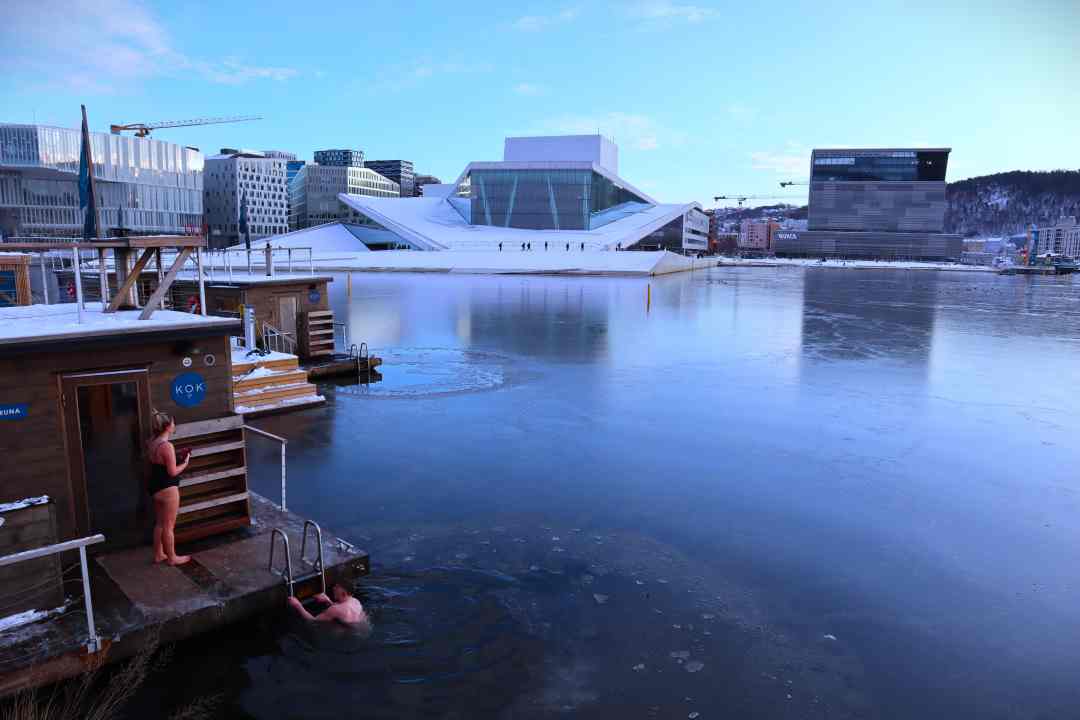
- The Oslo Opera House — walk the sloped marble roof, and check if a holiday performance is on
- The Munch Museum, a grey, modern, cold-looking tower on the waterfront, which is warm inside and worth a visit regardless of season
- Aker Brygge and Tjuvholmen for winter lights along the water
- Karl Johans gate, the main street, strung with lights toward the Royal Palace (above).
- The Nobel Peace Center is genuinely worth your time, not just a box to tick
- The Viking Ship Museum, Kon-Tiki, and Fram Museum are three warm, history-dense indoor escapes
- A Norwegian sauna by the sea at Sørenga or Aker Brygge, cold plunge included in the fjord if you’re up for it
- Cross-country skiing in Marka, the forest ringing the city, a short metro ride away
- A Christmas concert or midnight mass at Oslo Cathedral or Gamle Aker Church
- Grünerløkka’s cafés for gløgg, hot chocolate, and people-watching in the dusky daylight
- The Bygdøy Peninsula ferry with museums surrounded by quiet, snowy walking paths
Best Destinations For Winter Activities & Adventure
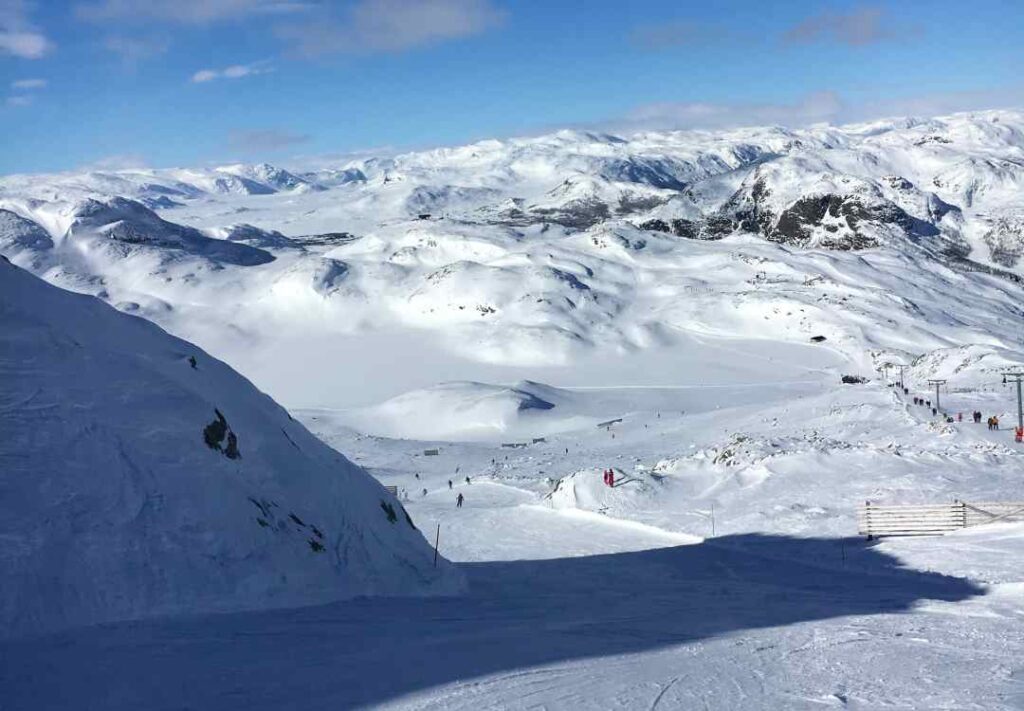
- Skiing: Geilo, Hemsedal, Gol, Trysil, Voss, or Myrkdalen for both alpine and cross-country; Marka around Oslo, Sjusjøen, and Røros for cross-country
- Dog sledding and snowmobiling: widely available across the north, Tromsø and Alta especially
- Snowshoeing: a low-effort way to get into snowy terrain without falling on your face every ten meters. As long as there is snow, you can go snowshoeing anywhere.
- Whale and fjord cruises: orcas and humpbacks show up off Andøya Island and Tromsø’s coast in December, and the boat tours are legitimately worth it
- Reindeer safaris: mostly in Sami-run operations around Tromsø and further north
Best For Christmas Traditions & Festive Atmosphere
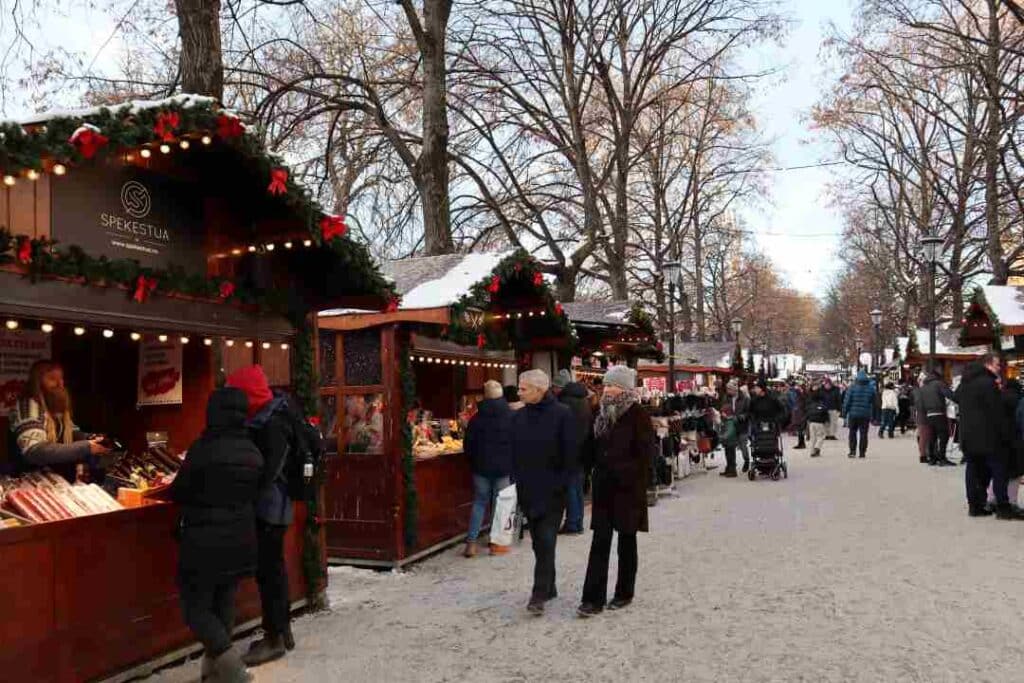
Norwegians take Christmas seriously, and December is built around it almost everywhere with lighting, decorations, and Christmas markets like the one in Oslo (above).
- St. Lucia Day (December 13th) with processions of white-gowned singers carrying candles, part Christian tradition, part older Norse light-in-the-darkness ritual
- Julebord is the Norwegian word for “office or friend-group Christmas party”, running through the whole month (and earlier), and yes, they get loud. Most common for groups, but you can book a table and make your own, trying out our typical Christmas food.
- Traditional Christmas food like ribbe, pinnekjøtt, cod, and lutefisk should be on your list, none of which will win a beauty contest, but all of which mean something here
- Christmas markets are everywhere; you can find them in Oslo, Bergen, Trondheim, Tromsø, Røros (the coldest place in Norway), and more, each of which has its own distinct local character
Best For Cozy Culture: Embracing The Polar Night
Norwegians don’t fight the dark; they build a whole culture around it, which you will find out soon enough.
Candlelit cafés, wool blankets, hot drinks, and long conversations that would feel forced anywhere else feel completely normal here in December.
If you find yourself annoyed by 3 pm sunsets, borrow the local approach: light more candles, make more coffee or gløgg (a sweet, hot brew), and stop checking the clock.
Important: Driving In Norway In December
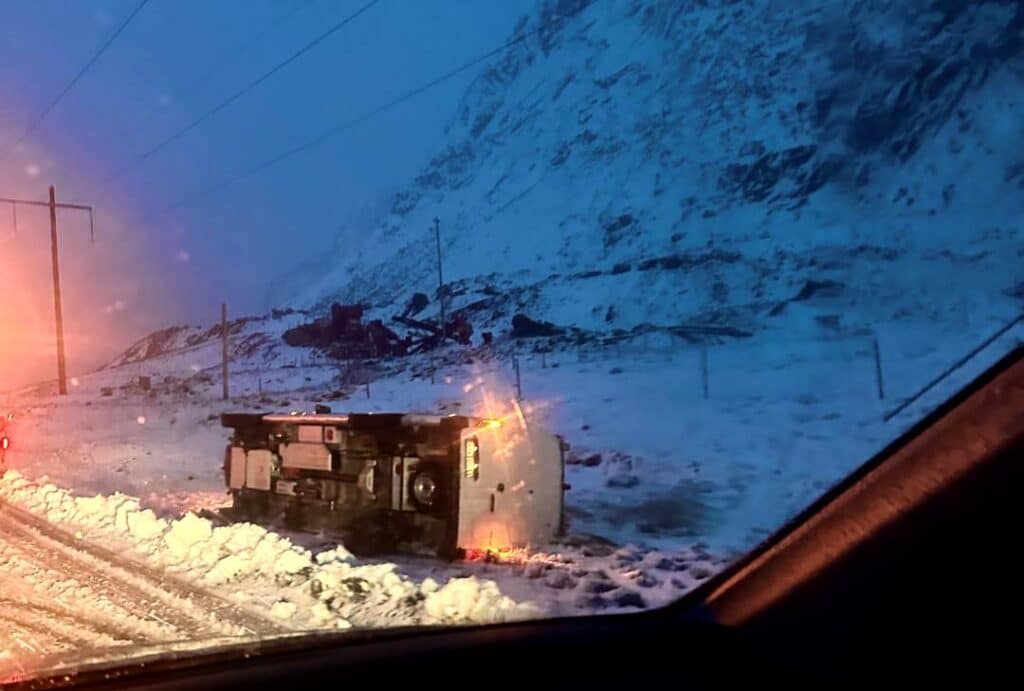
If your plan includes a winter road trip, know this before you rent the car: winter driving here is its own skill, and narrow roads with hairpin curves and steep elevation changes don’t always forgive inexperience.
The photo above is from Lofoten last winter. Dont worry, no one was seriously hurt here, but you dont want to end up like these guys.
In my area of Lofoten, the rescue trucks are super busy during the winter season, helping tourist drivers like these get back on the road after they slip off
If you plan on a December road trip and you are not used to driving during winter, I highly recommend you read my winter driving guide before you start.
Also, make sure your (rental) car has proper studded winter tires, ideally a four-wheel-drive vehicle on the heavier side if you’re heading into the mountains or up north. And check mountain pass closures, bridges, wind conditions, and the weather forecast before you commit to a route.
Brodder (ice cleats for your shoes) is a really good idea for winter hikes, even if you have not yet reached pension age.
Also read: The 10 Commandments for Driving in Lofoten: A Practical Guide for Visitors
Top December Destinations In Norway
- Oslo for Christmas markets, museums, nightlife, and cross-country skiing 20 minutes from downtown
- Bergen for festive vibe and seafood. Milder and wetter, but still worth it
- Røros for a genuinely cold, snowy, historic wooden town, UNESCO-listed, and highly underrated
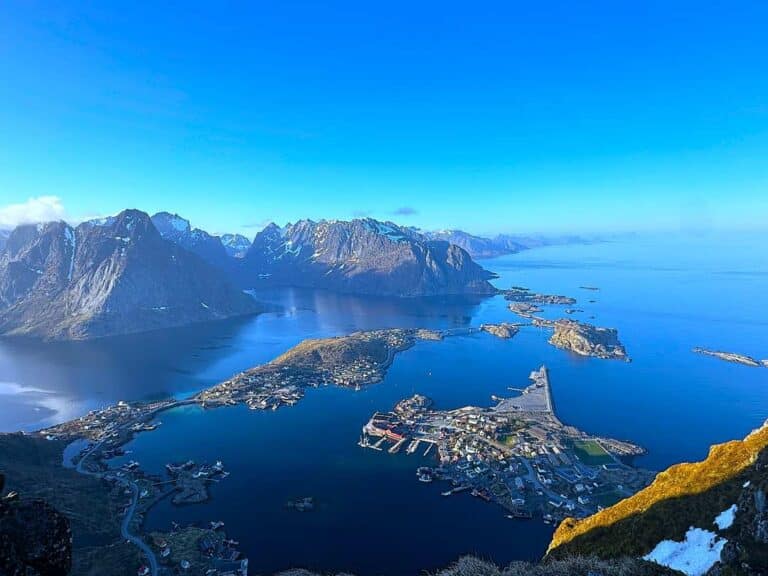
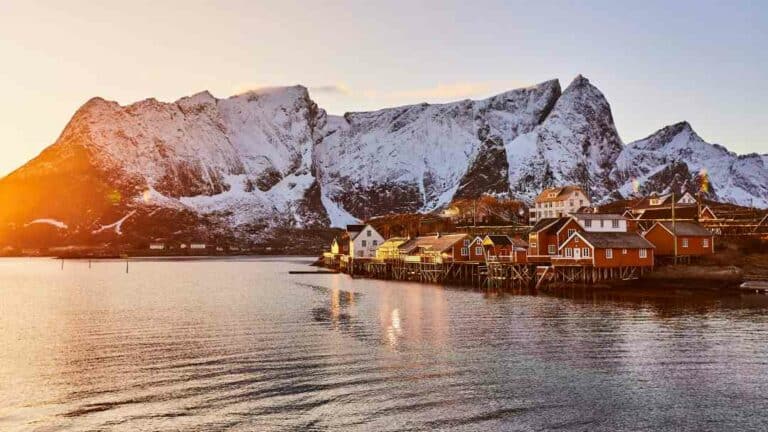
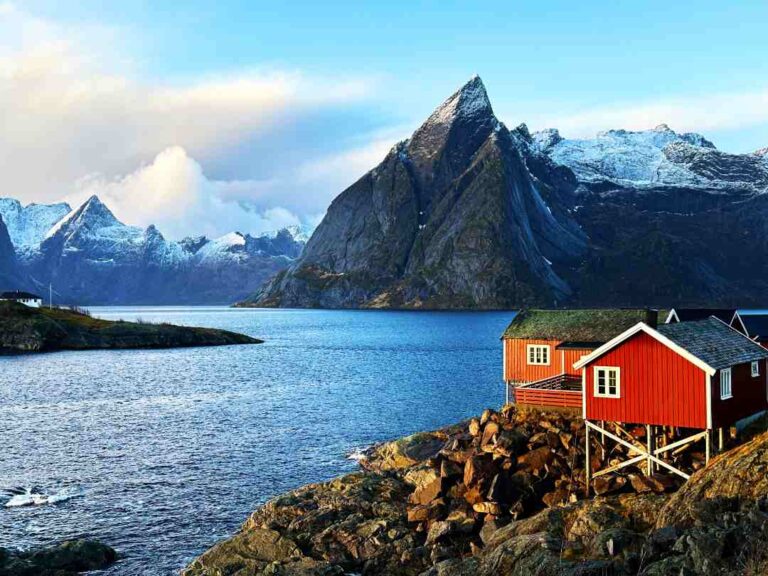
- Lofoten for dramatic snow-capped peaks, breathtaking views, fishing villages, and milder coastal temperatures than you’d expect this far north (but brace for storms)
- Tromsø for Northern Lights, Polar Night, whale watching, genuine Arctic city energy
- North Cape (Nordkapp) for extreme, remote, polar night in full effect
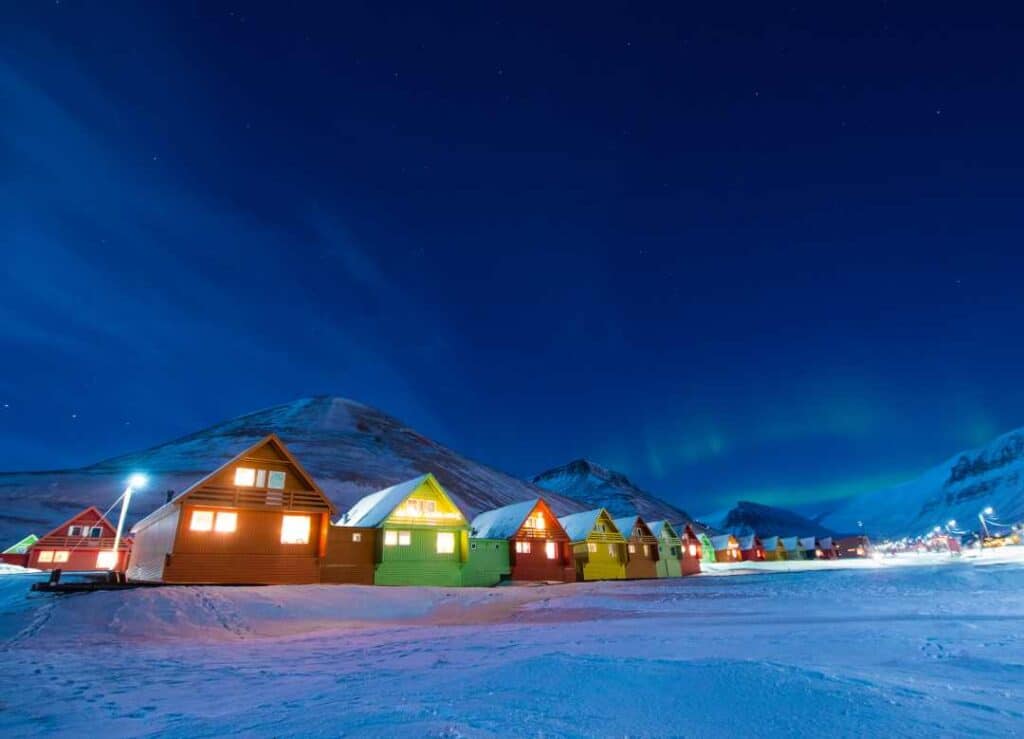
- Svalbard for the real Polar deal: close to four months of continuous winter darkness
FAQs: Norway In December
Will there be snow in Norway in December?
Yes, probably. Especially inland and in the north. Lillehammer, Røros, Hemsedal, and Tromsø are reliable. Bergen and Stavanger in the west are milder and wetter, so snow there is more of a maybe, as is in the south.
Can I see the Northern Lights in Norway in December?
Yes, December is a good month for it, particularly above the Arctic Circle in Tromsø, Alta, Kirkenes, and Lofoten. In fact, the Northern Lights usually start appearing in late September and are common until March. Oslo and the south rarely see auroras.
Is it too dark to enjoy a trip to Norway in December?
No, though it changes what your day looks like. Even during polar night, there are several hours of blue-toned twilight, and the cities are lit up for exactly this reason. Skiing, dog sledding, aurora tours, and Christmas markets all work fine around limited daylight.
What should I pack for Norway in December?
Thermal base layers, a proper waterproof winter jacket, wool sweaters, insulated boots, a hat, gloves, a scarf, and ice cleats for your shoes. Layering matters more than any single “warmest” item — you’ll move between freezing outdoor air and overheated Norwegian interiors constantly.
Is there polar night everywhere in Norway in December?
No. Polar night starts at the Arctic Circle, roughly 66°33′ North, which runs through Nordland county — the same county as Lofoten.
South of that line, including Oslo, there’s no true polar night, just short days. North of it, the sun disappears for a stretch that gets longer the further north you go, maxing out in Svalbard at close to four months of total, continuous darkness.
Wrap Up: Norway In December
December in Norway rewards people who know what they’re walking into. Pick your region based on what you actually want, whether it is snow, Northern Lights, Christmas markets, or all three, and pack like someone who’s taking the cold seriously, as Norwegians do.
We actually say “there is no bad weather, only bad clothing”. So there.
If you’re weighing Lofoten specifically (my current home) against the more obvious choices like Tromsø or Oslo, I’ve written in more depth about what Lofoten looks like outside peak summer season, and about traveling here in a way that doesn’t wear the place out, both worth a read before you book.
If mulled wine and Christmas markets have you wondering about the rules around alcohol here, I’ve covered that too in my guide to buying alcohol in Norway. Buying wine or liquor in Norway is different.
For the north specifically, my Tromsø & the North destination guides and Oslo & Central Norway guides go deeper on both ends of the country.
And if you’d rather have someone stitch the logistics together, I can help you with that in my tailored Norway itinerary offer.