Lofoten in September: The Locals’ Favorite Month for Hiking (2026)
September is hiking season for the locals in Lofoten (and in the whole of Norway, actually). Not July, not August, September.
As the summer crowds pack up and head home, Norwegians finally get out on the trails in real numbers, and there’s a good reason for that. The moors, forests, and mountain paths explode into a mix of gold, copper, and rust.
Temperatures drop just enough to make the steep climbs comfortable instead of sweaty, and the trails are still clear of snow. October is when the real autumn storms start rolling in. September is the window, and as a Lofoten local, I can confidently say it’s one of my favorite months of the year.
If hiking is on your list for this trip to Lofoten, September deserves a serious look. Here’s everything you need to know: what to expect, the weather, the best hikes, where to eat afterward, and where to stay.
Lofoten in September: What to Expect
September is the hinge month right in the middle of light and dark. The midnight sun is long gone, but you still get a generous 11 to 14 hours of daylight, depending on when in the month you visit.
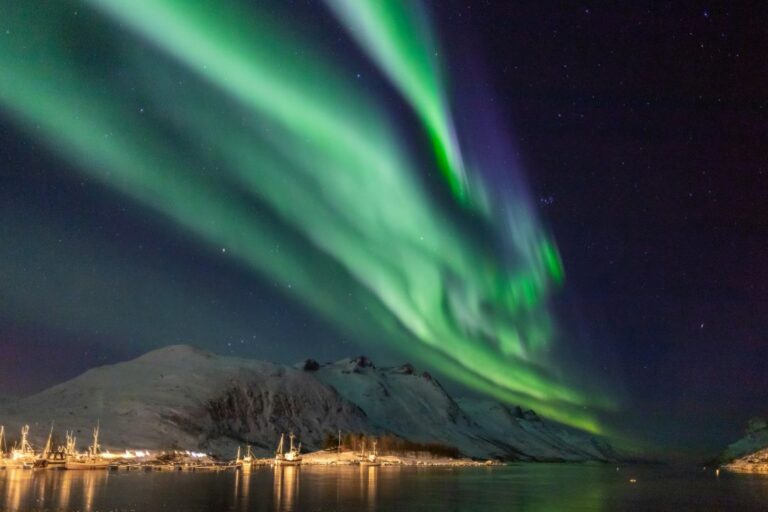
The Northern Lights make their first appearances of the season late in September as the nights grow properly dark again. Tourist numbers drop noticeably compared to peak season, July and August, which means easier parking at the popular trail heads, more availability at restaurants, and a calmer overall pace.
Most shops, restaurants, and activity providers are still open, maybe with slightly shorter hours than peak summer. In short: this is summer’ish Lofoten with fewer crowds, and with the colors turned all the way up.
Best places to stay:
- Svolvær: Svinøya Rorbuer for high-end fisherman’s cabins
- Henningsvær: Trevarefabrikken for trendy merged tradtional: the old woodwork factory
- Reine: Catogården Boutique Hotel in old fisherman’s home in Reine (shared amenities)
Weather and Temperatures in Lofoten in September
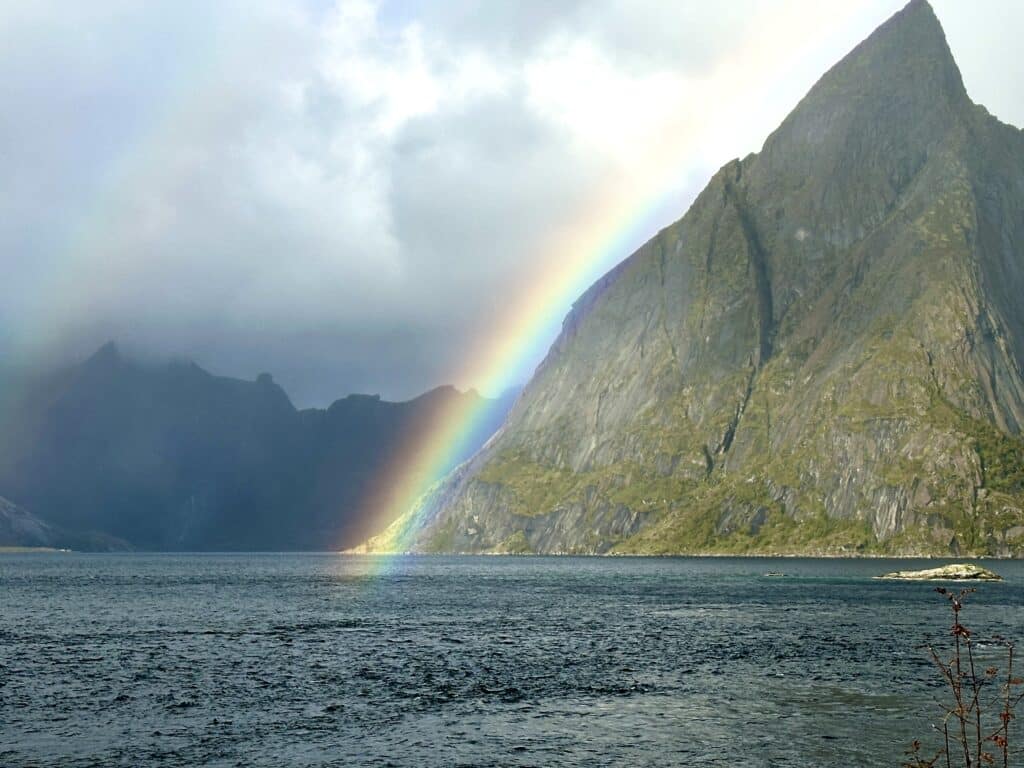
You can expect daytime temperatures between 7°C and 13°C (45–55°F) at the beginning of the month, dropping toward 5–10°C (41–50°F) towards the end. Nights will be colder, typically 4–8°C (39–46°F), so keep that in mind, especially if you are going camping.
Rain is part of the autumn package, predictably unpredictable. Lofoten weather doesn’t care what the calendar says, and September sees its fair share of showers and wind, sometimes arriving and clearing several times in the same day.
So pack for all four seasons, every day, no matter what the forecast says the night before, or even in the morning.
The upside of the changeable weather is the light; September skies in Lofoten can swing from flat grey to dramatic shafts of sun within the hour, and the light-and-dark contrast is when the mountains look their best.
September Activities in Lofoten
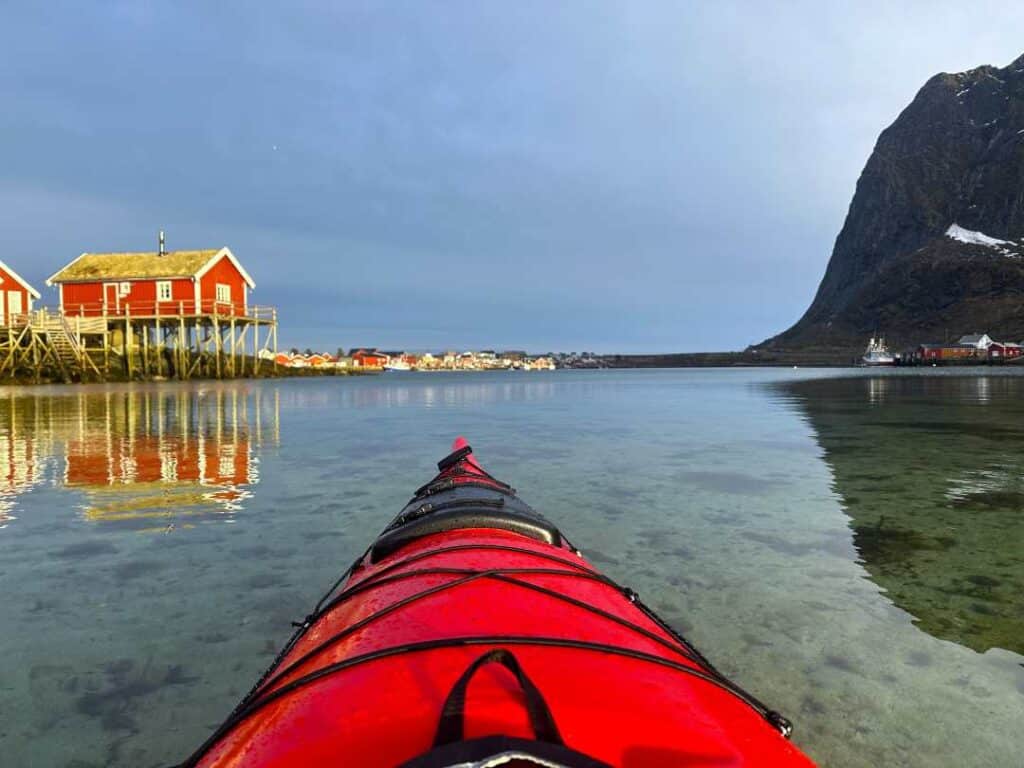
September is a good month for pretty much all the activities you can do in summer.
That said, September is an autumn month, and the weather can be soft and summery, or more fierce and stormy, and it can change really fast.
Fun things to do in Lofoten in September:
- Hiking, snow has probably not arrived yet
- Kayaking, pending the wind situation
- RIB safaris & boat tours
- Bird watching
- Sauna and cooling fjord baths
- SUP
- Northern Lights hunting
What To Pack For Lofoten In September
When you pack for Lofoten in September, remember to pack for anything from a cool summer to a winter in spe and anything in between, as you might get any kind of weather.
- Hiking trousers
- Wind and rainproof outerwear
- Thermal underwear
- Warm sweaters
- T-shirt
- Shorts
- Swimwear (if you are up for a dip in the fjord)
- Warm socks
- Hat and mittens
- Hiking boots
- Sunscreen
- Day pack if you plan on hiking
Dont worry about elegant evening wear for the restaurants, you will be welcomed in sporty mountain wear in every restaurant in Lofoten.
Also, if you go kayaking, the guides (and you should have one, unless you know the waters and elements up here) will provide all the clothes and gear you need.
Best Hikes in Lofoten in September
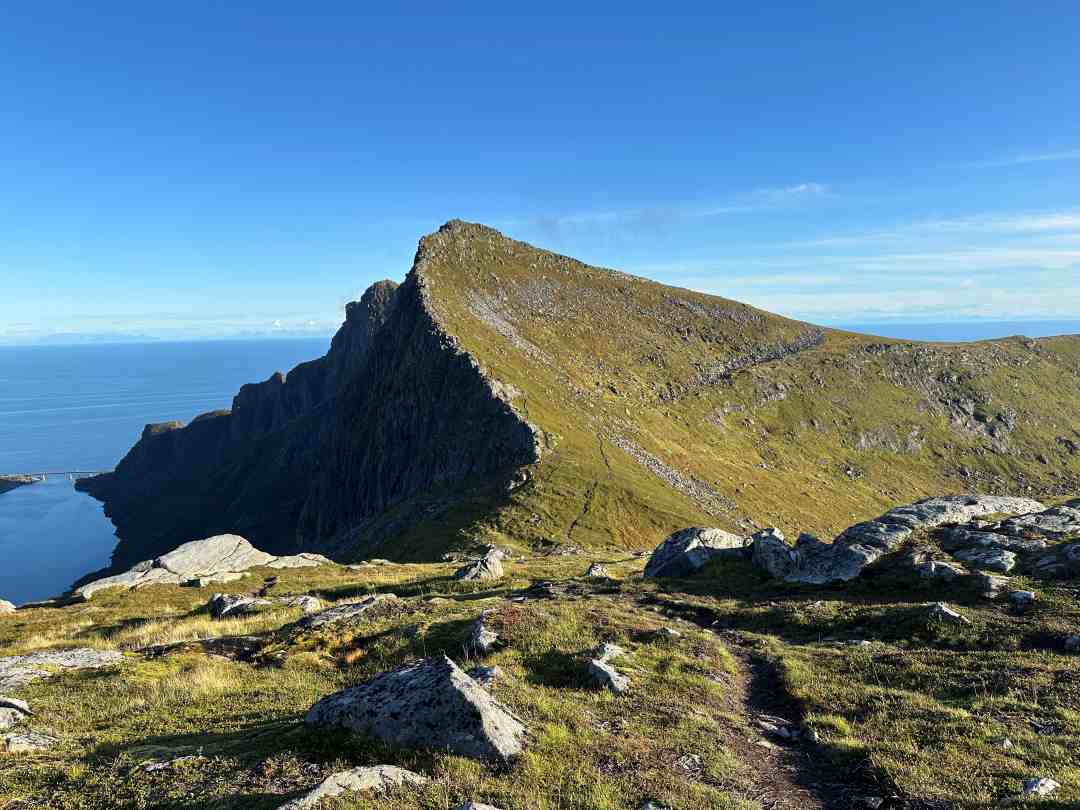
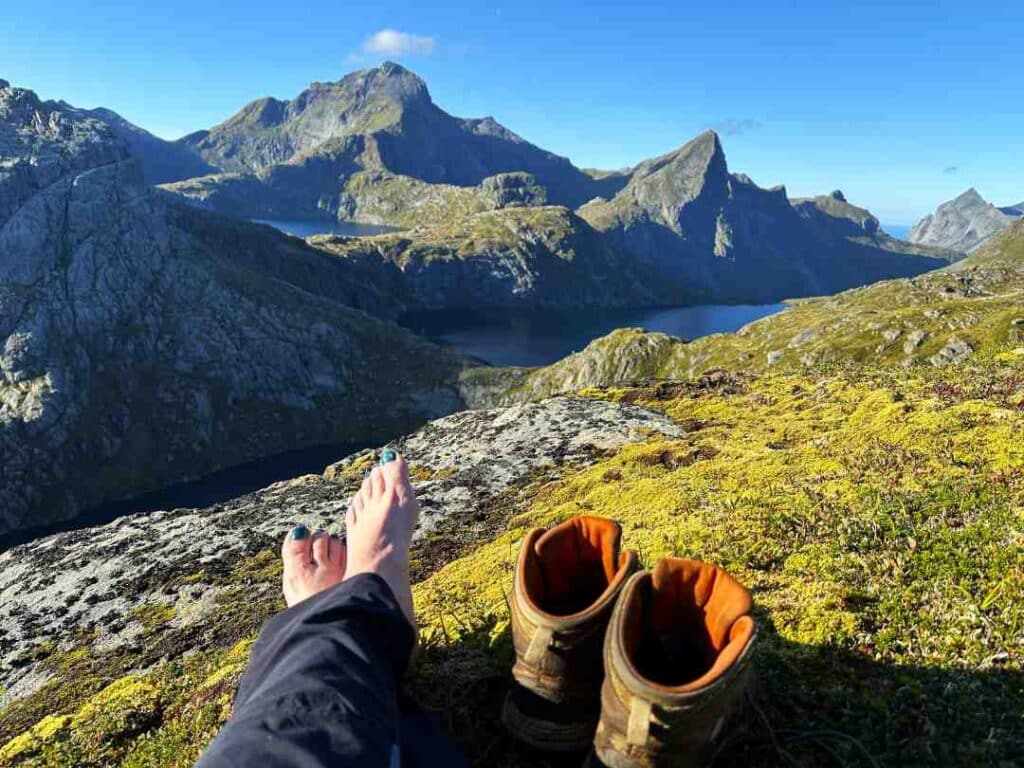
September is when the colors around the trails really come to life. In this month between summer and real autumn, the mountains explode with color in the trees, grass, moss, and bushes.
That, in combination with fairly stable weather (no guarantees) and slightly cooler temperatures, is what makes the magic.
Here are my top picks for this time of year, ranging from short and steep to full mountain days (well, full days in September are shorter than in the summer, be aware).
Reinebringen

The hike everyone has seen on Instagram, and for good reason.
The Sherpa Stairs climb steeply from the center of Reine straight up the mountainside, with three “breaking points” along the way where stone benches let you catch your breath and enjoy the view.
The reward at the top of Reinebringen is the classic shot from western Lofoten: Reine and the surrounding islands laid out below as a chain of uneven beads, and the Lofoten wall continues into eternity to the north. It’s steep, and the stairs are relentless, so take your time, one step at a time, and breathe.
In September, the lower slopes turn golden, and the crowds from peak summer have thinned considerably.
Also read: How To Do Reinebringen Hike (Sherpa Stairs) From A Local
Ryten and Kvalvika Beach
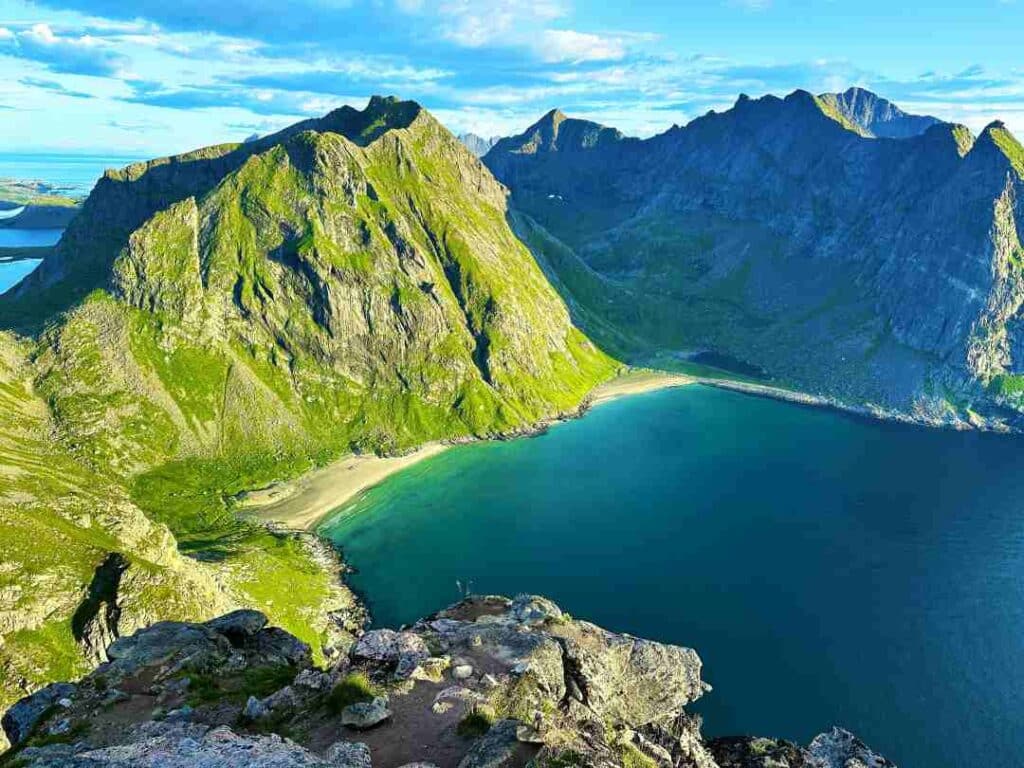
Starting near Fredvang, this is a moderate 7-kilometer return hike to the summit of Ryten, or about 12.5 km if you continue down to Kvalvika Beach, a white sand bay tucked between vertical cliffs that looks like it belongs somewhere far warmer than the Arctic.
From the top of Ryten, the view stretches across Flakstad’s coastline and the mountains Moltinden and Middagstinden, and down to the turquoise waters of Kvalvika below. Expect some steep, bouldery sections, especially on the descent to the beach, and mud after rain (which, see above, happens).
In September, the heather on the upper slopes turns deep red, and you’ll likely have long stretches of the trail to yourself.
Munkebu Hut and Munken
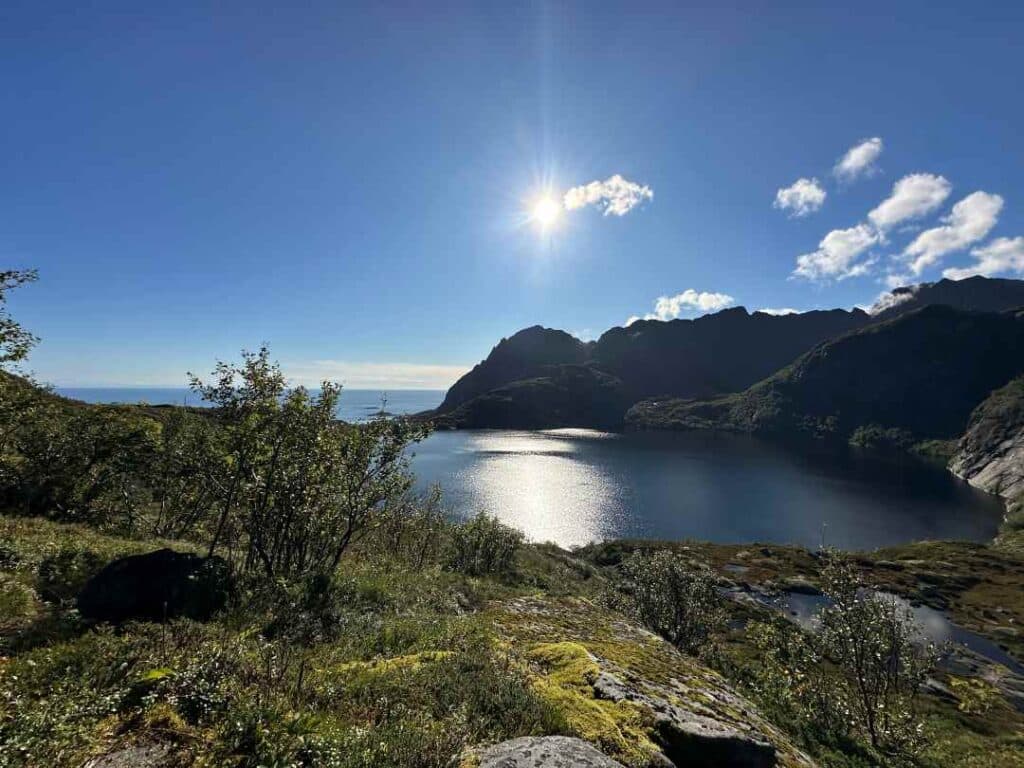
For a full mountain day, head to Sørvågen and the trail into Lofotodden National Park.
The hike to Munkebu Hut is moderate and less steep than most of Lofoten’s classics, making it a good warm-up before the optional scramble up to Munken’s summit, where the views open up across the whole of Moskenesøya.
If the clouds are sitting low, make Munkebu your endpoint and save Munken for a clearer day, as the upper trail can disappear into fog fast, and the rock gets slick when wet.
Offersøykammen
If you want a big payoff without a big time commitment, this is your hike.
Starting from Skreda, about 25 minutes by car from Nusfjord, the climb is somewhat steep but not overly technical, and the summit rewards you with a 360-degree view toward Leknes, the Nappstraumen current, and Haukland Beach below.
It’s one of the more accessible “wow” hikes in Lofoten, which makes it a solid choice on a shorter September day when daylight is already starting to shrink.
Mannen (Haukland Beach)
A short, sharp climb above Haukland Beach, Mannen rewards you with one of the best views over Haukland and neighboring Vik Beach for relatively little effort.
It’s a great option if the weather is uncertain (as it often is in September) and you want a hike that delivers views without committing your whole day.
Combine it with a walk along Uttakleiv Beach afterward if you have energy left — the 8-kilometer Uttakleiv–Haukland loop is moderately challenging but worth it.
Also read: Visit Uttakleiv Beach Lofoten: One of the Best Arctic Beaches in the World
A Special Note On Hiking In September
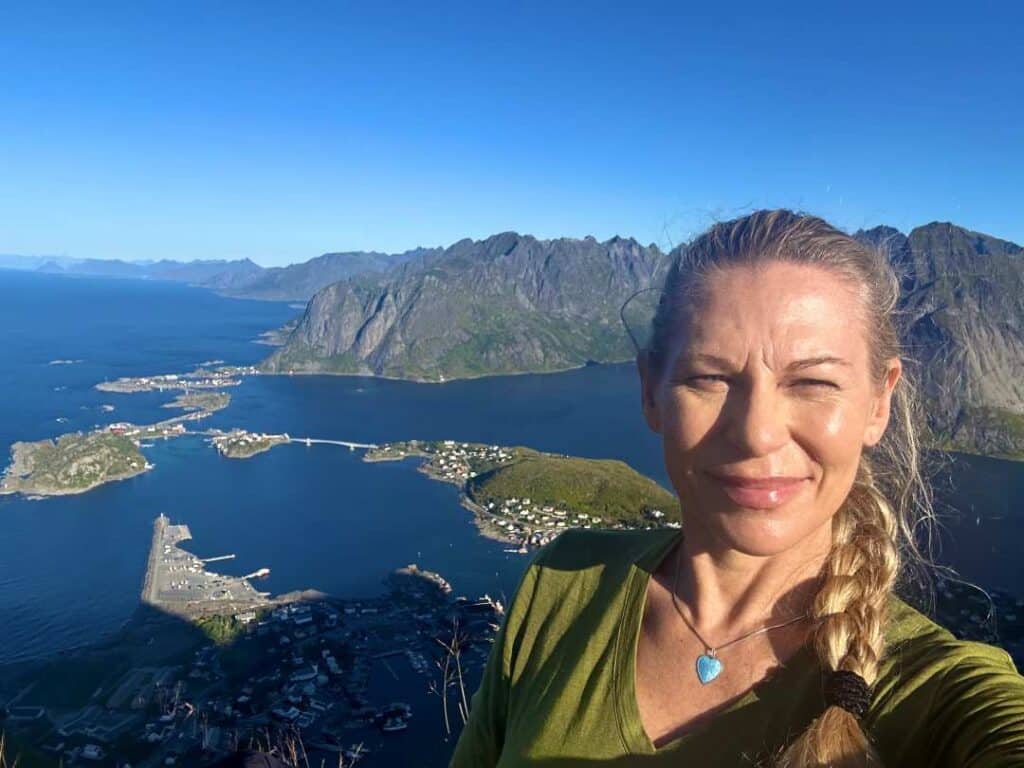
Although still far from the Polar Night, days in September are noticeably shorter than in summer. Before you go, check sunrise and sunset hours, start early, and check the forecast (and check it again before you leave; it can change in 15 minutes).
For longer hikes, or if you hike alone, always let someone know your route and expected return time. Conditions can change fast up here, and you want to make sure someone misses you quickly if you get in trouble.
Always bring:
- Extra clothes, thermal sweater, warm socks, rain- and windproof outerwear, hat, and mittens
- Enough water
- Thermos with a hot drink
- Snacks and lunches for longer hikes
- A small first aid kit
- Choose good supporting hiking boots with patterned soles
Think like this: you should be ok with what is in your daypack for 24 hours, in case something happens and you need to wait for someone to come help you
Where to Eat: 6 Restaurants Not to Miss in Lofoten
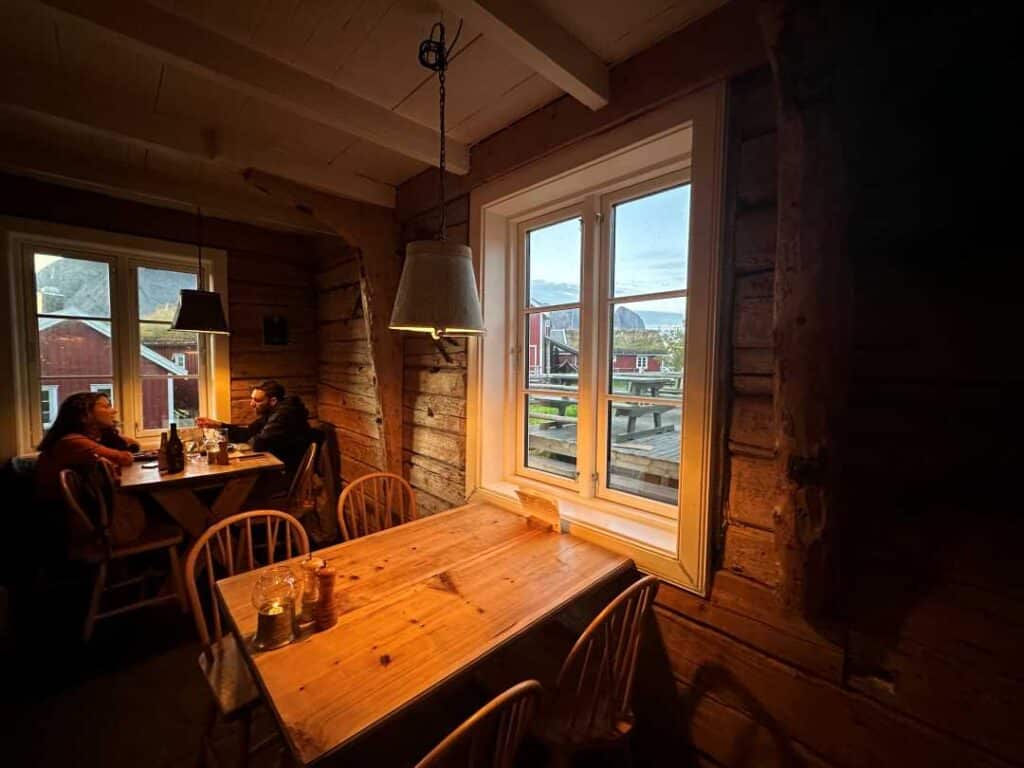
After a day on the trails, you’ve definitely earned a proper meal. If that for you means something a bit out of the ordinary, Lofoten has lots of options specializing in exactly that.
Here are six restaurants across Lofoten, from north to south, that consistently deliver and receive standing ovations from guests. One of them is my definite favorite.
Restaurant Nyvågar in Kabelvåg
Five minutes outside Svolvær, on its own little peninsula, there is a rustic dining diamond with a very special kitchen.
At Nyvågar, the menu combines authentic North Norwegian ingredients with international flavors, served in a rustic atmosphere and accompanied by the warm hospitality this region is known for.
The chefs draw their inspiration from nature, using everything from seaweed and kelp to high-quality homemade jams in their dishes. Stockfish ravioli, lamb, halibut, and a fjord view that does most of the talking.
Fiskekrogen in Henningsvær
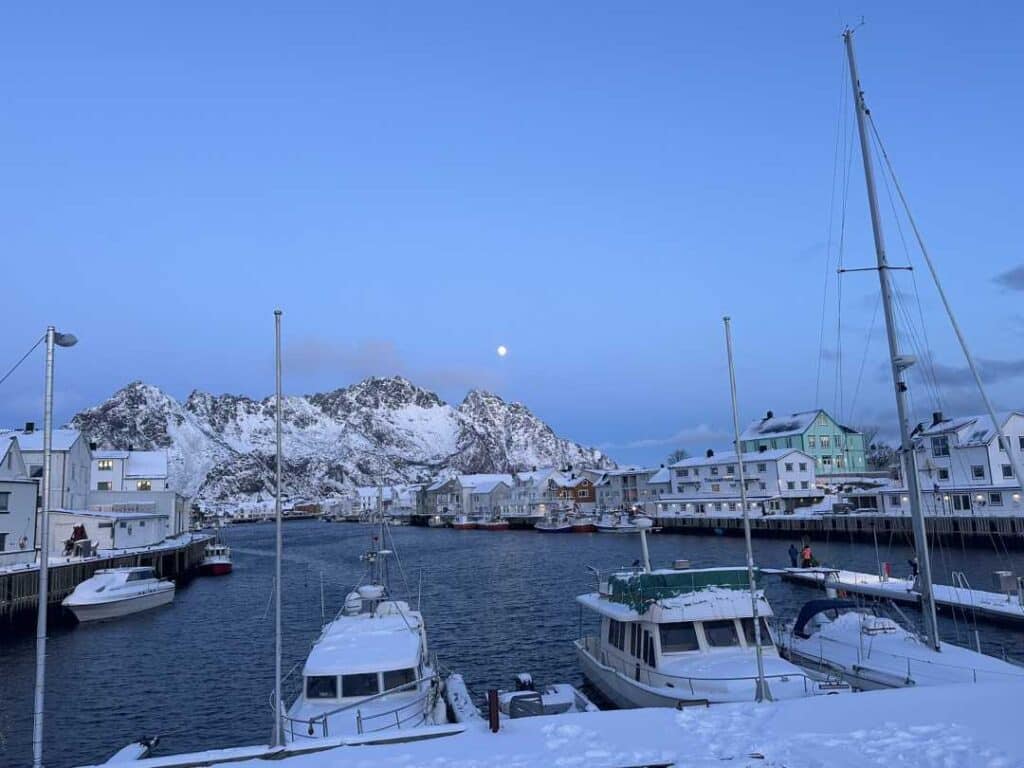
A proper Henningsvær institution, Fiskekrogen (the fish hook), serves fish soup, cod tongues, halibut, whale carpaccio when it’s available, all served with harbor views in one of Lofoten’s most photogenic villages.
Located right by the harbor in the photo above, Fiskekrogen is a great choice to end a day in Henningsvær, maybe the most charming fisherman’s village in Lofoten.
If skrei mølje is on the menu and you feel adventurous, that might just be your dish.
Lofoten Food Studio in Ballstad
In Ballstad, surrounded by some of the world’s best ingredients, Lofoten Food Studio has created a small culinary playground centered on the chef’s table. Seafood is prepared and served right in front of you, inspired by the four seasons, with the changing light, weather, and ingredients shaping the menu and the experience.
The menu changes with the seasons, built around whatever is fresh and local that week, served almost like a chef’s table experience. With a twist, local foods meet influences from China and Colombia, blending Eastern and South American flavors with a personal touch from the chef, Roy-Magne.
The result is front-row seafood, paired with a thoughtful drinks menu and an experience built to create unique memories around the table.
Restaurant Underhuset, Sakrisøy
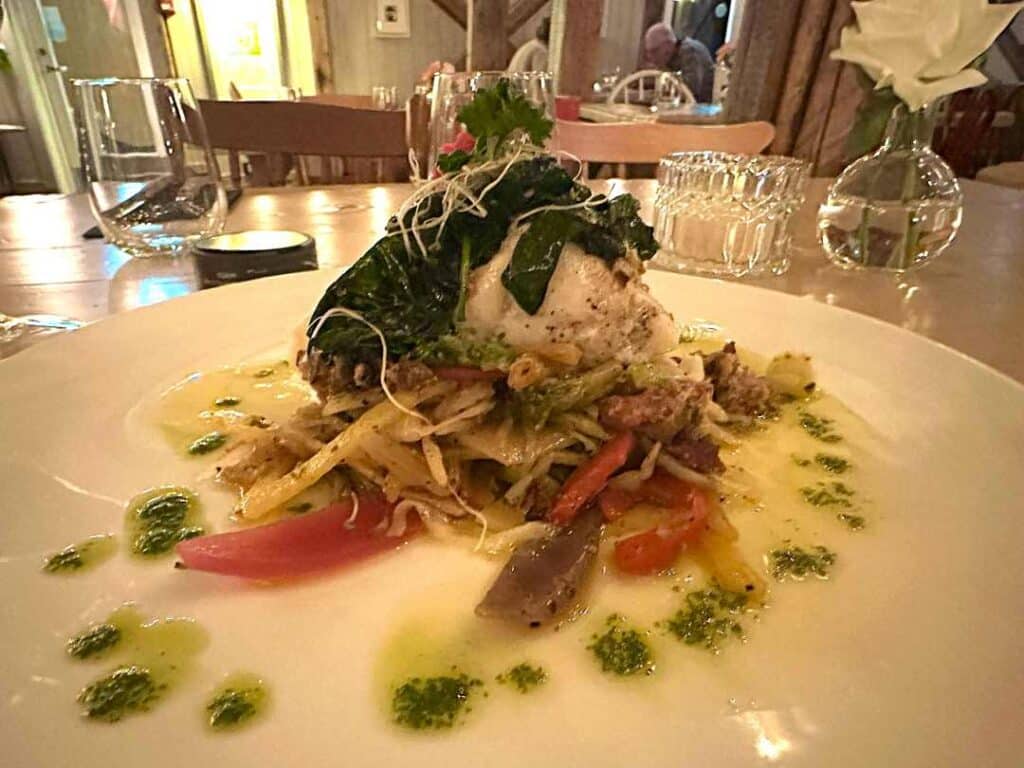
This is my personal favorite, and not just because it’s a bit of an unexpected mix.
Underhuset is a Norwegian-Mexican fusion restaurant run by a Mexican family, serving fish dishes with a Mexican twist, including an incredible salmon dish with a chocolate-based sauce I haven’t found anywhere else. The halibut here is also exquisite when they get it in fresh.
Underhusets interior mixes old Norwegian wooden details with colorful Mexican decor in an old white wooden villa by the waterfront, and on the right night, there’s even salsa dancing. Yes, really.
Gammelbua, Reine
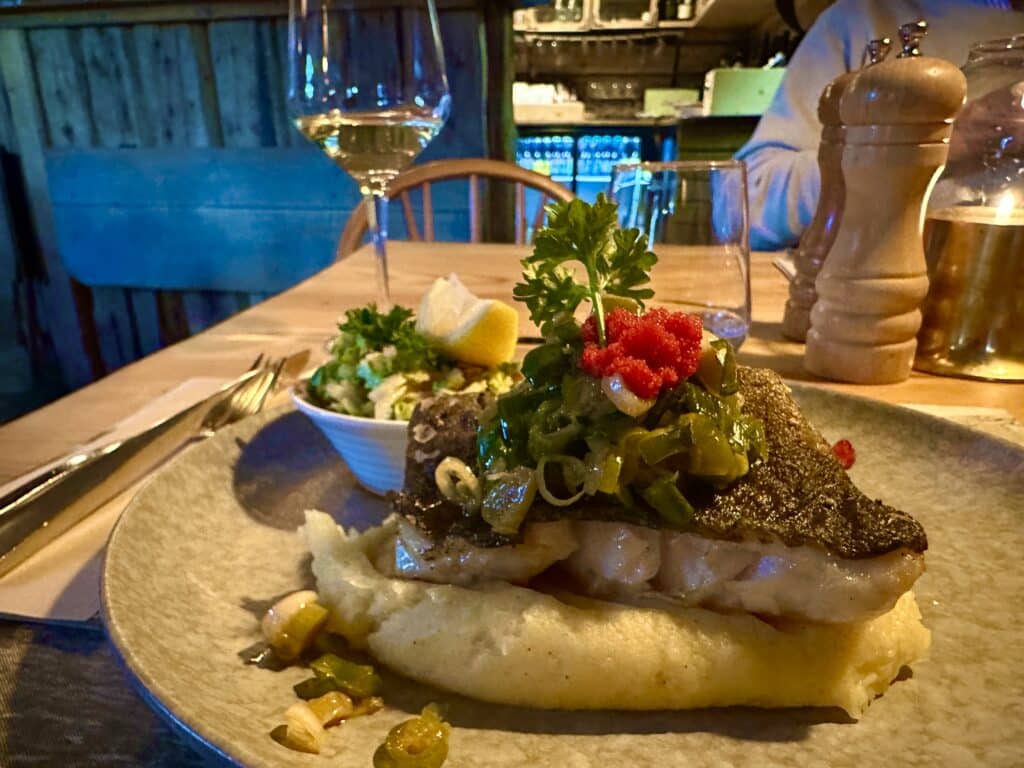
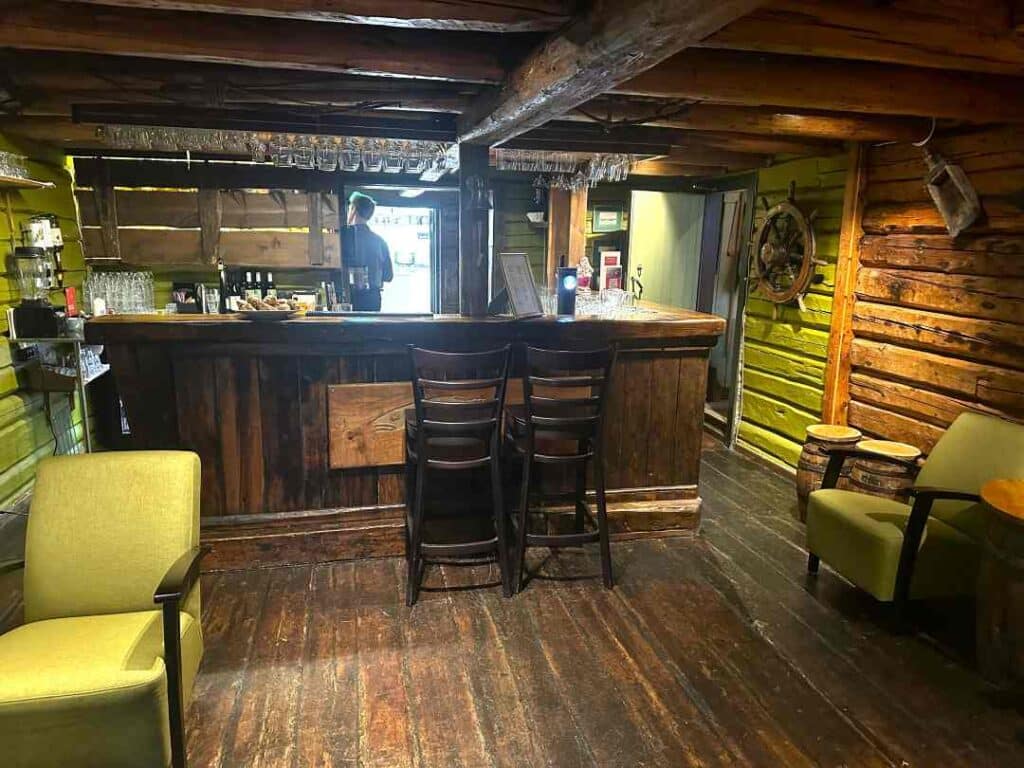
Part of Reine Rorbuer, Gammelbua is the kind of cozy, timber-lined restaurant where you want to land after a long day outdoors.
Open timber work, quirky vintage fishing photos on the walls, and solid local seafood dishes. It’s relaxed, it’s warm, and after a few hours on Reinebringen or Ryten, that’s exactly what you need.
Book ahead, the venue is small and intimate, so dont risk not getting a table if you just show up, especially during high season.
Restaurant Holmen in Sørvågen
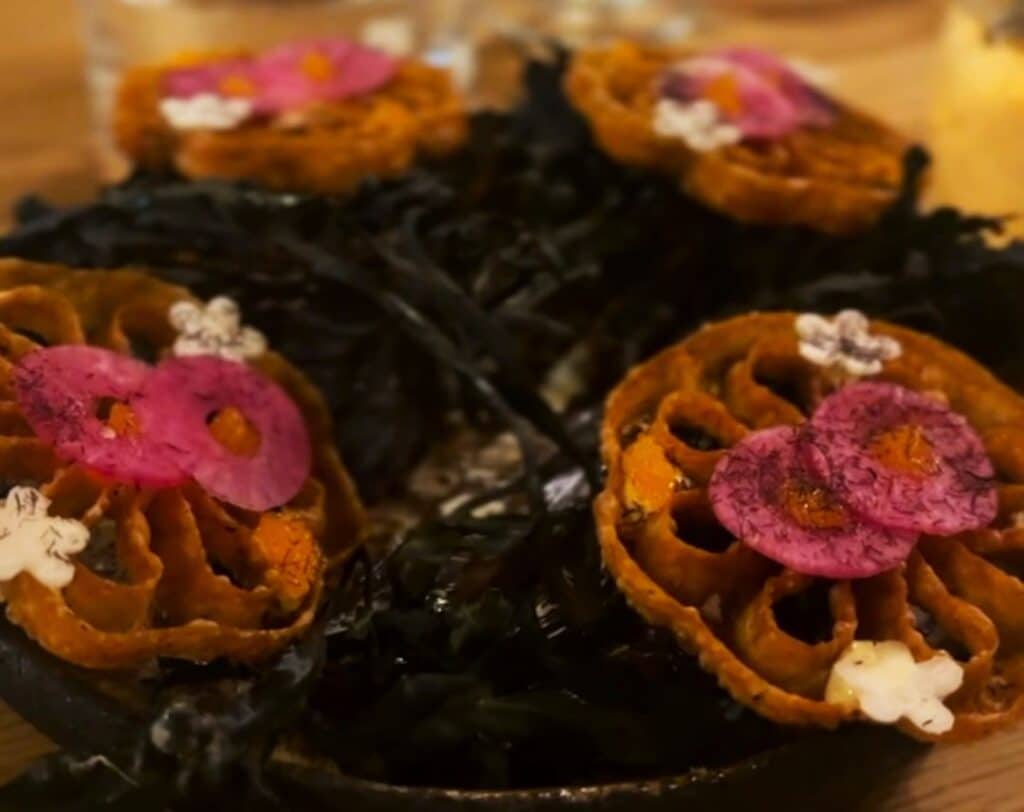
Holmen calls itself “kitchen on the edge,” and that’s not just marketing. I’ve had a seven-course dinner here, and every single dish was beautifully presented and tasted every bit as good as it looked.
The staff are highly skilled, you can watch the chefs work, the wine list is excellent, and the setting right on the water does the rest. Book ahead, especially if you’re coming straight off a hike and want something to look forward to.
Also read: 7 Best Restaurants in Reine Lofoten From A Local
Where to Stay: The Most Spectacular Rorbu’s in Lofoten
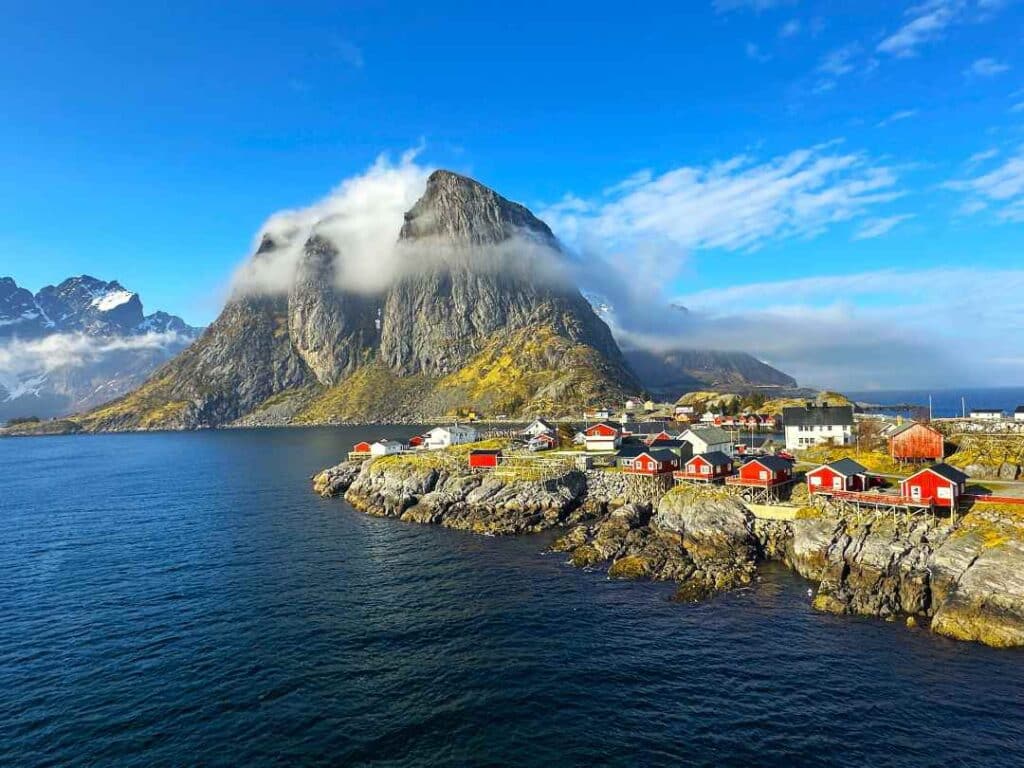
If you’re going to splurge on accommodation in Lofoten in September, with the colors, the quieter trails, and the chance of Northern Lights from your doorstep, rorbu’s are a strong contender.
The most famous accommodation type in Lofoten is the “rorbu”, the fisherman’s cabins, red or yellow old wooden cabins often next to or even above the water.
What you need to know about a rorbu stay is that the best word to describe it is “authentic”, not necessarily “luxurious”. The simple fisherman’s cabins from back in the day have been upgraded with modern amenities, but they still have a traditional, old-fashioned Norwegian, simplistic style.
Many are also self-service, with kitchens for self-catering, unlike a hotel with 24/7 reception, porterage, room service, etc. So just be aware of this before you book, and manage your expectations accordingly.
Svinøya Rorbuer in Svolvær
This is the original, Svinøya Rorbuer is a living fishing village on its own small island, just a short bridge from Svolvær center, the “capital” of Lofoten.
The history here goes back almost 200 years, and the restored rorbu cabins still carry that weight, alongside the old trading pier from 1828, now home to restaurant Børsen Spiseri.
Add a floating sauna, sea on one side and the Lofoten mountains on the other, and you’ve got one of the most authentic bases in the islands, close enough to walk into town, far enough to feel like your own little world.
Nyvågar Rorbuhotell in Kabelvåg
Just five minutes from Svolvær, in the historic Storvågan area, Nyvågar Rorbuer is home to 30 spacious two-level rorbu cabins with proper kitchens, handy if you’d rather cook your own catch than eat out every night.
There’s also a sauna, an “Aquavit Loft” bar that takes its name seriously, and a restaurant built around homemade, local food. If you dont know what Aquavit is, it is the Norwegian “water of life”; a strong liquor with a particular history, and often enjoyed with the Norwegian “Juleribbe”, the rib steak many have for Christmas Eve.
Nyvågar has a quiet ambiance, is EcoLighthouse-certified, and is right next door to the Lofoten Aquarium and museum if the weather sends you indoors for an afternoon.
Hattvika Lodge in Ballstad
Run by Guri, a sixth-generation local, and her husband Kristian, Hattvika Lodge mixes old rorbu cabins dating back to the 1870s with sleek modern hillside cabins added in 2020, so you can pick old-world charm or clean Scandinavian design, depending on your mood.
There’s a dockside sauna and wood-fired hot tub looking straight out over the harbor, kayaking that starts right from the property, and FANGST, the on-site restaurant, if you don’t feel like cooking.
A genuinely warm welcome, and one of the best central bases for exploring both directions along the E10.
Nusfjord Arctic Resort
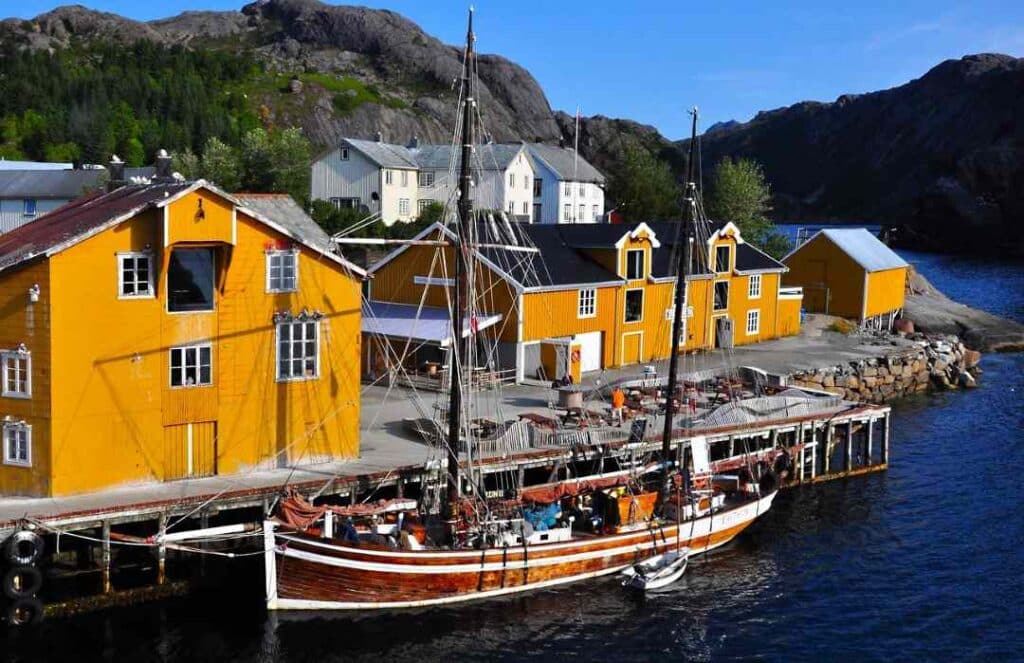
An entire restored fishing village turned boutique resort, Nusfjord Arctic Resort is such a popular destination it actually has an entrance fee for non-staying guests to handle the many summer tourists.
After the day-trippers leave (and in September, there are far fewer of them to begin with), Nusfjord turns wonderfully quiet. If you want a slower, atmospheric base for your September hikes, this is it.
Eliassen Rorbuer, Hamnøy
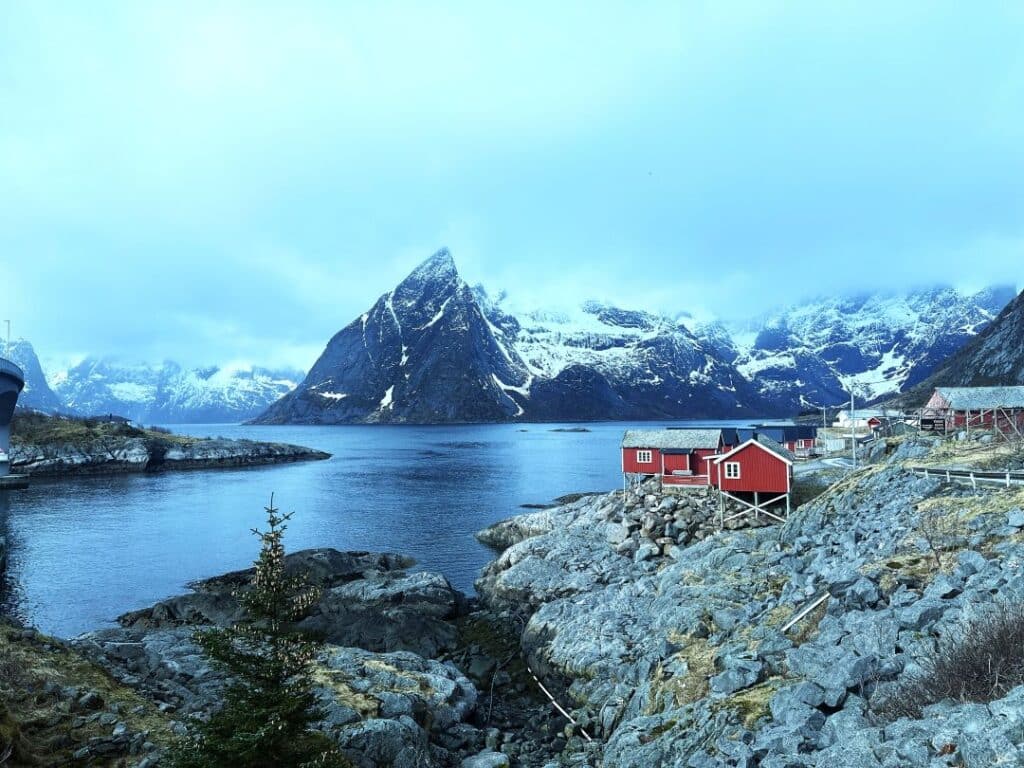
The most photographed rorbuer in Lofoten, and you’ll understand why the moment you turn off the E10 and head down to Eliassen Rorbuer on Hamnøy Island in Reine.
Most of these red cabins (but not all) sit right on the water beneath the Festhælen mountain, with views straight into Reinefjorden. Here, there is also a mix of old and new cabins, and if you want a view of the Reine Fjord, make sure you choose a waterfront cabin.
Eliassen is the oldest rorbu resort on the islands, though most cabins have been renovated and come with kitchens, which is useful in September when you might want a hot homemade meal after a wet hike.
Reine Rorbuer
Right in the heart of Reine village, with direct views of Reinefjorden, the West Fjord, and the mountains rising straight out of the water behind you, is Reine Rorbuer.
Traditional wooden cabins with modern comfort inside, and the Gammelbua restaurant is right there if you don’t feel like cooking.
Walking distance to the trailhead of the Reinebringen Sherpa stairs is also a perk if you stay here, and the Bringen coffee shop is one minute away, ready to serve your morning coffee.
Also read: 9 Best Places to Stay in Lofoten Islands From a Native
Å Rorbuer: The End of Lofoten
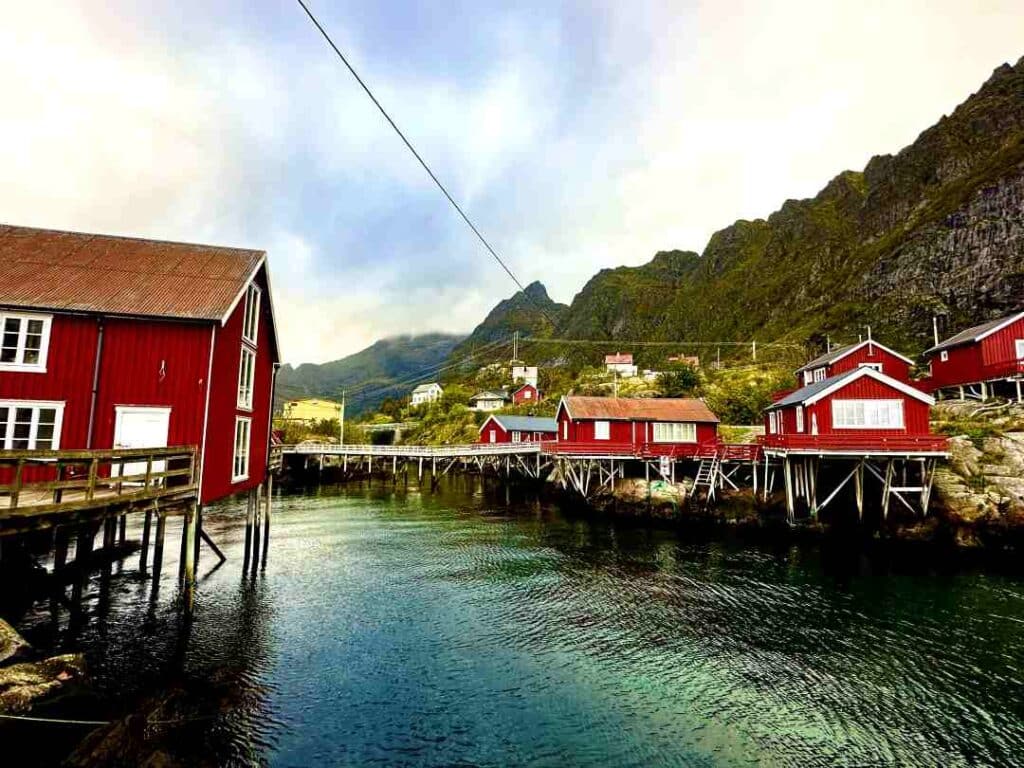
At the very end of Lofoten, you exit the last tunnel and arrive at a parking area right above Å village, where you also find the southernmost rorbuer in Lofoten, Å Rorbuer.
FAQ Lofoten in September
Can you see the Northern Lights in Lofoten in September?
Yes, the aurora season starts back up this month. Nights are finally dark enough, and the equinox around the 23rd often stirs up extra activity. No guarantees, but it’s possible.
Is September a good time to visit Lofoten?
For hikers, September is one of the best months. Crowds thin out, the colors peak, the trails are still clear, and the views are as always spectacular. If sunshine isn’t your main requirement, you’re set.
What’s the weather like in Lofoten in September?
In short, changeable. Daytime temps usually land between 5°C and 13°C, dropping as the month goes on. Sun, wind, and rain can all show up in the same afternoon and affect how warm or cold it feels. Layers and a real rain jacket are non-negotiable.
Is Lofoten crowded in September?
Far less than in July, but still not low season. High season is winding down, so it’s easier to get a table, a bed, and some breathing room on the popular trails.
Is it too late to hike in Lofoten in September?
No, it is actually more like prime time. October is when the storms really take over. Just remember you have less daylight than in summer, and always check the forecast before you head out.
Oh yeah, remember to tell someone where you are going, especially if you are hiking alone.
Final Thoughts on Lofoten in September
If you’re an avid hiker, September might just be the best month to visit Lofoten.
The trails are clear, the colors are at their peak, the crowds have thinned, and the Northern Lights are starting to make appearances again.
Pack layers, pack patience for the weather, and get out here; the mountains are ready to baffle you.