Visit Lofoten in Spring: Weather, Things to Do & Why It’s a Wild Adventure (2026)
If you’ve been dreaming about the Lofoten Islands but feel unsure about when to go, let me tell you a little secret: Spring is probably one of the most underrated and magical times to visit Lofoten.
This is the season when winter slowly loosens its grip, daylight stretches longer each day, and the islands feel calm, spacious, and wonderfully alive. For us locals (I boldly consider myself one, after having lived here since 2024), spring is when we start breathing slowly again.
Snow still clings to the mountains, the roads are open, and the light is something truly special.
If you enjoy dramatic landscapes, fewer crowds, and a slower, more authentic travel experience, visiting Lofoten in spring might be exactly what you’re looking for.
5 Reasons: Why Visit Lofoten in Spring

Visiting Lofoten in spring is like a box of chocolates: “you dont know what you are gonna get”, as a wise man once said. Yet, I will argue that spring in Lofoten can be beautiful in this in-between season.
It’s not quite winter with Polar Nights, not quite summer with everlasting sun — but it can be total winter, soft summer, and everything in between.
This contrast makes traveling to Lofoten in the spring a bit unpredictable (so take to heart my packing advice!), but that contrast is exactly what makes it so special.
Also read: Ultimate Lofoten Islands Travel Guide From A Local
1. Fewer Tourists And A More Authentic Lofoten Experience

Spring is considered the shoulder season in Lofoten, which for you means:
- Far fewer tourists than in summer
- Experience fishing villages and scenic viewpoints without crowds
- You may be lucky and experience all kinds of weather
- Some restaurants, hotels, and adventure companies can be closed or operating at reduced capacity (so do your destination research beforehand).
Instead of feeling like a pond on a treadmill, you can actually go slow and breathe it all in.
Locals have time to chat, cafés feel cozy rather than busy, and the islands return to their natural rhythm after winter.
First-time visitor? I would LOVE to create your itinerary for you!
2. Slightly Lower Prices Than High Winter And Summer Season

In Lofoten, there are two high seasons: winter and summer, and these months generally have higher prices than the shoulder seasons: autumn and spring.
The summer high season lasts from mid-June through to the end of September (or even into October now). The winter high season runs from the end of January through to the end of March.
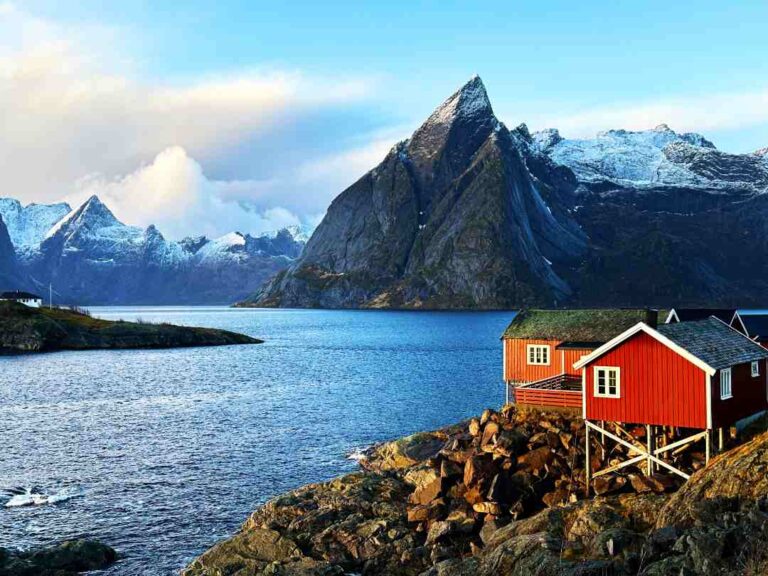
So for the spring, starting (technically) at the end of March, through April and May, prices will be a bit lower for most things. In this period, you might get a good deal for staying in one of the charming red fishermen’s cabins you see in the photo above (this is Eliassen at Hamnøy).
- More availability and often better prices on accommodation
- Public transport, like buses and ferries are not crowded or full
- Rental cars are also slightly cheaper (but make no mistake, Norway is not “cheap”)
Also read: Nusfjord Lofoten: The Norwegian Fishing Village You Actually Have to Pay to Enter (Complete Guide)
3. The Unique Light Of Spring In Lofoten
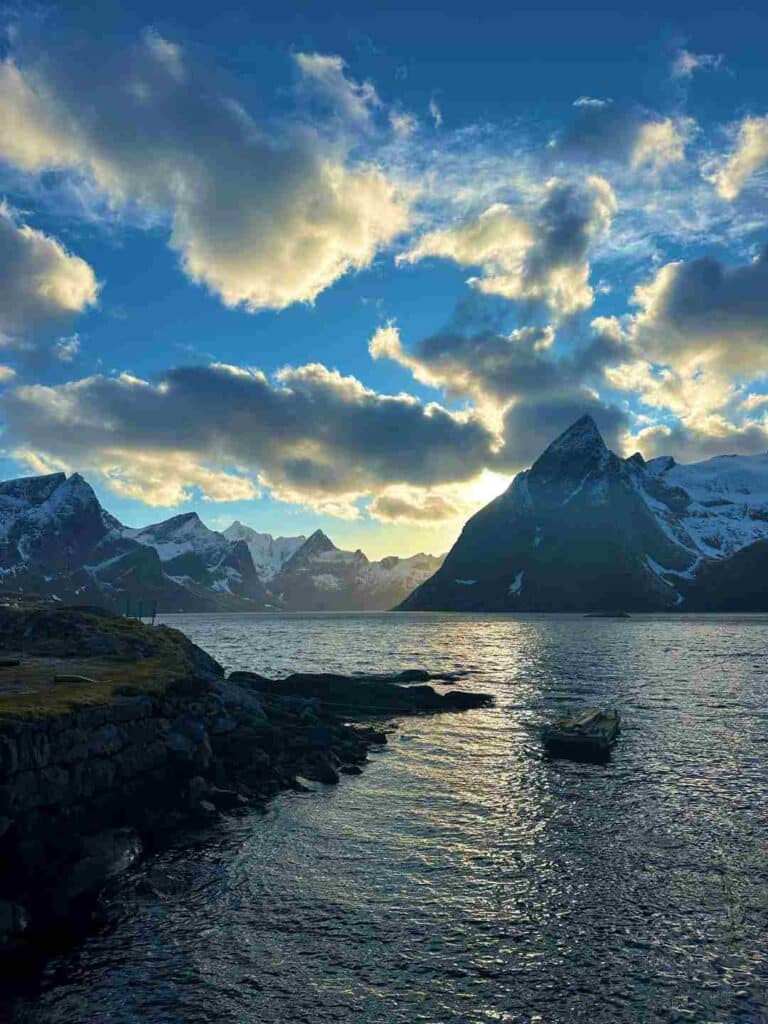
Lofoten is famous for its Arctic light, and spring delivers the widest variety of the most incredible photogenic conditions if that is your passion.
In the early spring, the sun still stays low in the sky, creating:
- Long golden hours
- Soft pastels and dramatic shadows
- Perfect conditions for landscape gazing and photography
It’s no surprise that Lofoten spring is a favorite among photographers who want snow-capped peaks, open water, and glowing skies in the same frame.
4. Contrasts: Winter Snowy Mountains Meets Summer Open Roads
One of the joys of visiting Lofoten in spring is seeing the contrasts of winter and summer collide. This is a visual thing, you can see flowers through the snow, a baby green veil on trees, while snow clings to the mountain sides.
- Snow-covered mountains rise straight out of the sea around you
- Roads are open, mostly snow-free, and scenic routes are easily accessible
- Hiking trails are becoming accessible
- Beaches are snow-free while peaks remain white
It’s visually dramatic and uniquely northern — a true northern Norway experience.
5. Experience All The Weather And Elements
During spring, you can get it all, which, on the downside, makes it a bit more challenging to pack (my expert tips on that further down).
But the upside is that you really can get to feel the elements, without the fiercest of the snowy storms in winter. Truth be told, the storms during spring and autumn can sometimes be wilder than winter, but at least there is usually less snow.
Then, the next day, you might wake up to the softest, quietest light over a blank, silvery world – so spring can give you the best of what nature has to offer on both sides of the element scale.
The 3 Spring Months In Lofoten

Visiting In March
March is more winter than spring in Lofoten. It is still cold, still winter and probably snow, but the sun is high above the horizon and the days last for a few hours.
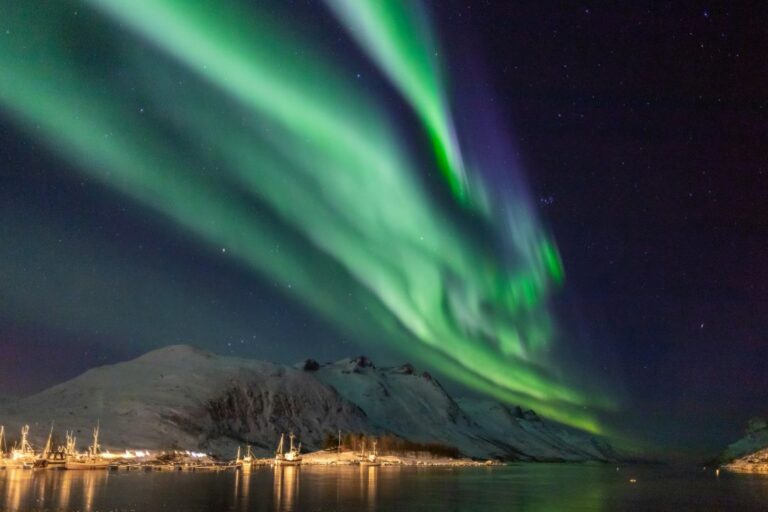
Still, nights always come with the promise of northern lights (remember, you need both clear skies, AND a high KPI. The sun storms must be on your side).
Visiting In April
Come April, we are nearing the last sights of Northern Lights for the season.
There are still snowy patches (especially in the mountains, some places into May), and if the storms come, they are usually more rain than snow.
Hiking trails are peeping out from under the snow, and towards the end of April, you might be lucky enough to hike the Reinebringen Sherpa stairs. But just maybe, so please, always check with locals if this is a good idea.
Visiting In May

As May arrives, it is very unlikely you will see the Northern Lights, but you will already have long days, and sturdy flowers start popping up from the dirt or through stubborn snow patches.
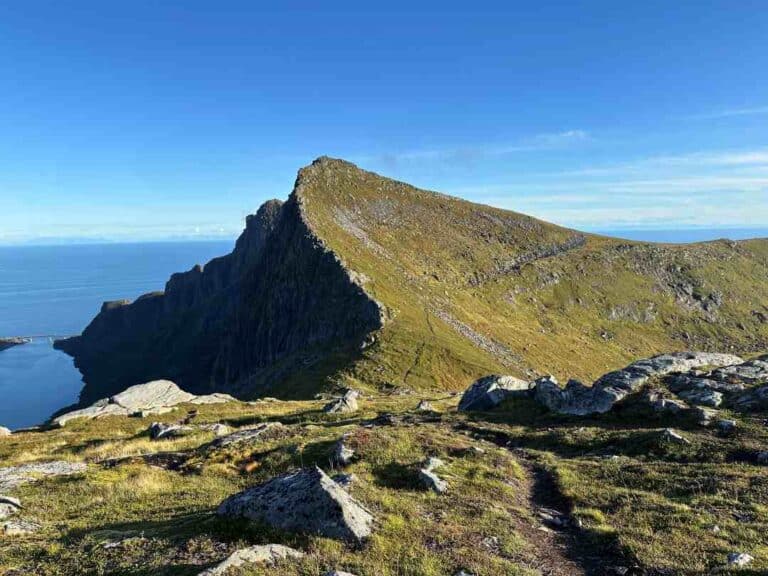
The weather is more stable, with fewer storms, and ferries and buses can generally be trusted to depart. Most hiking trails are open and safe, and on the Norwegian national day (17th of May), you will still have sunlight for your 11 pm hikes (like in the photo above).
The midnight sun season starts at the end of the month, so if you are here on May 28th, you can be the first person to gaze into the golden ball on the low horizon from a mountaintop at midnight. So make it an adventure, and hike to a mountain top that night.
Unless it is the kind of weather we had during the reel you see below, of course.
Best Things to Do When You Visit Lofoten in Spring
Spring offers a wonderful mix of activities — without the pressure of peak season.
Hiking In Lofoten In Spring
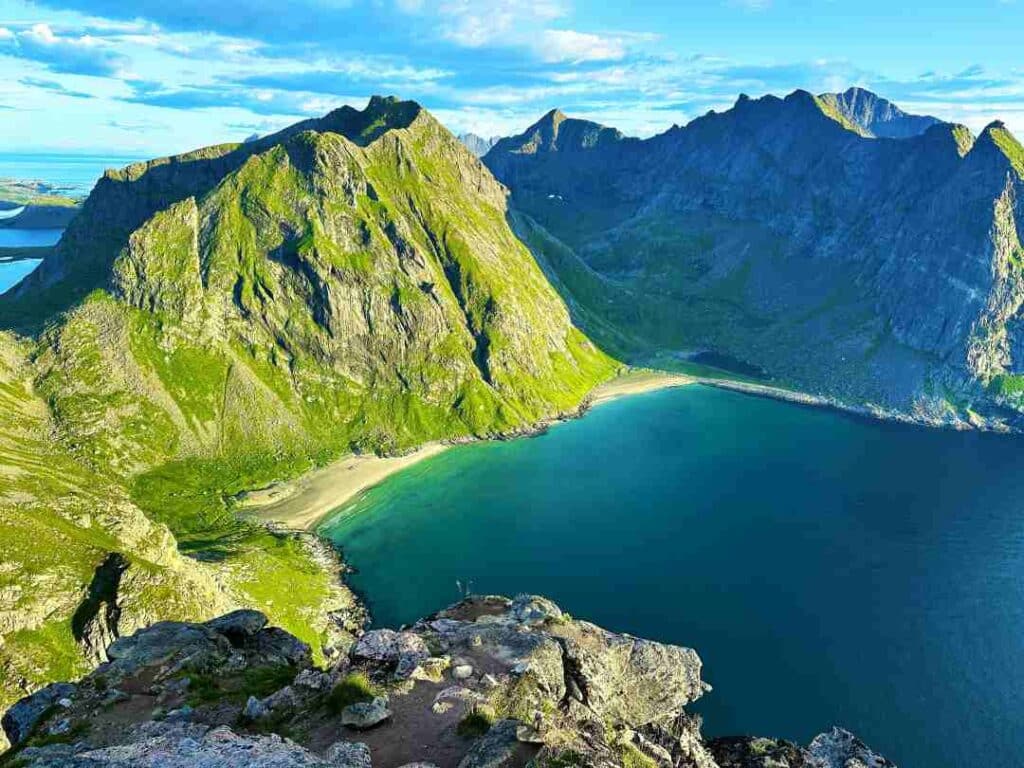
Finally, slowly but steadily, more and more hiking trails become snow-free and weather-proof as spring unfolds in Lofoten. Hiking is possible, but not everywhere, so you’d better keep a flexible mindset.
The last hike that probably opens is the Reinebringen Sherpa stairs, which is super popular but also very steep. The area at the top is sensitive to wind, and it is not very spacious.
- Lower-elevation hikes and coastal walks are often accessible, like Ryten and Kvalvika Beach
- Some mountain hikes may still require snowshoes or traction devices
- Conditions vary year to year, so be mentally prepared that your favorite might not be available when you get there (especially early spring)
If you enjoy quieter trails and dramatic scenery all around you, spring hiking in Lofoten can be incredibly rewarding — just be realistic and safety-aware.
Wildlife and Nature Experiences
Spring is when nature truly wakes up:
- Sea eagles are easy to spot along the coast
- Birds return to nesting areas
- Whale watching tours start up again in some areas
It’s a fantastic time for wildlife lovers and anyone who appreciates raw, unfiltered nature.
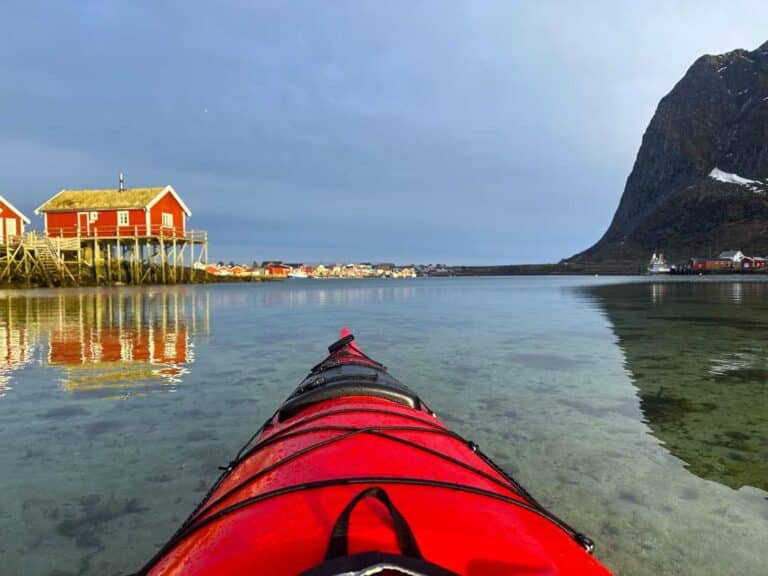
Kayaking In Lofoten Fjords

Kayak paddling is an activity you can also do in winter, but you know, winter also brings a lot of weather and low temperatures.
Come spring, you can enjoy the fjords and wildlife from a kayak in more “friendly” conditions, and not dressed like the Michelin man necessarily.
And kayaking is available in almost all Lofoten destinations, so you have a lot of flexibility.
Also read: 4 Top-Rated Options – Best Kayaking In Reine Lofoten
Photography in Lofoten in Spring

This is one of the best seasons for photographers:
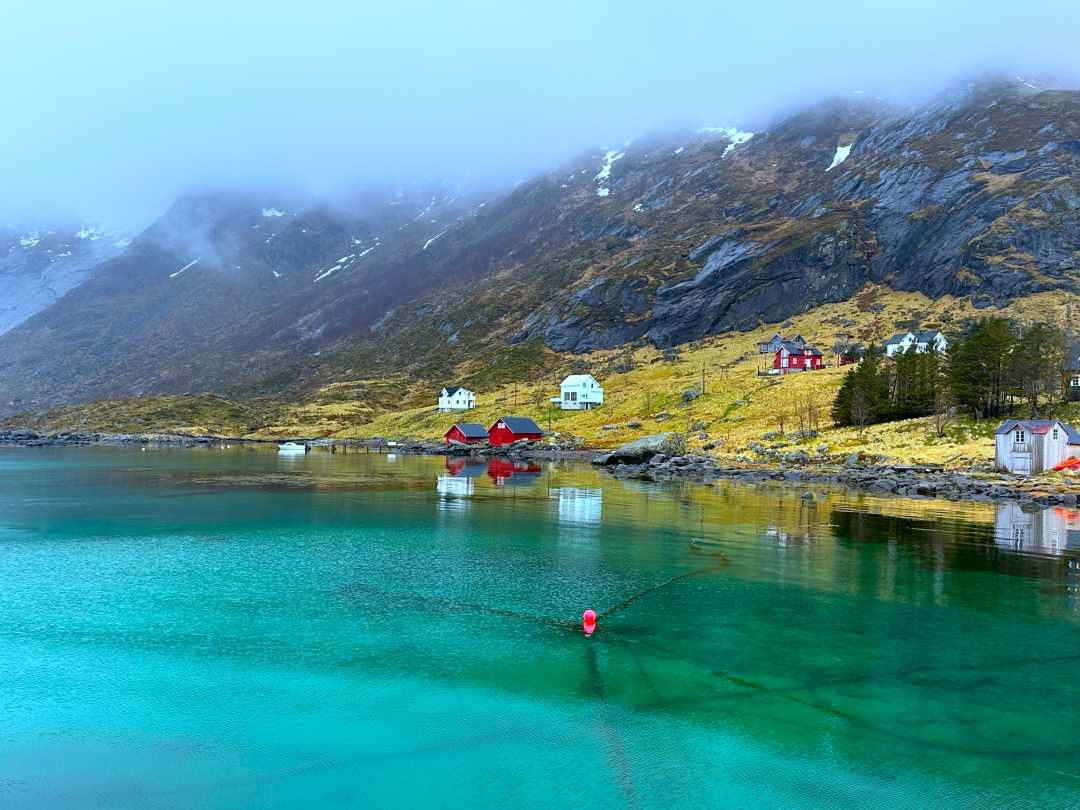
- Snowy peaks, green lowlands, and turquoise water
- Fewer people in iconic photo spots
- Ever-changing light conditions
Whether you’re shooting with a phone or a full camera kit, spring light in Lofoten delivers.
Northern Lights in Early Spring

Yes, you can still see the Northern Lights in Lofoten in early spring, especially in March and early April.
As long as the skies are dark and clear, aurora sightings are possible, making spring a rare season where you can experience both longer days and northern lights.
Horseback Riding Adventures
Go horseback riding at Hov Gård, about 40 minutes from Svolvær.
Deep Sea Fishing
The “skrei season” (the migratory cod that is super famous in Lofoten, there is even a world championship) lasts from winter (January) until April-ish, so you can also go skrei fishing in the spring!
Not all fishing boat companies are active yet, so again – do your research! But if you visit Lofoten, AND you love fish, this might be an adventure for you.
Lofoten in Spring Weather: What to Expect

Let’s talk honestly about the weather, because yes — this is the Arctic.
Temperatures and Climate in Lofoten in Spring
Spring temperatures in Lofoten are milder than many expect, thanks to the Gulf Stream.
Typical conditions:
- March–April: around 0–7°C (32–45°F)
- May: often 5–12°C (41–54°F)
Yet, the coastal climate of northern Norway means the weather can change quickly, although extreme cold is rare.
That said, during the spring season, you can be “lucky” enough to arrive just in time for a fierce spring storm, with horizontal rain and winds that make it difficult to walk outside.
Snow, Rain, and Road Conditions
You’ll still see snow in spring, especially in the mountains, but:
- Main roads are well-maintained
- Driving in Lofoten in spring is generally safe, and accidents are far fewer than during winter
- Occasional rain or even snow showers are normal
Always check road conditions if you plan longer drives, but for most visitors, spring road trips are smooth and scenic.
Also read: 10 Must-Know Things About Safe Winter Driving In Norway
Daylight Hours and the Return of the Midnight Sun
One of the biggest perks of spring is how fast daylight increases.
- By April, days feel long and bright
- In late May, the midnight sun begins in Lofoten (on the 28th, to be exact)
More daylight means more time to explore, photograph, and simply enjoy being outdoors.
Where to Stay Visiting Lofoten In Spring
Most places stay open in Lofoten all year round, although some resorts and hotels still close during the Christmas holiday.
Then, sometime in late January or February, most places (and services) start opening, although sometimes with reduced opening hours. So for the spring season, here is my best advice.
Rorbuer And Cabins In Shoulder Season
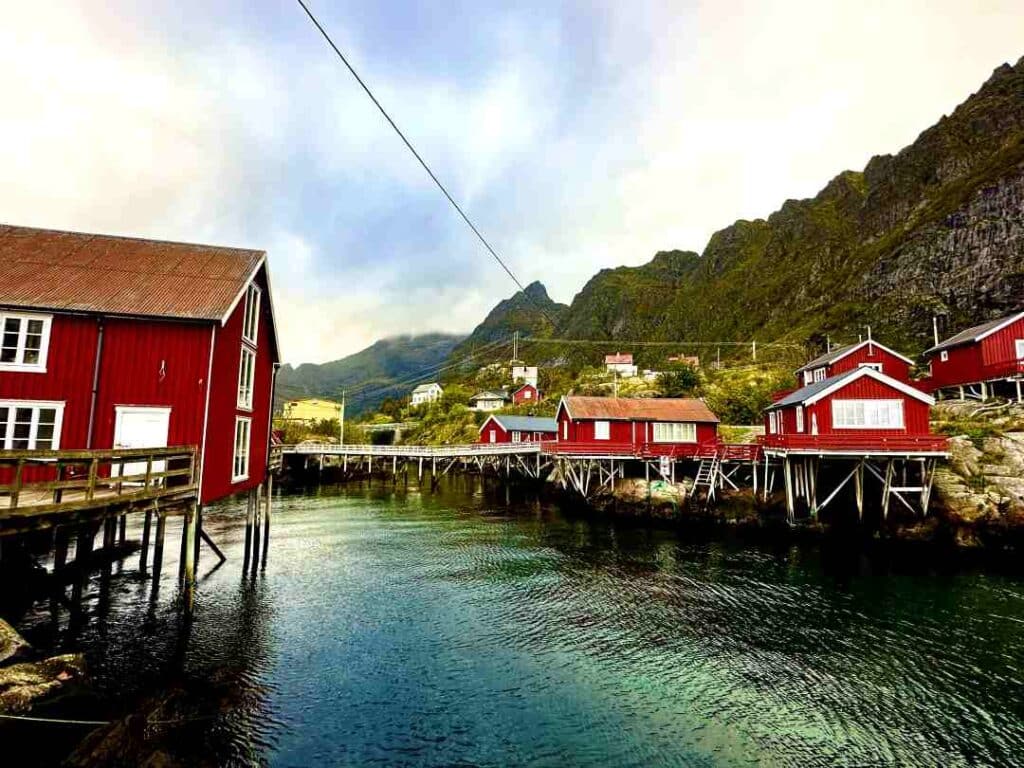
Staying in a traditional rorbu (fisherman’s cabin) is the most popular accommodation year-round in Lofoten, for many visitors staying in a rorbu is one of the highlights of the visit.
Although these are old, traditional cottages, they are often also the most expensive accommodations in Lofoten.
So if you visit during spring (or autumn) or any shoulder season, you might be able to find a really good rorbu deal compared to February or July.
Hotels and Guesthouses

Most hotels and guesthouses are open when spring arrives, especially from April onward, and availability is rarely an issue compared to summer.
Although there are actually not too many “hotels” as we know them (big buildings with many rooms) in Lofoten. There are more small resorts with cabins, cottages, or rorbus.
If budget is your main concern, traveling to Lofoten in spring is probably a good option for you, and if you also dont mind sharing accommodation, you can get prices down to very decent in the low seasons.
Camping for outdoors enthusiasts
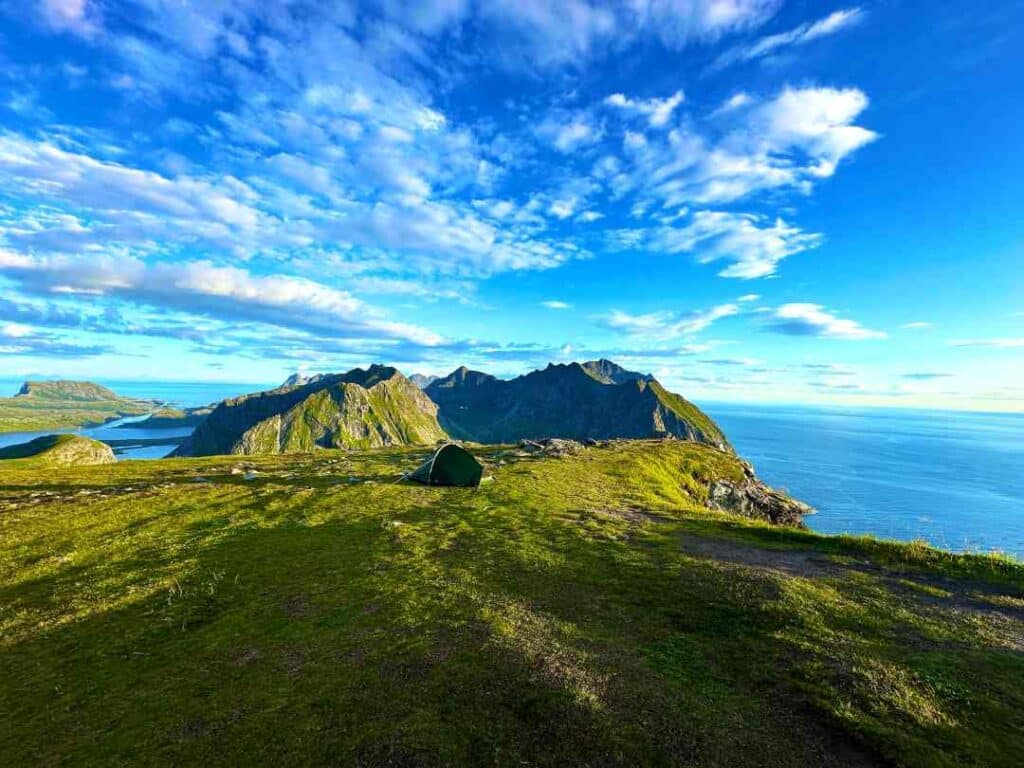
Or go camping. March might be a stretch weather and temperature-wise for most travelers, but from mid-April through May, camping is a real option if you are a bit outdoorsy.
If you choose camping, there is a good selection of camping sites along the E10 close to the most famous Lofoten destinations.
Wild camping is also legal anywhere in Norway, but let me also plead with you not to go camping indiscriminately. We say “leave no trace”, which is the most important, but also – Lofoten is our home.
If you go camping and enjoy our nature, mountains, fjords, and resources, we will be super grateful if you also leave a bit of resources (money) for us to maintain our nature, our trails, and also our infrastructure.
Please shop in our supermarkets, use our guides, and our camping sites! And most importantly; leave no trace, wherever you have been. Thank you!
Airbnb & Home Stays

There are more and more homestays available in Lofoten, both on Airbnb and on Booking.com, and other accommodation apps.
This can be a super cozy experience living in typical Lofoten homes, and if you don’t mind sharing, homestays are also often on the lowest part of the price scale.
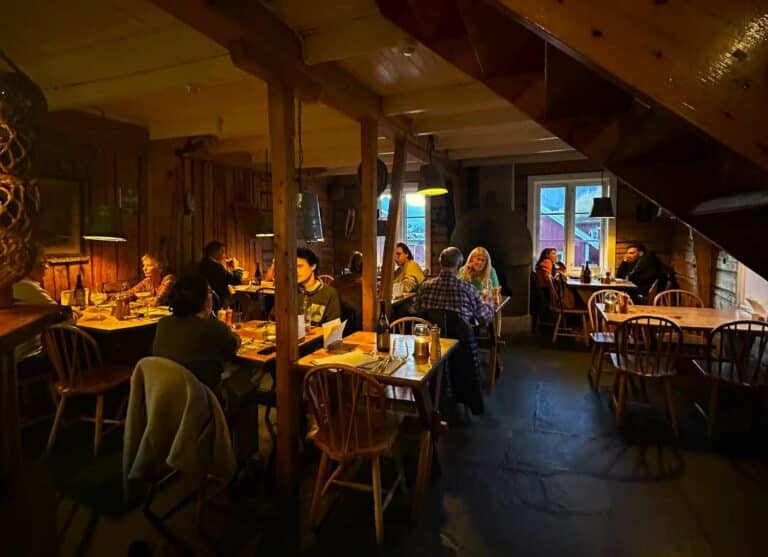
The photo above is actually from my house, as I rent out rooms on Airbnb – and the people in the photo did not know each other from before, but really hit it off being visitors expliring Lofoten.
So that might be you!
What to Pack for Lofoten in Spring
Regardless of what time of year you visit, think LAYERS. This not only includes spring, but is especially important during spring as the weather and elements change quickly.
So: wool, layers, wind, waterproof garments, hats, gloves, and good shoes.
Clothing for Changing Weather
Think layers:
- Warm base layers, preferably wool
- Insulating mid-layers
- Waterproof and windproof outer shell
- Woolen socks
- Hats and gloves that can deal with water and humidity
- Sturdy, warm shoes
- Thermos and water bottles
This is classic Arctic travel layering, and it works.
Footwear and Outdoor Gear
- Waterproof hiking boots
- Optional traction devices if you plan hikes
- Head light
- Hat, gloves, and a warm scarf — even in May
- AND
- Power bank
- Extra batteries
- Memory cards for your camera
Getting Around Lofoten in Spring

During the spring season in Lofoten, there is more public transport available than in winter, but not as much as in the summer season.
Also, the weather can still be “a lot”, and so you must prepare for delays or cancellations in public transport. Mainly ferries, but also flights and buses.
Driving in Lofoten in Spring

A rental car will always give you the most freedom and flexibility, and during spring in Lofoten, the driving conditions will generally not be super challenging.
If you visit early, please be prepared for winter conditions on the roads at times; early spring in Lofoten is not snow-free.
If you are not an experienced winter driver, you might want to check out my article about winter driving in Norway (yes, I am a very experienced winter driver).
Generally, though, driving in Lofoten in Spring is a good option.
- Scenic routes are open
- Traffic is light
- Pull over often — you’ll want to (or people catch up to you, which is a grand gesture. Stay safe and keep traffic safe.
Public Transport In The Spring Season
Buses and ferries are more frequent and more reliable than during winter, but that is never 100%. So, please research bus and ferry departures in advance, and also the days before, and immediately before departure time.
For buses, see: reisnordland.no
For ferries, see: torghatten.no
Guided tours begin to increase in late spring, but always check availability and departures in advance. Lofoten is remote; it is the Arctic, and things are not as easily accessible or wing-it-friendly as in more central areas.
Private Tours During Spring
Private tours in Lofoten during the spring season are a wonderful way to experience the islands at a relaxed and personal pace.
With fewer visitors around, guides have more flexibility to tailor the day to your interests — whether that’s scenic drives along the rugged coastline, photography stops in quiet fishing villages, wildlife spotting, or short hikes adapted to spring conditions.
Spring light, open roads, and calm surroundings make private tours especially rewarding, offering deeper insight into local life and landscapes while allowing you to enjoy Lofoten without crowds or time pressure.
FAQs Lofoten In Spring
Is Spring a Good Time to Visit Lofoten?
For many travelers, the answer is a clear yes — with a few caveats.
Pros of Visiting Lofoten in Spring
- Fewer crowds than summer
- More affordable accommodation
- Incredible light and scenery
- A relaxed, local atmosphere
Cons and Challenges
- Unpredictable weather
- Some hiking routes are still snow-covered
- Limited seasonal tours early in spring
If you value slow travel, nature, and flexibility over ticking off every activity, spring is a wonderful time to visit.
Visit Lofoten in Spring vs Summer and Winter

Lofoten doesn’t really do “average.” Each season has a strong personality, and choosing when to visit is a bit like choosing which version of the islands you want to meet.
Winter is fierce, dramatic, and a little wild.
This is Lofoten in full Arctic mode — polar nights, snowstorms, and mountains disappearing into blowing snow. The light is blue and moody, the sea is dark, and the Northern Lights dance when the skies allow it. Winter is powerful and beautiful, but it demands respect.
Roads can be challenging, the weather can change in minutes, and everything feels raw and untamed. If you love extremes and adventure, winter delivers.
Summer is the opposite — bright, social, and endlessly awake.
From late May to July, the sun never sets, and Lofoten glows around the clock. Beaches look tropical (until you touch the water), hiking trails are fully open, and life spills outdoors at all hours.
It’s lively, energetic, and absolutely stunning — but also busy. Summer is when everyone wants a piece of Lofoten, and the islands know it.
Spring is the quiet middle child, and arguably the most balanced.
It borrows snow from winter and light from summer, without fully committing to either. Mountains are still white, roads are open, and daylight stretches longer every day.
There’s space to breathe, to stop for photos without an audience, and to feel the rhythm of the islands rather than chase it. Spring doesn’t shout like winter or glow endlessly like summer — it simply invites you in.
If winter is Lofoten at its most intense, and summer is Lofoten at its most social, spring is Lofoten at its most schizophrenic, to be honest. But it is also the most fun.
- Compared to summer: fewer people, softer light, calmer pace
- Compared to winter: easier driving, more daylight, milder weather
You get the best of both worlds.
Final Thoughts: Who Should Visit Lofoten in Spring
Spring in Lofoten is perfect for:
- Nature lovers
- Photographers
- Solo travelers
- Anyone craving space, silence, and beauty
If you want to experience the Lofoten archipelago in a way that feels genuine, unrushed, and deeply connected to nature, spring might just be your season.
It’s quiet, powerful, and unforgettable — just like Lofoten itself.