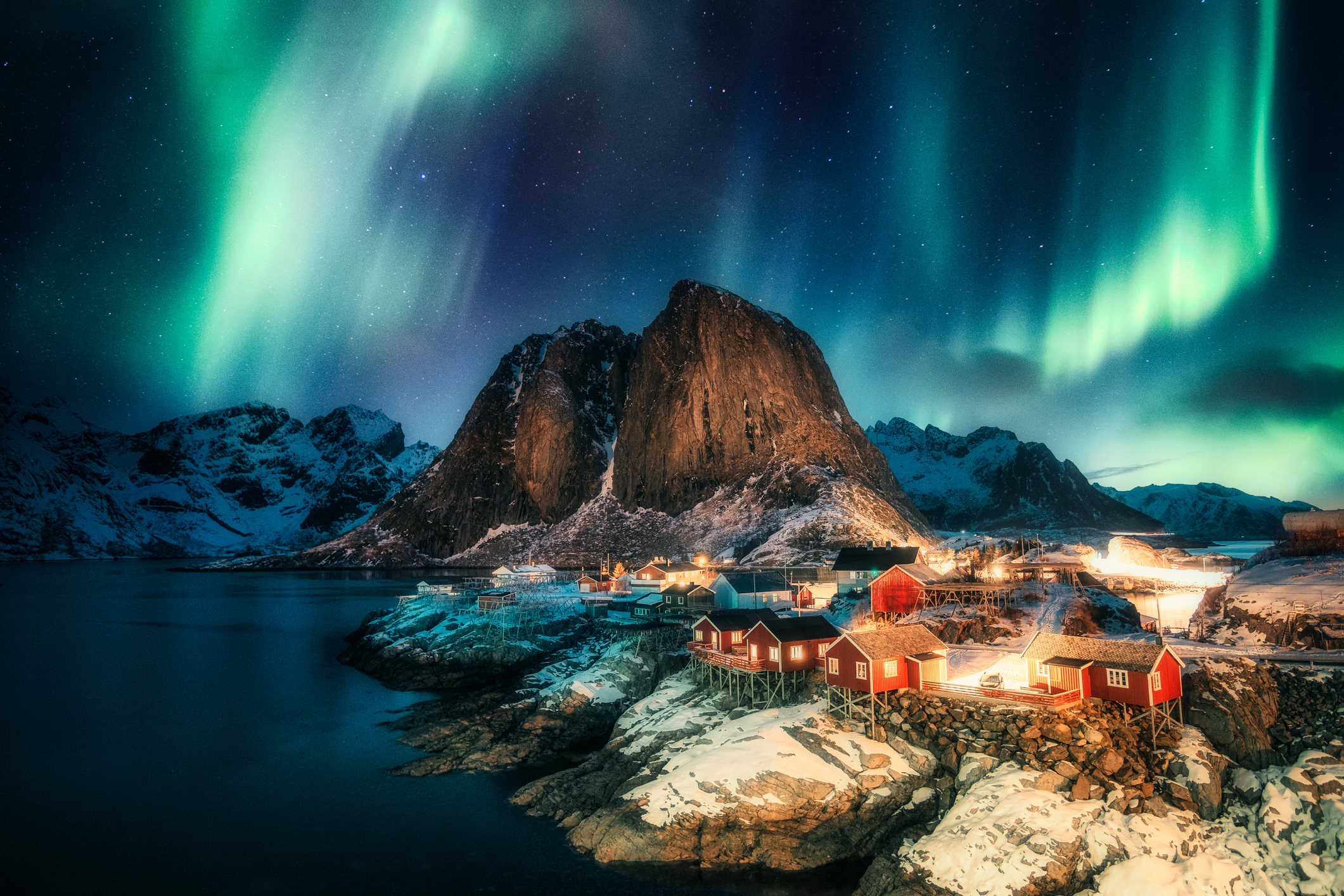
Best Places to See the Northern Lights in Lofoten (From a Local)
The northern lights season in Lofoten runs from September to mid-April, at best. Outside that window, the midnight sun and short nights keep the sky too bright to see anything, no matter how strong the solar activity is.
So that is your window, weather permitting. And we do have a fair share of “weather” here in the shoulder seasons and winter, including cloud cover, so I advise you to manage your expectations there, too.
Everything else- things like where you stand, how far or where you drive, how long you wait- are details. I’ve lived above the Arctic Circle for years, and the last stretch of it has been right here in Lofoten.
Here’s where to go, what to check before you go out, and which spots in Lofoten actually give you the best northern lights shot.
The Best Places to See the Northern Lights in Lofoten
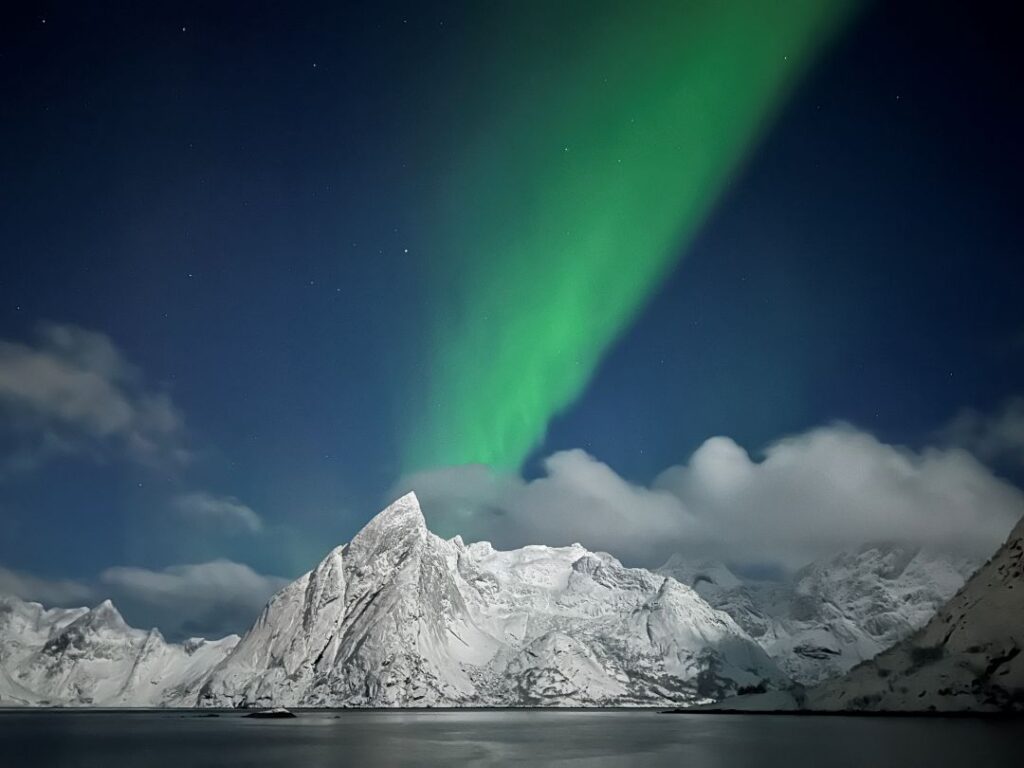
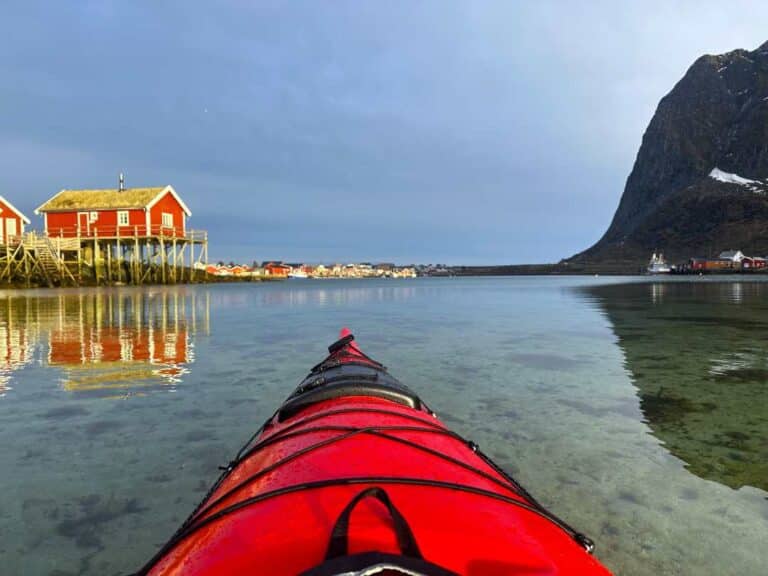
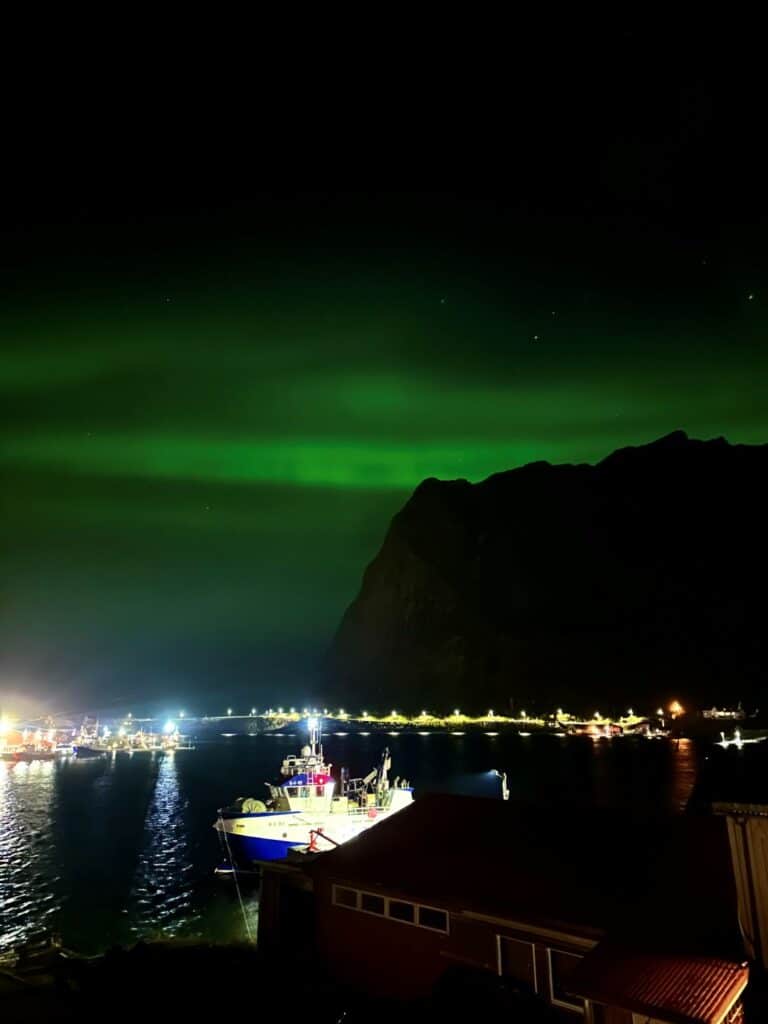
The first thing to know about chasing the lights in Lofoten: you don’t really chase them. You just put yourself somewhere dark enough, long enough, and wait. Like the photo above, which I took myself from Hamnøy Island in Reine, towards the Reine fjord last winter (yep, cold).
In fact, I took all the photos in this article with my iPhone, in case you are wondering.
If you dream of seeing the Aurora against an incredible, goosebump-inducing natural backdrop for your photo shoot, some spots are better than others.
Best places to stay:
- Svolvær: Svinøya Rorbuer for high-end fisherman’s cabins
- Henningsvær: Trevarefabrikken for trendy merged traditional: the old woodwork factory
- Reine: Catogården Boutique Hotel in an old fisherman’s home in Reine (shared amenities)
From The White Sandy Beaches
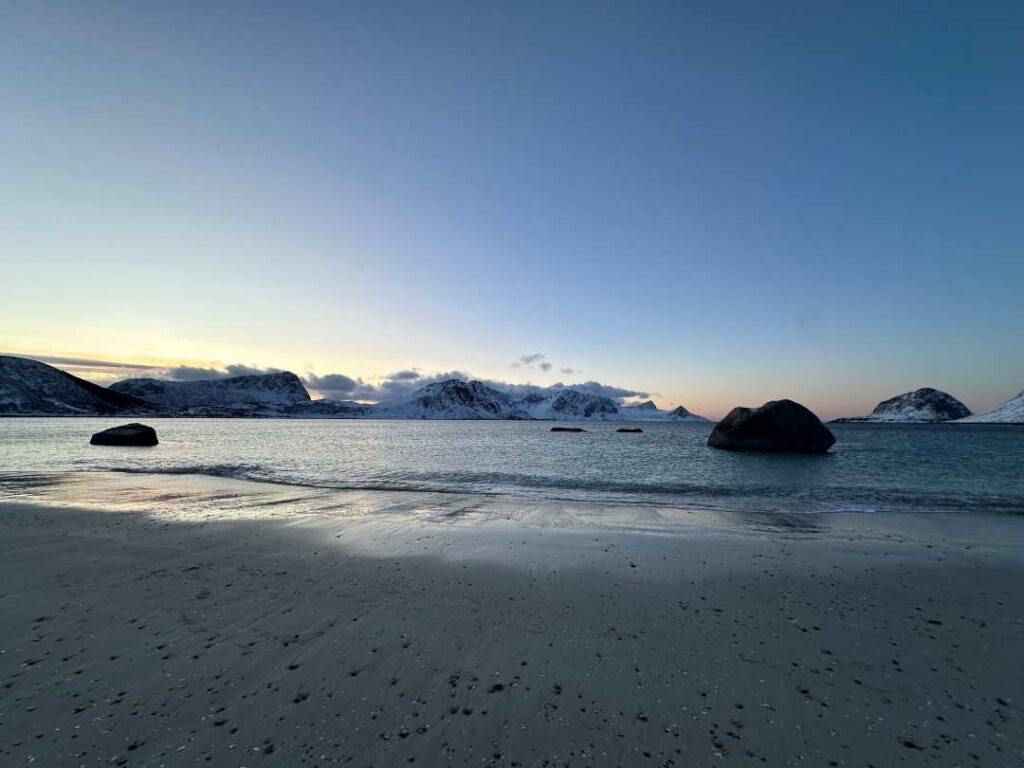
To make it easy for you, I will just list the beaches here from north (Svolvær) to south (Å in Lofoten), and at the end are the ones you can only reach on foot.
Austvågøy Island
- Rørvika Beach: A small sandy beach right by the E10 just 15ish minutes south of Svolvær, with mountains behind it and very little light. Easy to reach from the E10, and good when you want a dark sky without a long drive.
Gimsøy Island
- Gimsøysand: Flat land, a wide beach and an open horizon in almost every direction. Gimsøy has none of the steep mountains you find elsewhere, so you get “more sky” than nearly anywhere else in Lofoten. A strong choice when the aurora is high and wide.
Vestvågøy Island
- Unstad Beach: At the end of a valley on the outer side of Vestvågøy, Unstad is best known as an Arctic surf beach. Only a few houses, and the mountains on both sides shield you from light. Stunning, but expect a cold wind off the sea.
- Uttakleiv Beach: North-facing. It is known for the round rock pool that photographers call the “dragon’s eye,” which has framed thousands of aurora photos. Open sky to the north and almost no light.
- Vik Beach: Between Uttakleiv and Haukland, by the tunnel. Smaller and quieter than its neighbors, and open to the north. A good alternative when the other two car parks are full.
- Haukland Beach: About a quarter of an hour from Leknes, in a sheltered bay with mountains on all sides. A proper car park makes it one of the easiest beaches to use at night. Popular, but still dark enough.
- Storsandnes Beach: Quiet and shallow, and on calm nights the mountains and the sky are mirrored in the water. Few people, little light. To get here, exit the E10 just south of the Nappstraumen subsea tunnel.
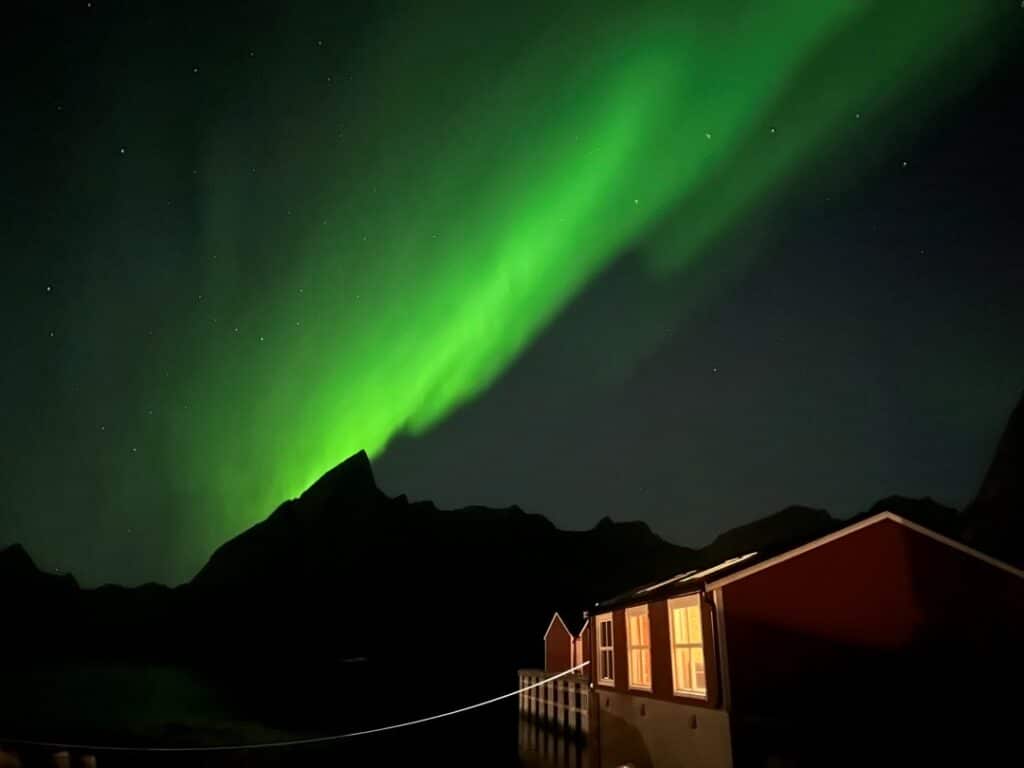
Flakstadøya Island
- Flakstad Beach: Next to the red Flakstad church. The backdrop of the church gives the aurora a very unique foreground. Park by the church, not on the roadside.
- Skagsanden Beach: By the E10 at Flakstad, by Lofoten Beach Camp with sand, rocks, and Hustinden mountain rising behind. When the tide goes out, ripples form in the sand, and the water reflects the sky, so it is one of the most photographed aurora beaches in Lofoten. Expect company on clear nights.
- Ramberg Beach: A long white beach right next to the E10 in Ramberg, with just a handful of houses around it. The view goes to the west out to the open sea, so there is plenty of sky. Easy access, little light, and space to spread out.
Moskenesøya Island
- Yttersand Beach: White sand at the end of the road beyond Fredvang (cross the two bridges from the E10), facing north out to the open sea. Few houses, little traffic, and an open horizon. One of the easiest dark beaches to reach by car, but with narrow roads, so use your GPS.
Only reachable on foot
Bunes Beach (Moskenesøya): No road and no village, so no lights. You take the ferry from Reine to Vindstad, then hike about 40 minutes across the island, with Helvetestinden rising straight up behind the sand. In winter, the ferry runs sparsely, so check the schedule before you plan a trip here. And yes, you probably need to spend the night.
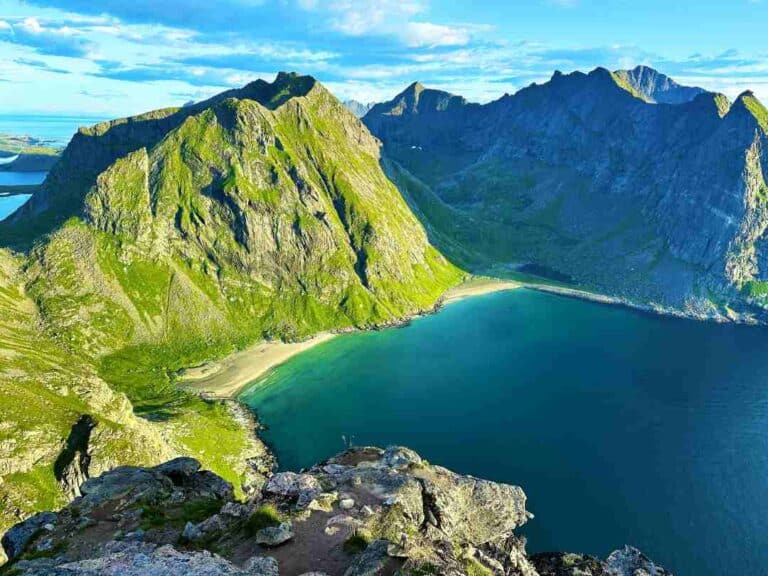
Kvalvika Beach (Moskenesøya): A bay closed in by steep mountains, reached on foot from Fredvang, a hike of around 1,5 hours one way. The surroundings make it one of the most spectacular aurora spots in Lofoten. They also make it one of the most demanding: a winter hike with snowshoes in snow and wind is not an evening outing for the inexperienced or unprepared.
Horseid Beach (Moskenesøya): One of Lofoten’s most remote beaches. Reached by ferry into Kjerkfjorden and a longer hike over the pass, with nothing between you and the sky but mountains. It is a fine place for the aurora. In the dark winter, it is for experienced hikers who know the terrain, can assess danger and take care of themselves, and nobody else.
Reine — from the village, not the summit
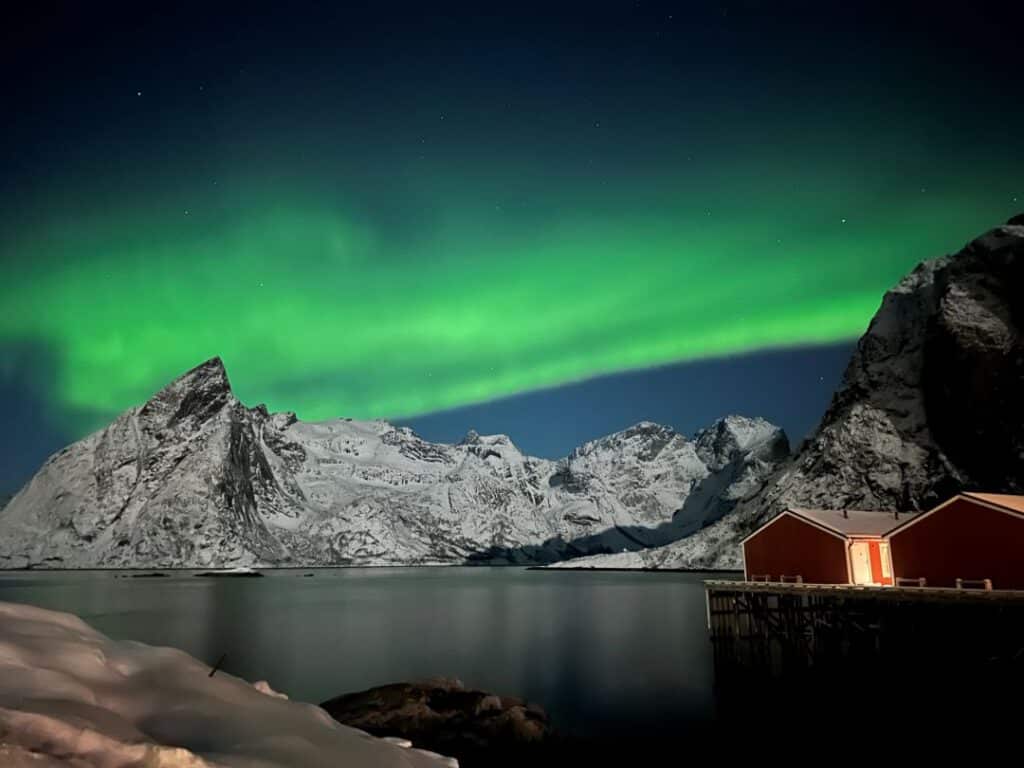
Reine’s fjord views are some of the most famous and striking in Lofoten, and they don’t stop working after dark. The village sits beneath Reinebringen, overlooking the West Fjord, the Reine Fjord, with Hamnøy and Sakrisøy islands nearby.
One important note: don’t try to climb Reinebringen in winter for a better angle. I’ve written about that hike separately, and the short version is that it’s steep, exposed near the top, and genuinely dangerous in snow, rain, wind, or darkness. Generally “closed” from October to April or even May.
Watch for the lights from the harbor or the shoreline, or your own window instead. The view is still excellent, and you keep both ankles intact. Be aware that from the actual village, there is a bit of light pollution, although not a lot.
Hamnøy Bridge
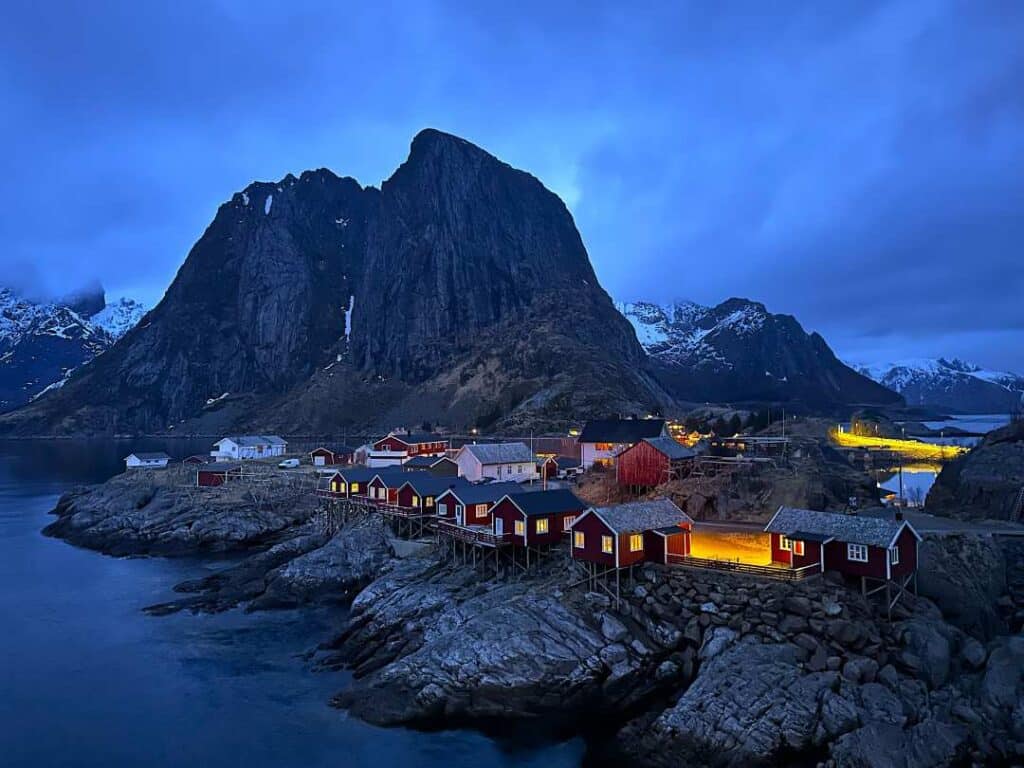
This is the most famous and most photographed spot in Lofoten, apparently, but there is also a reason for that.
The bridge viewpoint right off Hamnøy Island is where you can capture the red fishermen’s cabins with the backdrop of the majestic Festhælen mountain. Combine that with northern lights dancing over the mountains, and it’s an even more spectacular sight.
So be it that you are standing on the road or right next to the road. The experience, and the shots, will be amazing.
Along The E10, Basically Anywhere
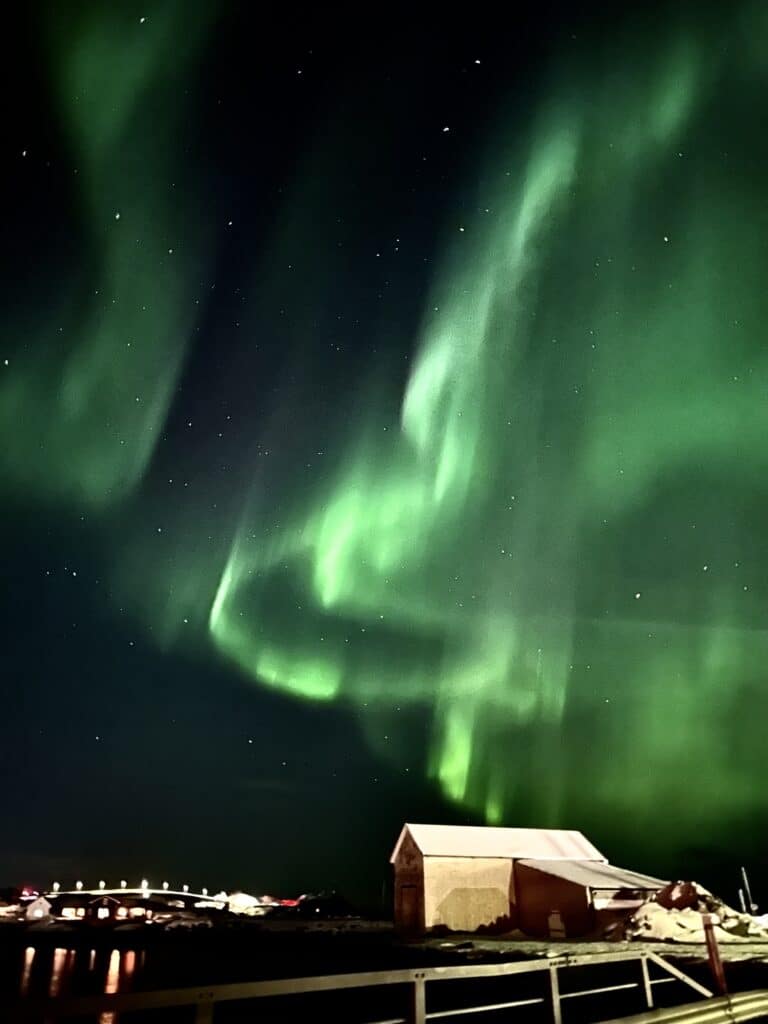
This is an option nobody mentions in the glossy guides, but this is a real option. I don’t know how many times I have pulled over into a pocket while driving, because the Aurora suddenly started dancing above my car.
Mind you, you can not just stop anywhere; be very mindful and considerate about other traffic. The E10 has frequent small pull-off pockets for stops and passing, so if you spot the Northern Lights from your car, you don’t have to drive far to find one.
On a clear night with activity on the forecast app (I use Aurora Me), pulling into one of these for ten minutes to shut down the car and look around costs you nothing and has worked for me more times than many a planned expedition.
Just use your hazards, keep well off the road, and switch to low beams before anyone else comes around the bend. Much of the E10 has no streetlights, and a car with its brights on in a dark layby can startle the next driver.
Your Own Rorbu Balcony
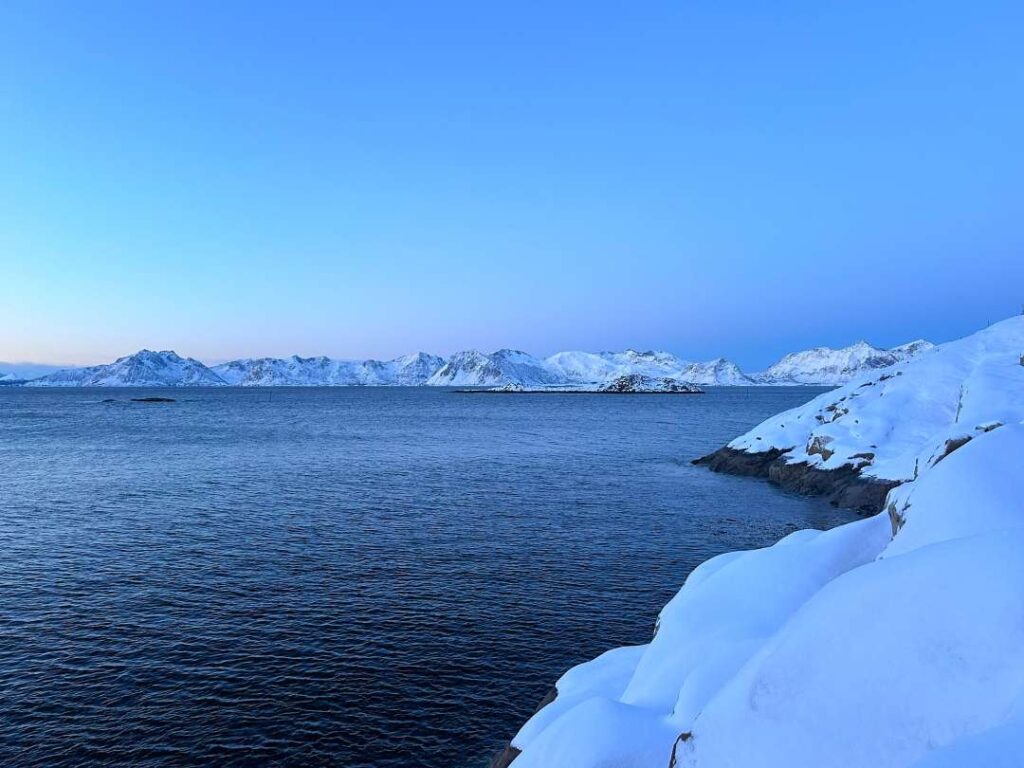
If you’re staying in a rorbu with a view, you don’t need to go anywhere. Several of the places I’d actually recommend staying in Lofoten are set up for exactly this.
What you need to check is that you book a rorbu with a view, because not all fishermen’s cabins have unobstructed views of fjords and mountains. Look for “waterfront” or “sea-facing” in the description, large windows, and make sure you read the entire cabin description before you book.
From A Hot Sauna Seat
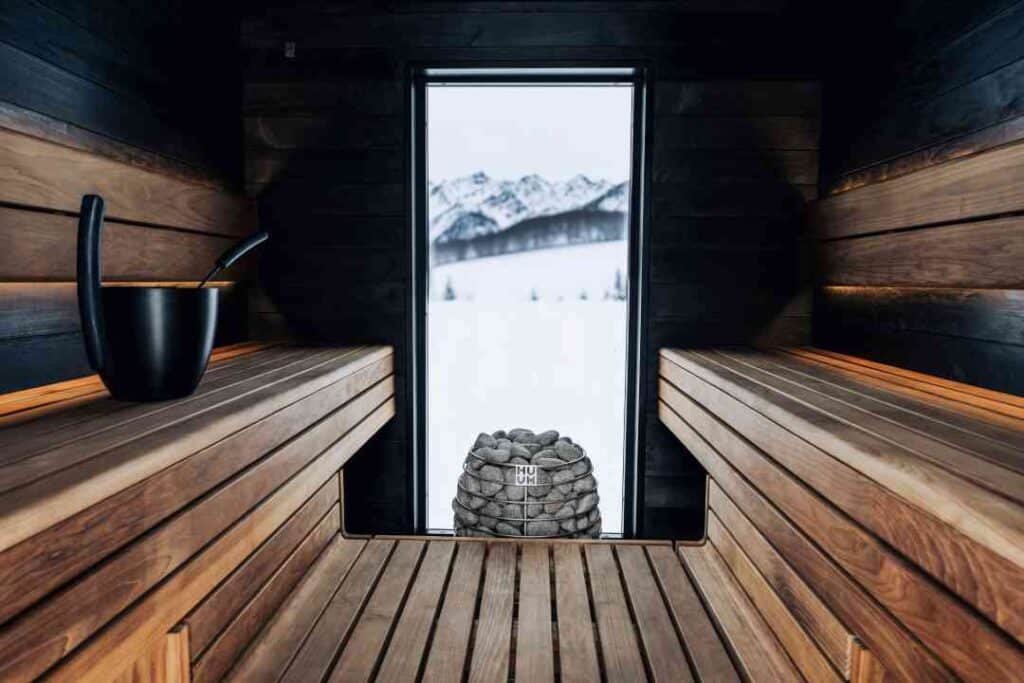
You find saunas all over Lofoten, some floating on the Arctic water, others nestled just on the shore, with spectacular views over fjords and mountains.
Although they are not open late at night, remember that during winter it is dark 24 hours a day, so you can stumble across the aurora any time of day. Just imagine sitting in the hot sauna and popping out to dip in 4-degree water under a dancing aurora in the sky.
Sounds unbelievable? Not at all; this experience is very possible, as long as there are solar storms, clear skies, and a sauna.
Here are some you should check out:
- LYST Lofoten Sauna — Svolvær
- Lofoten Sauna at Svinøya Rorbuer — Svolvær
- Trevarefabrikken — Henningsvær
- Skårungen — Kabelvåg
- Hov Sauna — Hov, Gimsøy
- Solsiden Brygge — Ballstad
- FURU Hostel Lakeside Sauna — Bøstad, Vestvågøy
- Lofoten Beach Sauna — Ramberg, Flakstad
- Reinefjorden Sjøhus — Hamnøy, near Reine
- Bensvik Brygge — Værøy
Photography Tips That Matter
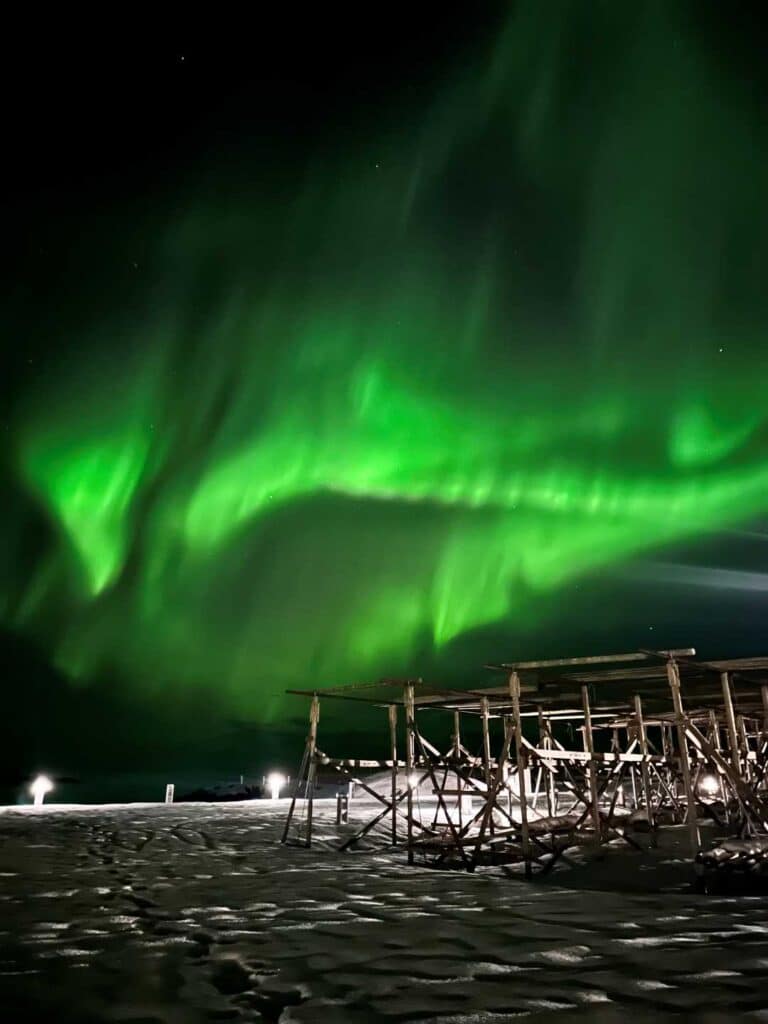
Tips for Photographing the Northern Lights: There are a few things you should pay attention to, in addition to dressing up in really warm clothes. It could take a while.
- Use a tripod: Essential for keeping your photos sharp during long exposures (I did not have one in the shot above; you might see that).
- Use manual mode: Start with a shutter speed of 2–5 seconds, aperture f/2.8 or wider, and ISO 1600. Adjust as needed.
- Focus manually: Focus on a bright star using your camera’s screen, then avoid changing the focus.
- Use a wide-angle lens: Capture more of the aurora and the surrounding landscape.
- Include a foreground: Mountains, fishing cabins, beaches, and fjords make your photos more interesting.
- Shoot in RAW: This gives you more flexibility when editing colors and exposure.
- Find a dark location: Move away from streetlights and other sources of light pollution.
- Keep your batteries warm: Cold weather drains them quickly, so bring a spare in an inside pocket.
- Experiment with exposure: Use shorter exposures when the aurora moves quickly to preserve its shapes and detail.
- Check your composition: Keep the horizon straight and take a few test shots to adjust your settings.
Oh, and you can get really good shots with a phone, too; the tripod is really the key for clear photos.
Tip for beginners: If you use a smartphone, activate Night Mode, stabilize the phone on a tripod or solid surface, and use a long exposure setting if your phone offers one.
When to See the Northern Lights in Lofoten
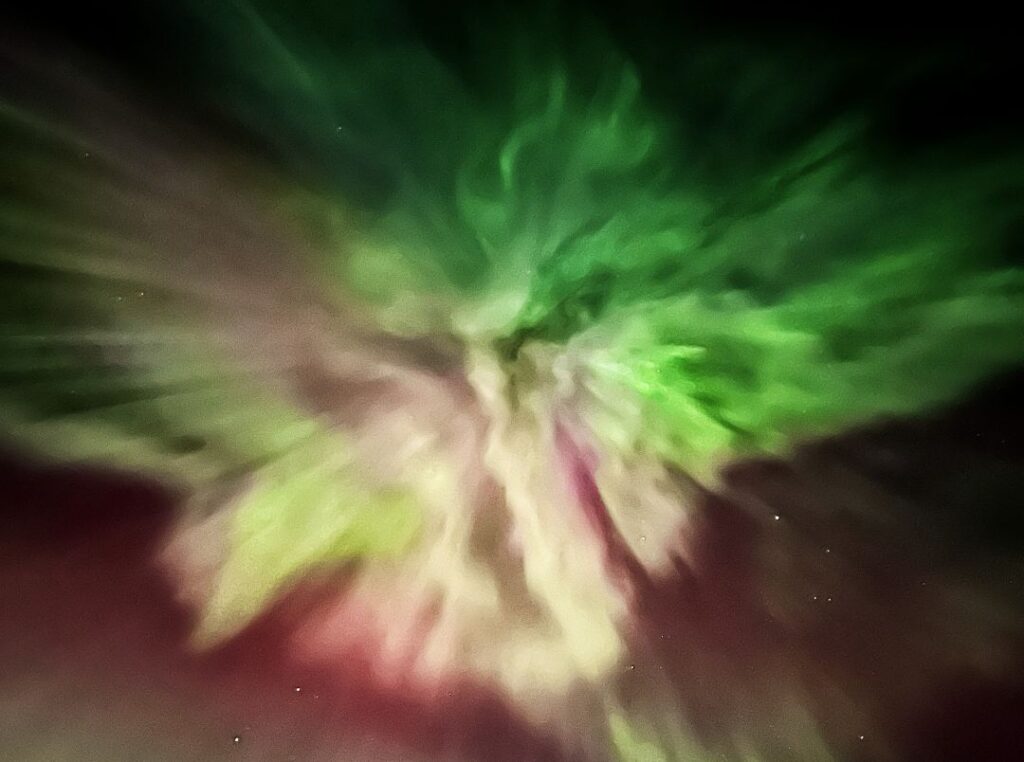
Three things need to line up: a dark sky, a clear sky, and solar activity. Lofoten takes care of the first one for half the year. This far north, you get real darkness from around late August through April.
From mid-April to late August, forget it. The midnight sun means there’s no true night, so there’s nothing to see the lights against.
Clear sky is the one you can’t control and the one that ruins the most plans. Lofoten’s weather comes in off the sea and changes its mind constantly, so check the forecast the same evening, not three days out.
Solar activity is the wildcard. We’re a few years past the last solar maximum, which peaked around late 2024. Activity is easing off now, but the decline isn’t a straight line; strong geomagnetic storms still show up with little warning, including some notably severe ones in early 2026.
What to Check Before You Go Out
I use an aurora forecast app (My Aurora Forecast is the one most people land on) and cross-check it against a plain cloud cover map for Lofoten specifically (yr.no), because the app’s cloud layer isn’t always accurate for a coastline this fragmented.
A KP index of 3 or higher is a good sign at this latitude. Below that, you can still get lucky; I have several times with a KP around just 2. Lofoten sits well inside the Aurora oval, so we don’t necessarily need the KP numbers that mainland Europe does.
New moon nights help, but they’re not essential. A bright aurora will beat a bright moon most of the time.
And dress like you know where you are. You will be standing still, outside, in the dark, probably for longer than you planned. What to pack for Lofoten in winter is worth reading before you go.
Wrap Up & A Few Honest Caveats
Nobody can guarantee you the northern lights on a given night or period or time of year, and anyone who tells you otherwise… well. You might get four clouded-out nights and one spectacular one.
If you’re only in Lofoten for one or two nights, build in a plan B, a sauna, a late dinner, an early bed – something that makes a quiet sky not feel like a wasted evening.
If you’d rather have someone else handle the forecasting and the driving, Lofoten also has guided aurora tours where you can just show up and enjoy the ride and hopefully the sky.