Seasonal Work in Lofoten: Jobs, Housing, Visas and How to Apply (2026–27)
Lofoten has roughly 24,500 residents and around one million visitors a year. As you might see, no local workforce closes the gap in the need for workers here.
Seasonal workers in Lofoten fill it: people from all over the world arrive in spring or early winter, spend a few months in hotels, kitchens, guiding companies, or fish plants, and go home.
I have lived in Reine for over two years, which by now makes four seasons and counting.
Twice a year, new staff arrive fresh off the ferry or the plane, slightly wide-eyed at the scale of the mountains, about to start a few months of work in one of the most spectacular and physically demanding places in Europe.
Some of our seasonal staff are 23 and between things. Others are 40 and have decided a desk job is no longer the whole answer. But what our seasonal workers have in common is not age or background.
It is that they chose this remote, spectacular place above the Arctic Circle specifically, when they could have gone anywhere.
This guide covers what a season in Lofoten actually involves: which jobs exist, when they open, where you will live, what the pay and tax rules look like, whether you need a permit, and how to apply. It also covers what the job listing leaves out; everything else.
Seasonal Work in Lofoten: The Short Version
- Two high seasons. Summer runs from about mid-May to September (some employers run into October). Winter runs from late January to mid-April, built around the Northern Lights tourism.
- Most common jobs: reception, housekeeping, kitchen and waitstaff, guiding and activity staff, museum hosts, and fish processing in winter.
- Housing: many established employers provide it or help you find it. Some don’t. Ask before you accept, as it can be hard to find on your own.
- Language: English is enough for many tourism jobs. During summer, French and Italian are a plus. During winter, Chinese is a huge plus. Some roles want a Scandinavian language.
- Permits: EU/EEA citizens can work without a permit. Everyone else needs a permit or a working holiday visa.
- When to apply: January to March for summer. September to November for winter.
Why Lofoten Needs Seasonal Workers
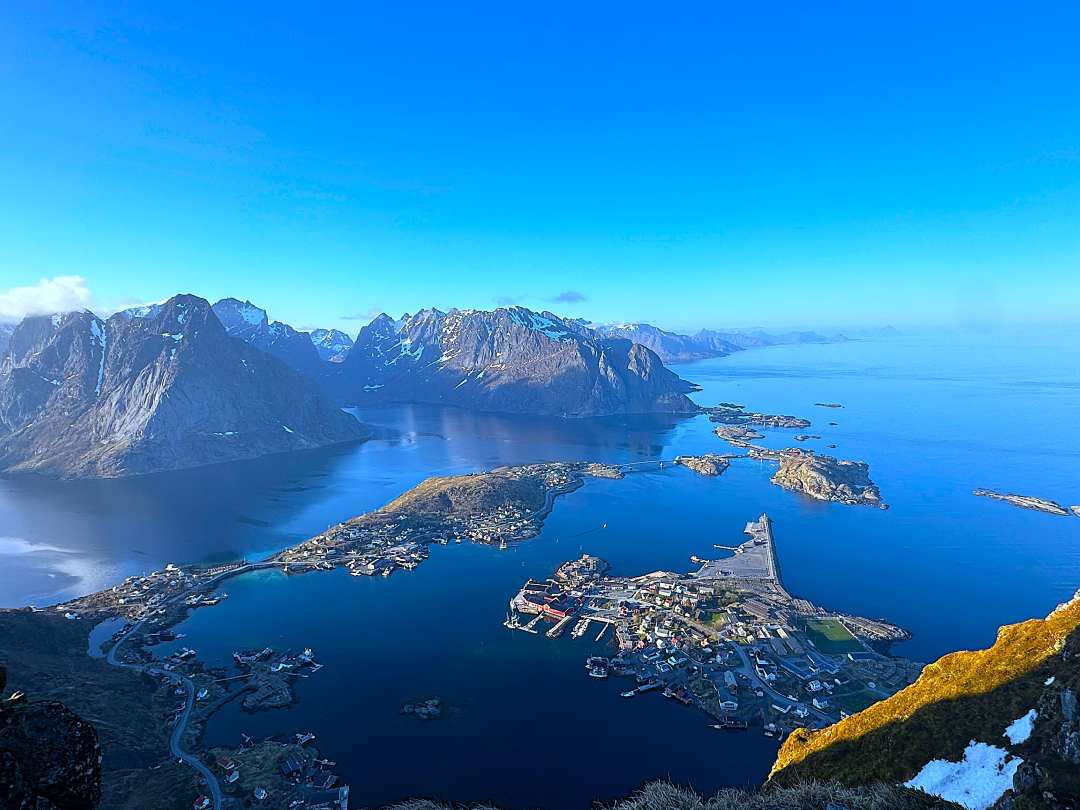
Lofoten is an archipelago of six municipalities, about 1,200 square kilometers, and just under 25,000 people registered as living here. Small fishing villages and narrow roads. Mountains that drop straight into the fjord.
And then the visitors arrive. Official statistics count more than 600,000 commercial guest nights a year. Once short-term rentals and free camping are included, the estimate is around one million visitors.
The local population cannot absorb that alone. Not even close. Hotels, rorbuer (the red fishermen’s cabins Lofoten is known for), restaurants, tour operators, kayak companies, and guiding services all need extra staff for the high seasons, and most of them have to come from outside.
If you have visited Lofoten, you have had a trip that ran mainly on seasonal workers. Your rorbu was ready when you arrived; your guide was at the trailhead. Your dinner came out of a full kitchen. Most visitors never think about it, which this guide will help you change.
You are now thinking about it from the other side.
Related: Ultimate Lofoten Islands Travel Guide From A Local
When Is the Work? Lofoten’s Two Seasons
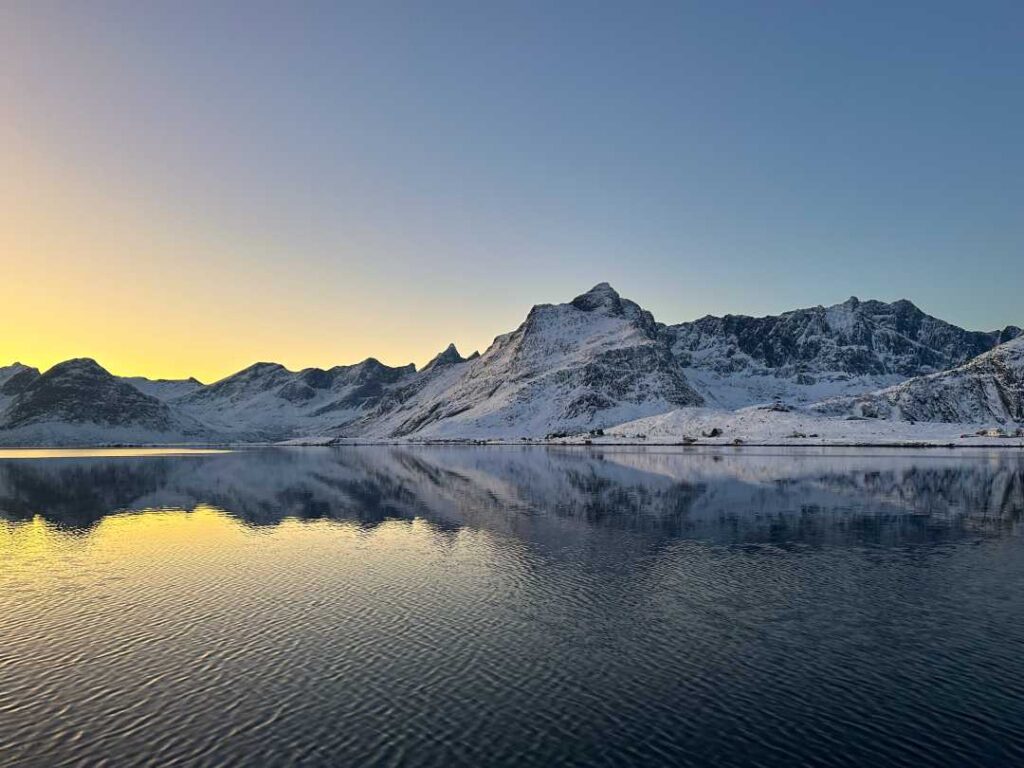
The two seasons are different in character, and so are the jobs that come with each. Know which one you are applying for.
| Summer season | Winter season | |
|---|---|---|
| Roughly | Mid-May to September (some into October) | Late January to mid-April |
| Driver | Midnight sun, hiking, road trips | Sightseeing, show shoeing, kayaking, Northern Lights |
| Typical jobs | Hospitality (housekeeping, reception, serving), guiding, museums | Hospitality (housekeeping, reception, waiting), guiding, museums, fish processing |
| Character | Full capacity, long days. Midnight sun aka midnight hiking, kayaking, and more. | Challenging environment, storms, polar night, compressed energy. Can be magical in the blue light 🙂 |
Summer Season: Mid-May to September
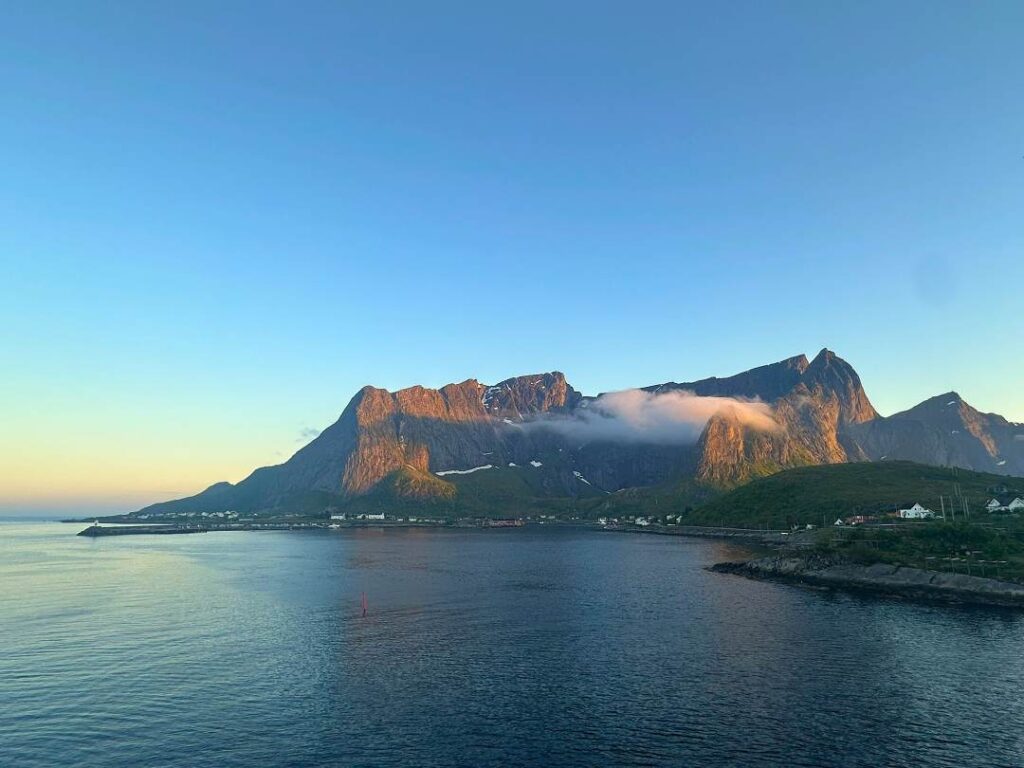
This is the busy one. Summer high season starts in the middle of May, and rund well into October now.
The incredibleness of Lofoten in the summer is the 24/7 daylight and the midnight sun. The photo above is of the Reinebringen mountain at midnight in July.
In Svolvær (the “capital of Lofoten”) the midnight sun runs from about 25 May to 17 July, and visitors arrive from everywhere: hikers, road-trippers, photographers, kayakers, families, couples. Restaurants have waiting lists.
Guided hikes and kayak tours book out weeks ahead.
Summer is when most hospitality and tourism positions open. If you want outdoor guiding work (hiking, kayaking, sightseeing tours), summer is your season.
Norway’s immigration authority also treats hotel, restaurant, and tourism work as seasonal, mainly from May to September/October, which matters if you need a permit.
Winter Season: January to Mid-April
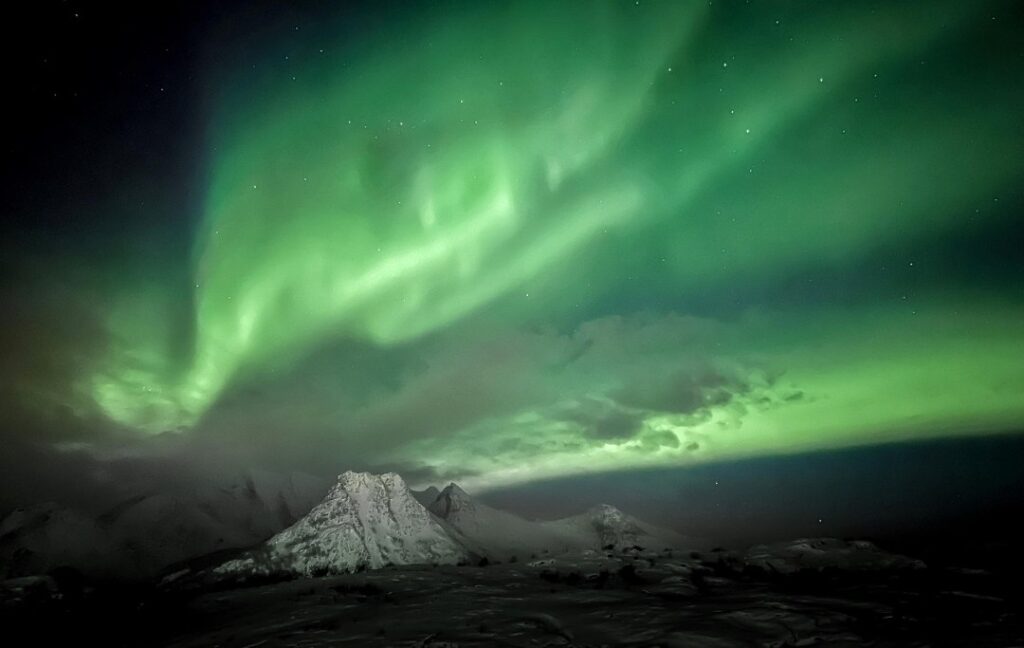
This one is specific to Lofoten. From January to mid-April, the Lofotfisket takes over the islands. It is one of the world’s largest seasonal cod fisheries.
The skrei, the migratory Arctic cod, swim from the Barents Sea to spawn in the waters around Lofoten. Fishermen from along the Norwegian coast converge here, and the fish plants need people for processing.
At the same time, the Northern Lights visitors arrive. Aurora season runs roughly September through March, and winter has become a real draw: dark skies, snowscapes, cold water. Tour operators, hotels, and rorbuer all need winter staff.
Working in Lofoten during winter, prepare for “a lot of weather”, storms, winds, and the Polar Night (mentally, if you can). It is tough, but also stunning, and you will feel very alive.
Winter is quieter than summer in visitor numbers. It comes with its own intensity, though: storms, polar night (in Svolvær the sun stays below the horizon from about 4 December to 7 January), and a fishery that runs on weather and biology, not on your schedule.
Related: Best Time to Visit Lofoten: A Local’s Guide to the Seasons
Seasonal Jobs in Lofoten: What Is Actually Available

Here is what comes up reliably, season after season.
Hospitality and Accommodation Jobs
Housekeeping is the backbone of every rorbu and hotel operation. It is physical, consistent and always in demand. No special background required.
Reception and front desk also have frequent openings. You manage bookings, check-ins, guest communication, and a steady stream of questions from people who arrived from all over the world and need your help. Language skills are an asset. Patience is non-negotiable. Eliassen Rorbuer in Hamnøy, for example, has advertised both housekeeping and reception roles.
Attractions are also looking for seasonal staff in Lofoten, as well as tourist information staff. Look specifically for museums in Lofoten, and check if they have openings on their website, or send them an email with a CV and cover letter.
Maintenance is a real job too. Arctic weather is hard on buildings, and someone has to keep them working. Sometimes this can be an option, but it is not very common.
Food and Beverage Jobs
Waitstaff positions open at restaurants across the archipelago, from fine dining to harbor-side casual. Catering experience helps, but for the right attitude some employers hire without it.
Waiter and kitchen staff positions are also available in most resorts, and even museums with a cafeteria are an option.
Chefs and kitchen staff are consistently sought after, from high-end properties to hostel kitchens. Culinary training makes you a much stronger candidate. Even so, FURU Hostel in Bøstad says outright that skills can be learned and welcomes entry-level applicants for some kitchen roles.
Outdoor, Guiding and Activity Jobs
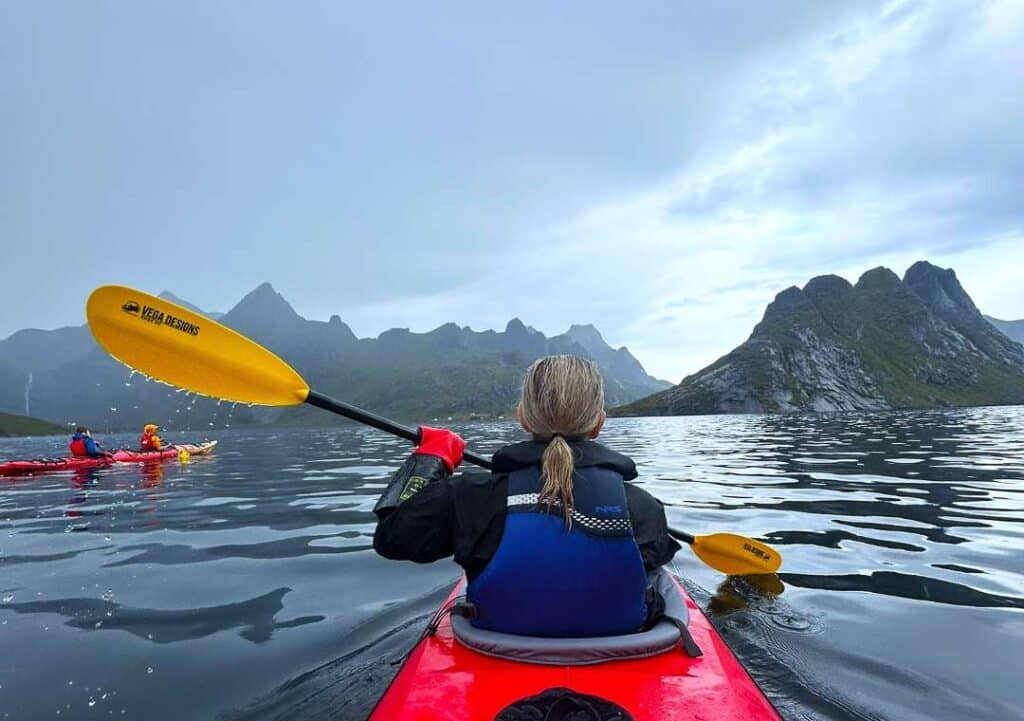
This category has grown as Lofoten’s adventure tourism industry has expanded.
Guides for hiking, kayaking, Northern Lights tours and sightseeing are in demand in both seasons. Guiding qualifications, wilderness first aid, or a boat license put you in a strong position.
Activity staff are not directly guiding jobs, but also do not require the same level of experience or certifications. This can include preparing boats, managing equipment rental, and supporting guided expeditions at outdoor operators across the archipelago.
Museum and Culture Jobs
There are a variety of museums in Lofoten, and the number is also growing.
The Norwegian Fishing Village Museum in Å, at the southern end of the islands, hires seasonal guides and museum hosts for the summer.
Fish Processing (Winter)
Processing roles in the Lofotfisket are tied to the winter season and the skrei calendar. The work involves cutting, filleting, packing, and sanitation.
It is physically demanding, and many roles are open to people without experience. Confirm with the employer what training is provided, the hourly rate, and the working hours before you commit.
If you want to be part of one of the world’s last truly old seasonal industries, this is where it happens.
What Employers Actually Look For
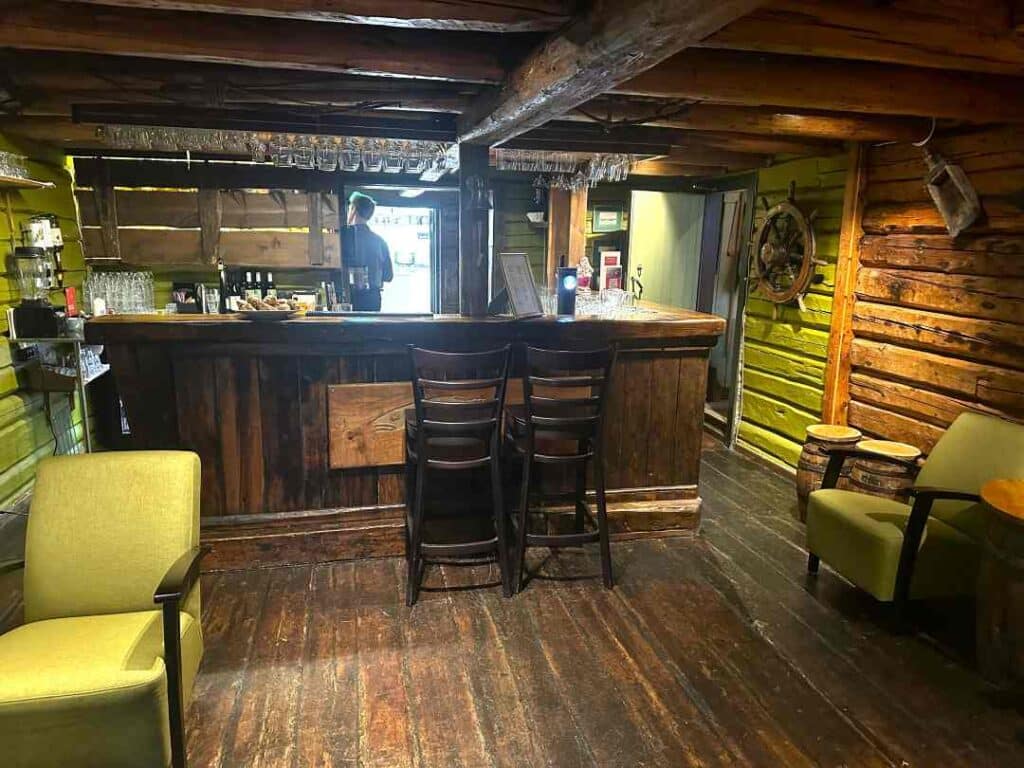
Attitude comes up a lot more often than qualifications. Employer pages here talk about being resilient, flexible, helpful across departments, and unbothered by varied tasks.
Holmen Lofoten lists resilience and resourcefulness as a value, which in a remote Arctic location is less a slogan than a job requirement.
Do You Need to Speak Norwegian?
For most tourism jobs, no, you dont. English is the working language at many of the larger operations.
However, it varies by employer. FURU Hostel asks for a Scandinavian language or intermediate English for most roles, and advanced English for reception.
Having a bit of Norwegian skills helps, even just for you. In shops, on the bus, and with your neighbors, knowing a bit of Norwegian is very helpful, and it matters more the longer you stay.
Seasonal roles outside tourism (shops, public services, some fish plants) may ask for it, so read the listing carefully.
What Life Looks Like Off the Clock
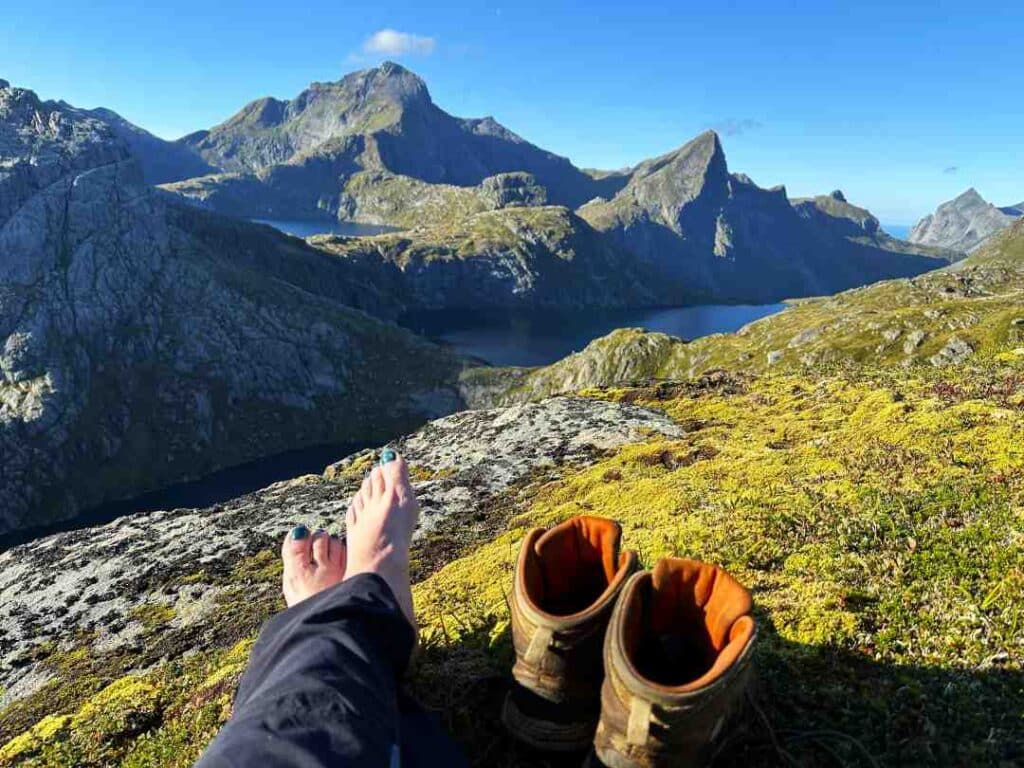
Job postings describe this part in broad strokes. The reality is more specific.
The work is going to be demanding. Long shifts, physical labor, guests who need your full attention no matter how long your last shift was. Hospitality in a destination like this during peak season is not a light commitment.
And then, in the hours you get back, you are in Lofoten.
That means mountains. The hiking is some of the best in Norway: Reinebringen above Reine, Ryten above Kvalvika Beach, the Munkebu hut route, Hermansdalstingen, Volandstinden, Andstabben, Svolværgeita, and dozens more.
Many are accessible without technical equipment. Several will take your breath away in a way that is hard to describe until you are standing at the top.
It also means fjords to kayak. The sea is cold enough to be bracing and clear enough to be extraordinary. In winter, it means Northern Lights over the water on clear nights, and clear nights in Lofoten happen more often than the weather’s reputation suggests (although dont be fooled, we have storms).
People who do a Lofoten season didn’t come here to rest. They chose one of the most physically demanding options available because access to the outdoors was the point.
The job funds the lifestyle. The lifestyle is why they are here.
The community among seasonal workers forms fast. Most people are temporary, so nobody really wastes time.
Once you are here, you are likely to be invited to the WhatsApp group for Lofoten, with sub-groups for anything and everything. This is a very active online community, creating a very active IRL community.
People share cars, cook together, and hike together after shifts. People who have done a season here tend to describe it as one of the least lonely stretches of their lives, even in the depths of winter, despite the remoteness.
A few arriving for a season decide not to leave. They extend a summer into winter, apply for a second season, and eventually stop being seasonal workers and become something closer to locals. It is a known phenomenon.
Related: 11 Reasons You Need to Visit Arctic Lofoten Norway
Housing for Seasonal Workers in Lofoten
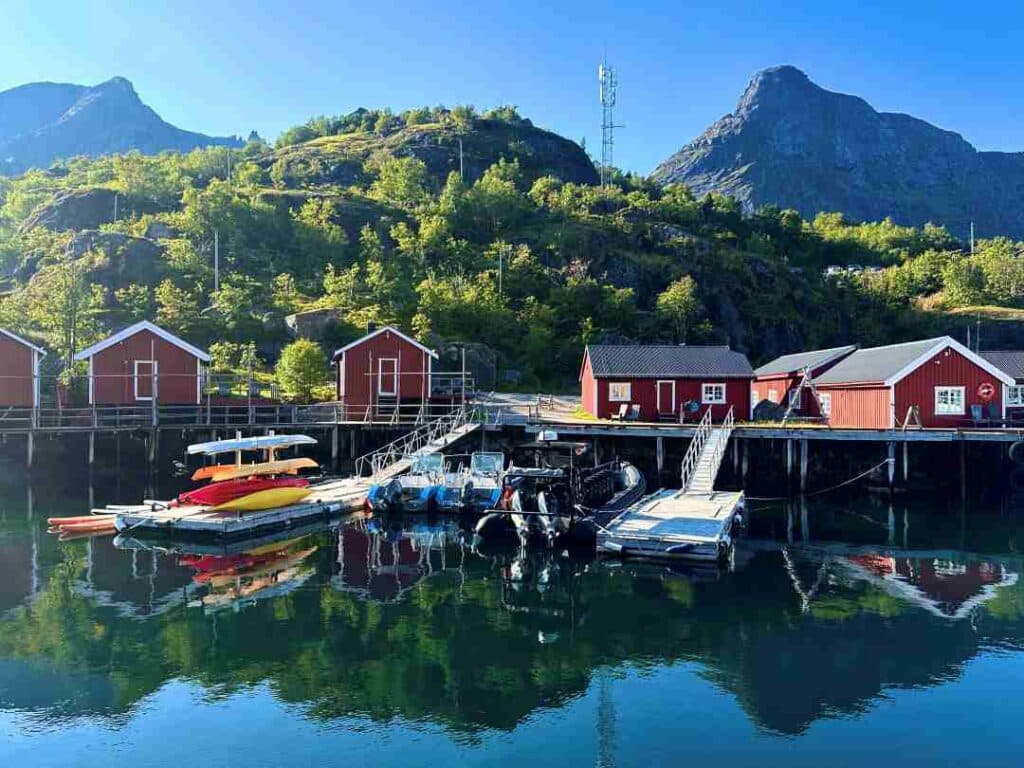
Finding accommodation on your own in Lofoten is hard. The islands are small and popular, and the housing stock in the fishing villages does not expand to meet a seasonal population spike. Short-term tourist rentals compete for the same buildings.
Established employers know this and factor it in. Many offer temporary housing on arrival and help you find something longer-term; see examples below.
- Solsiden Brygge in Ballstad helps with accommodation when you start and uses its local contacts to help you find a permanent home if you want one.
- Holmen Lofoten in Sørvågen provides staff accommodation as part of its employment package.
- Eliassen Rorbuer in Reine offers staff accommodation at low prices, either rooms or cabins.
- FURU Hostel in Bøstad does not provide staff housing, but helps you look and offers limited parking for vans on working days.
Housing varies by employer and by year, so check the current listing. Before you accept any position, ask the employer directly:
- What is provided on arrival?
- What does it cost, and how is it deducted from your pay?
- Is the room shared, and with how many people?
- Do you have kitchen facilities?
- How far is it from the workplace, and do you need a car?
- What happens if the arrangement doesn’t work out mid-season?
- What happens when the season ends?
Some employers house their seasonal staff very well, and some less so. Keep the answers you receive in writing, preferably as part of the contract.
For a private rental, Finn.no is Norway’s largest classifieds site and where locals look, but there are not a lot of Lofoten listings there. If your employer does not offer housing, ask for advice, contacts, or where to look.
Start early. Spring is not the moment to discover that every bed in the village is taken.
Related: Best Places to Stay in Lofoten Islands (useful for seeing which properties are big enough to employ seasonal staff)
Wages, Tax and the Cost of Living
Minimum Wage in Norway
Norway has no national minimum wage. It has legal minimum rates in nine sectors, and wages elsewhere are set by collective agreements or individual contracts. The sectors most relevant to a Lofoten season:
- Hospitality: NOK 204.79 per hour for workers over 20.
- Cleaning: NOK 236.54 per hour for workers over 18.
- Fish processing: the previous minimum wage regulation was repealed on 3 August 2026, according to Arbeidstilsynet (the Norwegian Labor Inspection Authority), and a new one is under consideration. Ask any fish plant to put the hourly rate in your contract.
Those figures are the rates Arbeidstilsynet listed as effective from 15 June 2025. Rates are adjusted, so check arbeidstilsynet.no for the current numbers.
Employment protections apply to seasonal workers too. That means a written contract, holiday pay, and legal working-time rules. These are the baseline, not perks. In practice, wages in Norway are meaningfully higher than for equivalent jobs in most of Europe.
Cost of Living in Lofoten
Costs are also higher than in most places. Groceries, transport, and everything beyond the basics are Norwegian-priced, and Lofoten’s remote location adds to it.
Most seasonal workers still find the net position better than in comparable jobs elsewhere, especially when the employer covers housing (or offers housing at a very low cost). Budget for what you will pay for food and transport, not only what you will earn.
Tax Deduction Card and D-Number
One administrative task to handle immediately: get your tax deduction card (skattekort) and a Norwegian ID number (D-number, or a national identity number if you are registered as a resident).
Without a tax deduction card, your employer must withhold 50 percent of your income at source. This is not a trap. It is the system, and it is fixable. Get it sorted in your first days after arrival.
Expect an ID check with the Norwegian Tax Administration (Skatteetaten), and ask your employer on day one. Seasonal employers run this process every year and usually know the routine.
Tax rules change, so use skatteetaten.no as your reference.
Work Permits and Visas: Who Can Work in Lofoten?
Yes, you can work in Lofoten if you are not from the EU. The route depends on your nationality.
The Norwegian Directorate of Immigration (UDI) at udi.no is the authoritative source. Rules are updated, so check your own case there and don’t rely on a summary, including this one.
EU/EEA Citizens
Citizens of EU and EEA countries (all EU member states plus Iceland, Liechtenstein and Norway) can work in Norway without a separate permit. If you stay longer than three months, you must register with the police.
Nordic Citizens
Danish, Swedish, Finnish and Icelandic citizens can live and work in Norway without a permit. If you stay longer than six months, you must register at the tax office and complete an ID check.
Seasonal Worker Permit (Non-EU/EEA)
If you are from outside the EU/EEA (this includes the UK, the US and most of the world), the relevant category for many Lofoten jobs is the seasonal worker permit. The main conditions:
- You need a concrete offer of full-time work from a Norwegian employer.
- The permit covers a maximum of six months in a twelve-month period. After six months, you must stay outside Norway for six months before you can get another.
- You must be at least 18 and show that you will return home after the job.
- Outside agriculture and forestry, your employer must first get confirmation from NAV that workers from Norway or the EEA could not be found for the position.
- Pay and conditions must match Norwegian standards.
- Family members cannot come with you on this permit.
Hotel, restaurant and tourism work, as well as fish processing, all count as seasonal work.
NAV confirmation is a real hurdle for employers, so if you qualify for a working holiday visa, that route is often easier.
Working Holiday Visa
Norway has working holiday agreements with Australia, Canada, New Zealand, Japan, Argentina and Andorra. UDI lists the details:
- Age: under 31 for Australia, New Zealand, Japan, Argentina and Andorra. Under 36 for Canada.
- Duration: up to one year (Australia can extend to two years in total).
- Job offer: not required before you arrive. You can arrive with savings instead.
- Funds: NOK 15,488 per month, which means NOK 46,464 for the first three months.
- Employer limit: six months with any one employer for Australia, New Zealand, Japan, Argentina and Andorra.
- Family members cannot accompany you.
Read the current requirements on udi.no before you plan around any of it.
Where and How to Find Seasonal Jobs in Lofoten
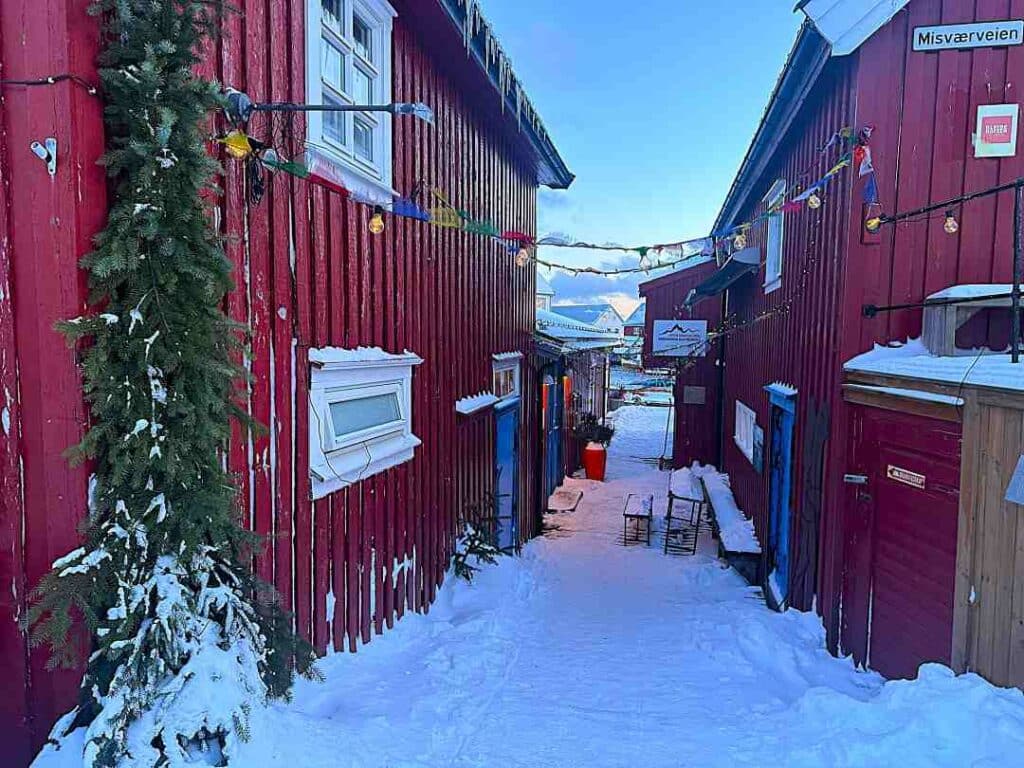
Where to Look
- Finn.no is the main hub for job openings in Norway, but mainly permanent positions. Sometimes you can also find seasonal jobs here.
- Arbeidsplassen (by NAV). Norway’s national job portal (nav.no) is the most reliable starting point and supports English. Search “Lofoten” / combined with the role type.
- Employer websites. Many of the larger operations (hotels, resorts, activity companies) recruit directly. Eliassen Rorbuer, Holmen Lofoten, Solsiden Brygge and FURU Hostel are examples where they advertise seasonal work on their own sites. Approaching an employer directly often works better than waiting for an aggregator to list the job.
- Museums and culture. Norsk Fiskeværsmuseum in Å posts seasonal positions ahead of each summer, and you have a variety of museums in Svolvær, Leknes, Henningsvær – and the Viking Museum at Borg.
- Eures Jobs (jobleads.com). The European job mobility portal (eures.europa.eu) covers postings across the EU/EEA, including Norway. Requires login.
- Job boards. Indeed Norway lists Lofoten jobs, often in Norwegian (requires creating an account). Search in both languages.
- Workaway and similar platforms. Useful for shorter, volunteer-style stays at smaller, family-run operations. Volunteer arrangements are not a substitute for a paid contract, so be clear about hours and what you get in return.
When to Apply
- Summer season (May to September): employers can start recruiting as early as January. However, some also wait until after the winter season is over (late March) before starting recruitment for summer. So apply early, and you might get info about the start of the process, or just resend your application later.
- Winter season (January to April): apply in autumn, September through November. My tip here is the same as above, as employers have different processes.
So get in early, and follow up. Popular employers receive very many applications, and the first round of hiring happens well before the season starts.
How to Apply
Send a short CV and a short personal statement. State the exact dates you are available and that you can commit to the full season.
Some employers have specific application requirements, which you may find on their website or be told when you apply. Eliassen Rorbuer, for example, requires you to send a 2-5 minute video presenting yourself, your experience, interest, and why you are applying for the job.
Mention languages, certifications (first aid, boat license, food hygiene), driving licenses, and interests. Say something about why Lofoten and why this employer. Employers here hire for personality and attitude over skills and certifications, and look for people who will stay through the hard weeks.
Red Flags
Note: Legitimate employers do not charge you to apply.
Be careful with recruitment sites that promise a specific monthly income for Lofoten work, and don’t rely on them for pay, housing, or permit claims.
Confirm all details directly with an employer, and never travel without a written contract.
Getting to Lofoten and Getting Around
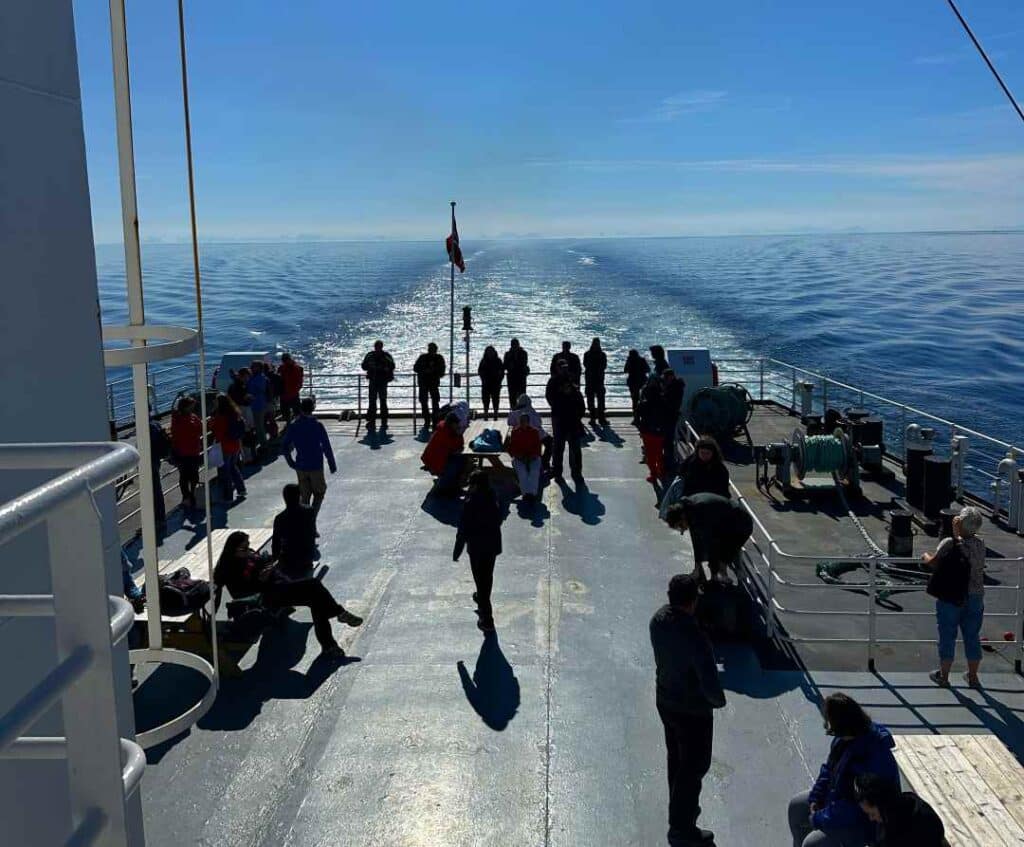
To get to Lofoten, you will fly (or drive) to Bodø town on the mainland, and from there you have options.
Lofoten has two airports, in Leknes and Svolvær, and either is a 25-minute flight from Bodø. Search flights on the Widerøe website.
Many people also arrive by road via the E10, by ferry (photo above) from Bodø to Moskenes, or by flying into Evenes and driving down (a five-hour trip). Find the ferry schedule on the Torghatten website.
If you are coming from Tromsø, see how to get to Lofoten from Tromsø.
Public buses exist, but they are sparse, especially in the evening and in winter. A car makes daily life easier, and most seasonal workers share one.
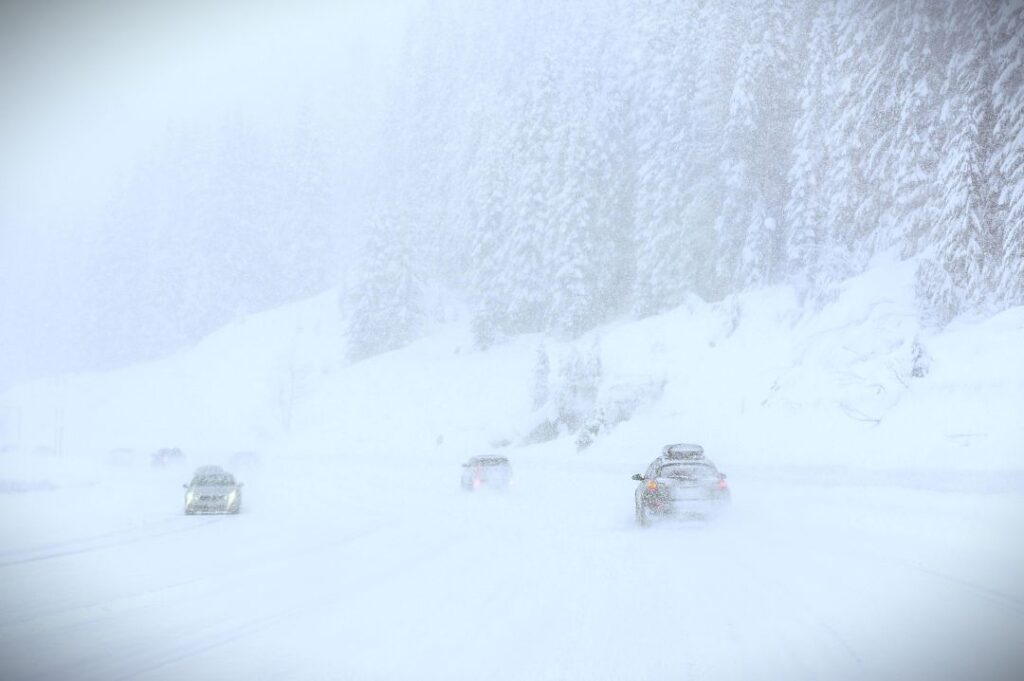
If you plan to bring your car, that is the best option for getting around outside of working hours.
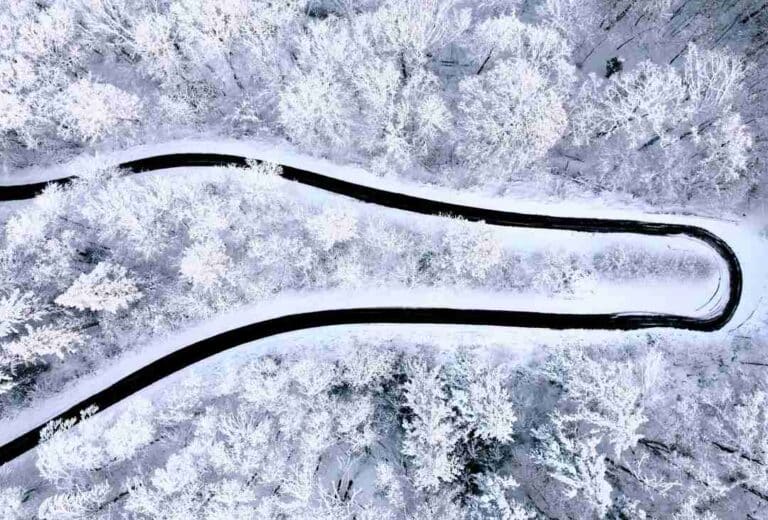
However, if you come for the winter, read here about winter driving first. As you see in the photo above, winter driving in Norway can be challenging, especially if you have no winter driving experience before.
Weather, Daylight and What to Pack
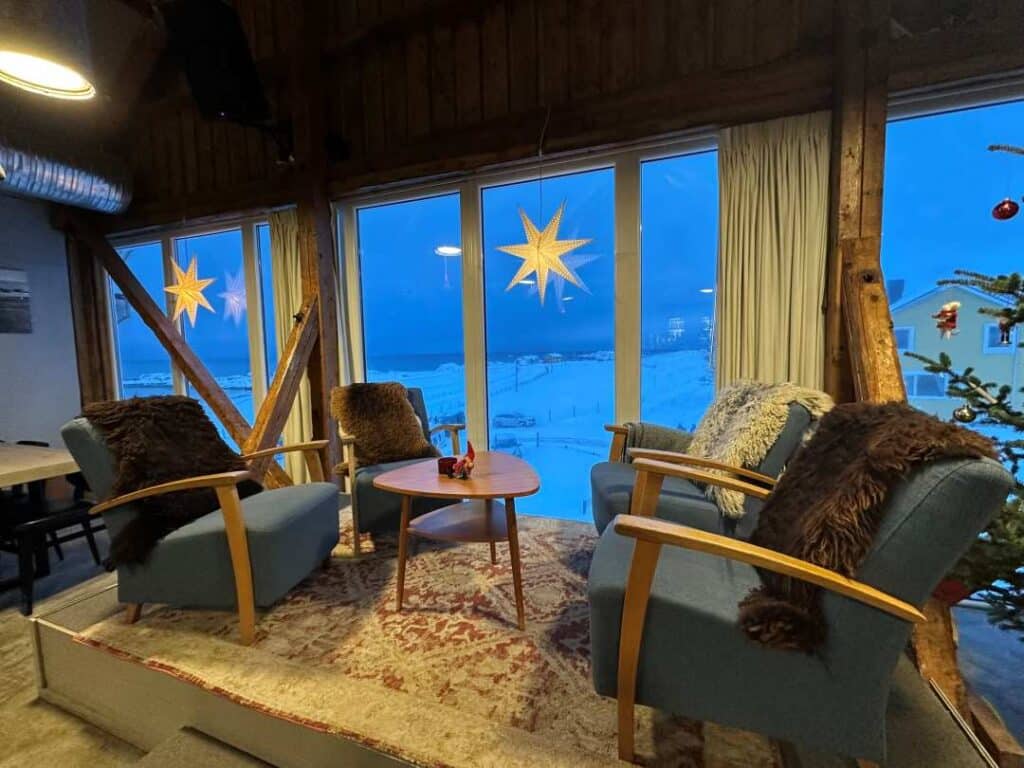
Winters here are milder than the latitude suggests, thanks to warm Atlantic currents. However, mild does not mean dry. Especially during shoulder season, wind and rain are the norm, and winter can also be fierce.
So you need a real waterproof shell jacket (and trousers), wool base layers including socks, sturdy waterproof footwear, a warm hat and mittens. A headlamp will also come in handy.
For fish processing and outdoor work, ask your employer what they provide. In summer, bring a sleep mask (the midnight sun does not care about your shift pattern, unfortunately).
Winter has its own particular mental load. The Polar Night is real, and the gap between the short days and the season’s workload often catches people off guard. It is not dark-dark all day, but not daylight either. We call it the blue light, and it lasts for about four hours a day (on clear days).
You will probably feel more tired than usual, but light, movement, and company help. Most people cope well, and those who don’t usually know in advance that they would struggle.
Related: Visit Lofoten in Spring: Weather, Things to Do & Why It’s a Wild Adventure
Is a Lofoten Season Right for You?
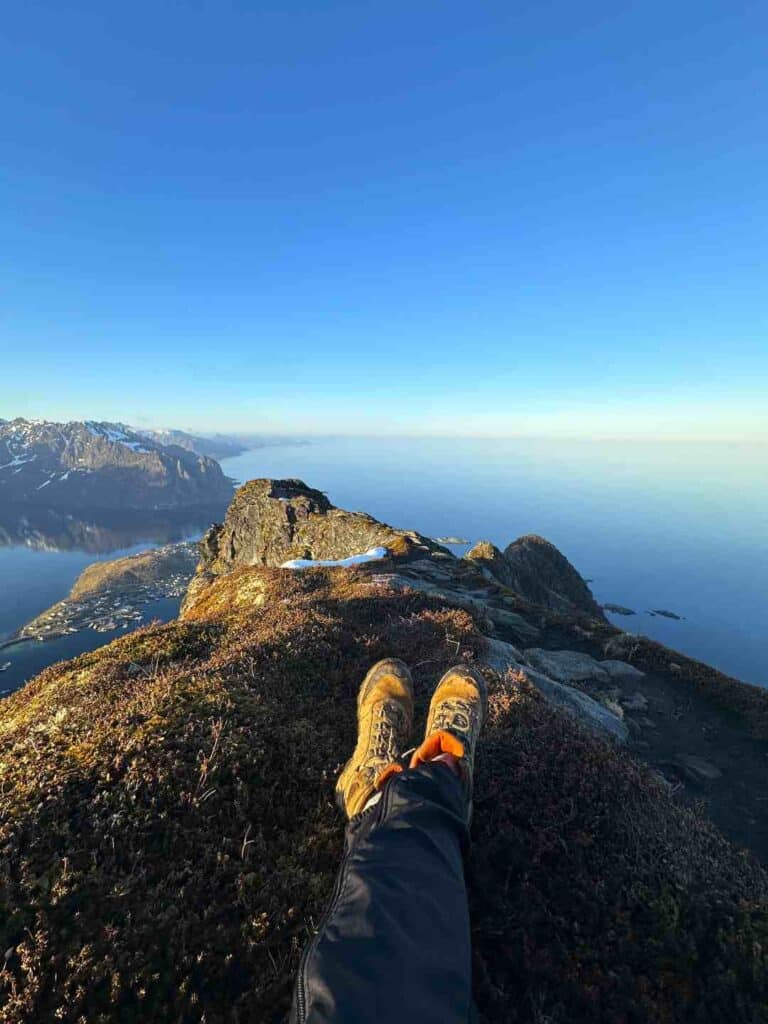
Questions worth asking yourself before you apply.
Are you comfortable with remoteness? Lofoten is not a city. Villages are small, and entertainment options beyond the outdoors are limited. If you need noise and density to feel grounded, a few months in a fishing village may be harder than you expect.
Are you physically up for it? The work and the lifestyle both ask something of your body. Long shifts, then hiking or kayaking in your free time, for months. People who do well here find that energizing, not depleting.
Do you have a skill that transfers? You don’t need one. Plenty of seasonal roles are open to people without specific experience. But guiding qualifications, kitchen training, language skills, or outdoor certifications take an application considerably further.
Are you comfortable with uncertainty? The weather changes fast, real fast. Your plans will shift. Seasons end abruptly. Ferries get canceled and storms close roads. Lofoten rewards flexibility and penalizes rigidity.
Can you handle the money side? Housing costs, expensive groceries, and a season that ends on a fixed date all need planning. Know what you will do in the gap after the season.
If the answer to most of those is yes, or if the remoteness question made you feel exhilaration instead of anxiety, a season in Lofoten is probably worth the application.
From Seasonal Worker to Local
I will say this plainly: the people I have watched arrive here and thrive did not come for the job. They came for the place, and they found a job that gave them access to it.
That distinction matters here; it separates a season here from a season at a ski resort in France or a beach hotel in Spain. Lofoten is a very specific environment that asks something specific of you, and gives something specific back.
I came for a job, and now I own a house here. So consider yourself warned.
FAQ: Working in Lofoten
Can I work in Lofoten without speaking Norwegian?
Yes, in many tourism and hospitality roles. English is the working language at several of the larger employers. Some roles and some employers ask for a Scandinavian language, so read each listing.
Is housing provided for seasonal workers in Lofoten?
Often, but not always. Some employers provide staff housing, others help you find it, and some offer no housing at all. Ask what is provided, what it costs, and how it is deducted from your pay, and get the answer in writing.
How much do seasonal workers earn in Lofoten?
It depends on the sector and employer. Norway has no national minimum wage, but hospitality and cleaning have legal minimum hourly rates, and other jobs are set by collective agreements or contracts.
Costs are high, so compare your pay against housing and food. Check current minimum rates at Arbeidstilsynet.
Can non-EU citizens work seasonally in Lofoten?
Yes. Most non-EU/EEA citizens need a seasonal worker permit, which requires a concrete job offer, and the permit lasts up to six months in a twelve-month period.
Citizens of Australia, Canada, New Zealand, Japan, Argentina and Andorra who meet the age limits can apply for a working holiday visa, which does not require a job offer in advance.
When should I apply for seasonal jobs in Lofoten?
For summer, apply between January and March. For winter, apply in autumn. Early applications matter because the first hiring round happens before the season starts.
Is there seasonal work in Lofoten in winter?
Yes. From January to mid-April, fish processing for the Lofotfisket and winter tourism (Northern Lights tours, hotels, rorbuer) both need staff. The winter market is smaller than summer’s.
Do I need a car to work in Lofoten?
Not always, but it helps. Buses run, but not often, especially in the evening and in winter. Many seasonal workers share a car. Check whether your employer’s housing is within walking distance of work.
Can my partner or family come with me on a seasonal permit?
Not on the seasonal worker permit or the working holiday visa. Family members cannot accompany you on either. EU/EEA citizens have different rights.
Relevant sources you might need
- UDI seasonal workers
- UDI seasonal work FAQ ·
- UDI working holiday ·
- UDI EU/EEA FAQ ·
- Skatteetaten tax card ·
- Arbeidstilsynet minimum wage ·
- Nordic Council:
- Moving to Norway ·
- Nordregio: Lofoten case ·
- Holmen Lofoten careers ·
- FURU Hostel jobs ·
- Solsiden Brygge jobs
Wrap-Up
Some of our seasonal staff are 23 and between things. Others are 40 and have decided that a desk job is no longer the whole answer. Some of them knew exactly what they were getting into, while others had absolutely no idea.
What they have in common is not really age or background; it is that they chose this remote, spectacular place specifically, even though they could have gone anywhere.
So what do you think? Now you know how to get here; just find out if you are ready for a “season of your life”!
Other articles you might like: