Lofoten in October: A Local’s Honest Guide to the Shoulder Season
October is the month Lofoten empties out after the summer, colors turn from green to orange, red, and brown, and the locals start saying to each other, “We sure have a lot of weather today!”
Half the seasonal cafes pull their shutters down to prepare for winter, and the archipelago is noticeably heading toward the dark season, the Polar Night, and some of its wildest weather.
It’s also, if you ask me, an underrated month to visit for the right kind of traveler. I am heading into my third year of living in Lofoten through every season, and I don’t say that lightly. If you choose to visit in October, you need to know what you are signing up for.
Here’s what October actually looks like, so you can decide if it’s your month.
Quick Facts: Lofoten in October
- Temperature: Average highs around 9°C (48°F), lows around 5°C (41°F)
- Daylight: Drops fast from roughly 11.5 hours on October 1st to about 7.5 hours by October 31st
- Rain: October is one of Lofoten’s wettest months. Pack accordingly
- Wind: Yep. Expect wind, rain, and clear skies, sometimes all within one hour
- Snow: Can arrive on the mountain peaks the last half of the month
- Northern Lights: Nights are dark enough, reliably, from late September
- Crowds: Low. Most of the tour buses are gone by mid-month
- Prices: Shoulder-season rates starting in rorbuer and hotels
- Availability: Some hotels and restaurants close during low season, so do your research
Also read: Best Places To Stay In Lofoten
Weather in Lofoten in October
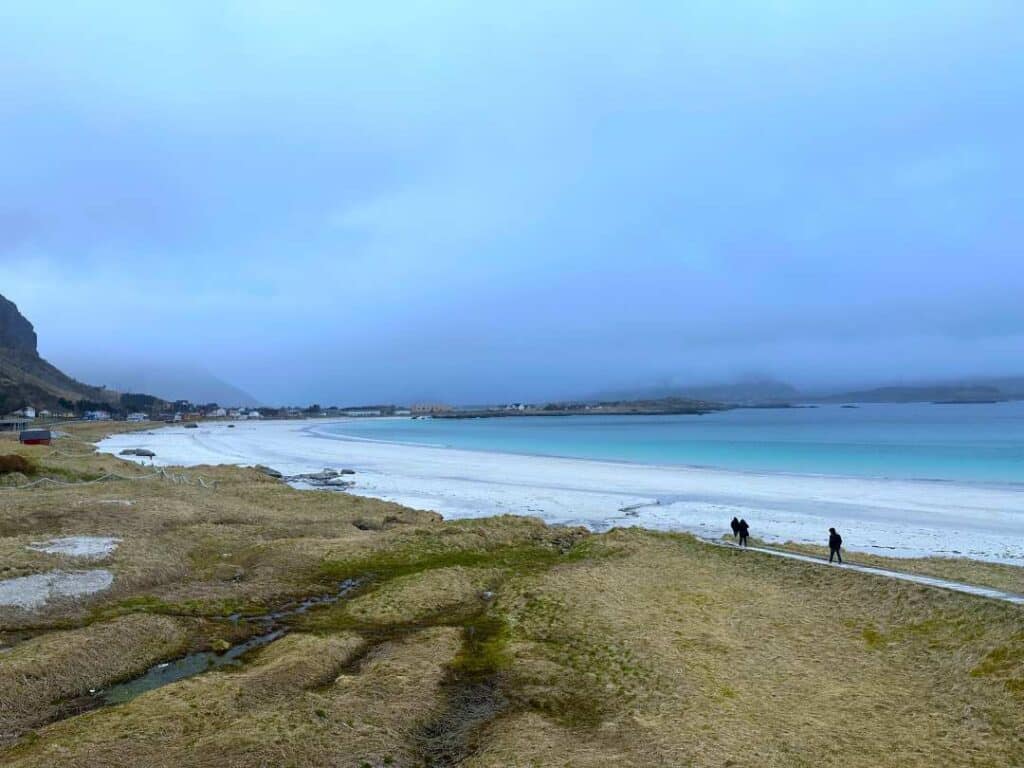
Make no mistake, October definitely isn’t a brochure month. There’s no midnight sun, no guaranteed blue-sky mountain shot for your feed.
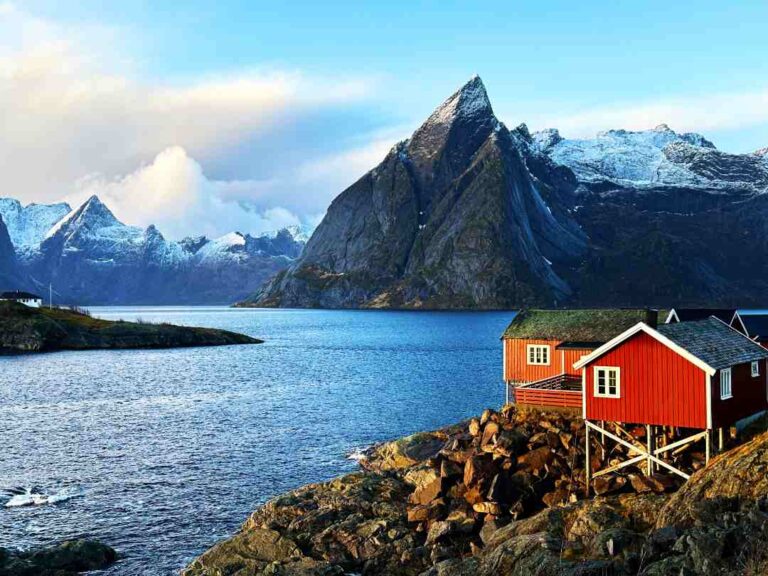
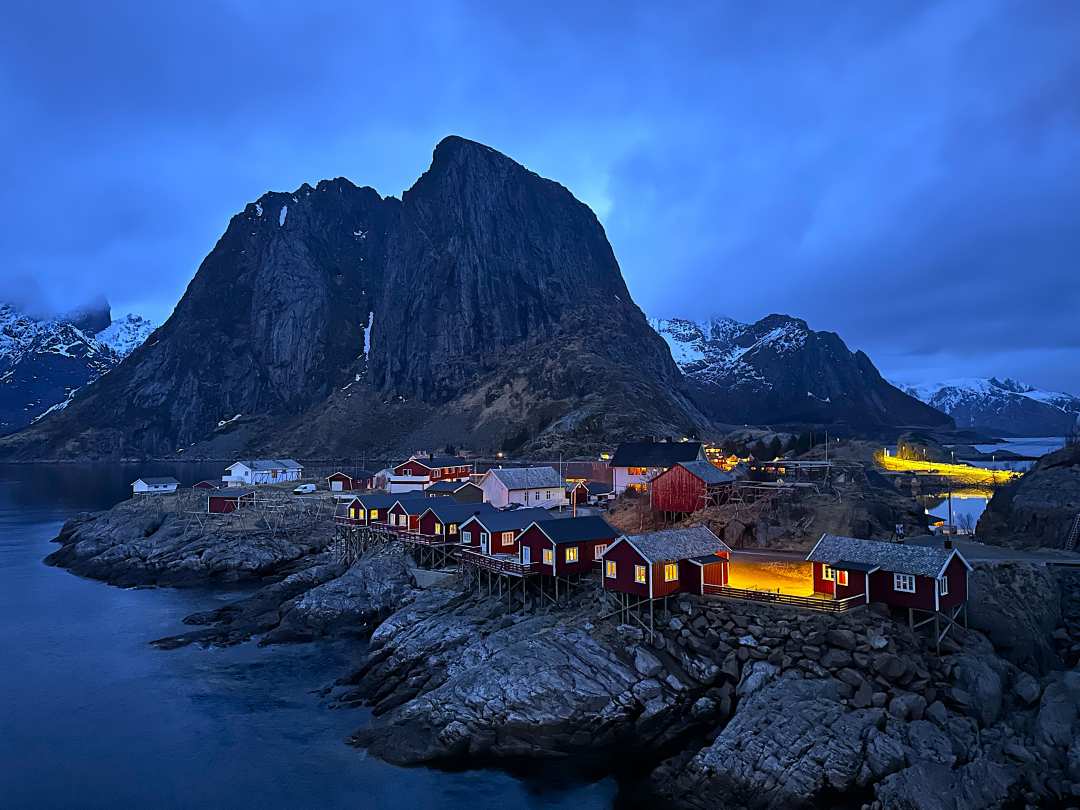
What you get instead is quiet trails, dramatic light, storm-watching from a warm rorbu, and a real shot at the Northern Lights without fighting a tour bus for a parking spot.
October sits right at the hinge between autumn and winter here, and autumn is the stormy season. Expect average high temperatures around 9-10°C and lows around 5°C, with wind and rain doing most of the talking.
This is one of the three wettest months of the year in Lofoten, with more days of rain than not, and storms roll in off the Norwegian Sea or the West Fjord with real force.
The Gulf Stream keeps it from turning into proper winter cold, but “mild” and “dry” are not the same thing, and nobody visiting in October should confuse them.
Snow is possible at higher elevations by late in the month, even while it’s still raining at sea level. Daylight is the bigger shift to plan around: you lose roughly four hours of it over the course of the month, so a trip in early October and a trip in late October are genuinely different trips.
Can You See the Northern Lights in Lofoten in October?
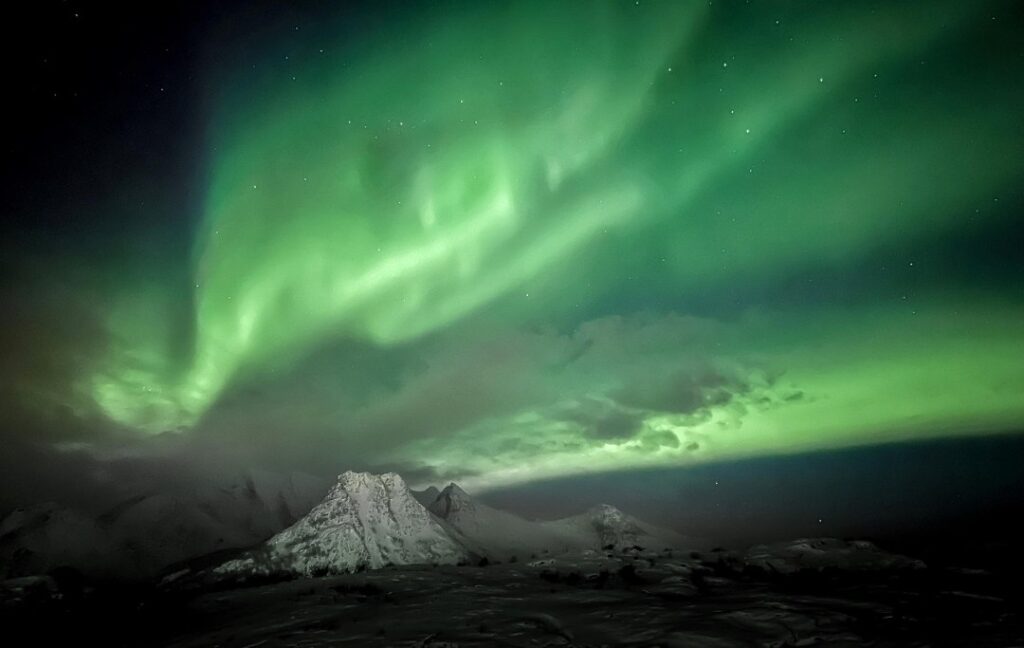
Yes. From late September, the nights here are dark enough for the aurora to show up reliably, but there is a catch.
That is cloud cover, not lack of darkness. October is one of the wettest months of the year; autumn storms keep rolling in, and the aurora needs a clear patch of sky to work with.
If experiencing the Aurora is your main goal for visiting, you should plan for several nights rather than one, and keep an aurora forecast app open. Treat a sighting as a bonus rather than an itinerary item, and you will not feel too disappointed if you arrive during a stormy period.
Unfortunately, there are no guarantees when it comes to Mother Nature.
You might also like: Seasonal Work in Lofoten: Jobs, Housing, Visas and How to Apply
Is Lofoten Worth Visiting in October?
Yes, it is, for the right kind of traveler. October isn’t a lesser version of summer Lofoten, but more like a different destination that happens to share the same coordinates.
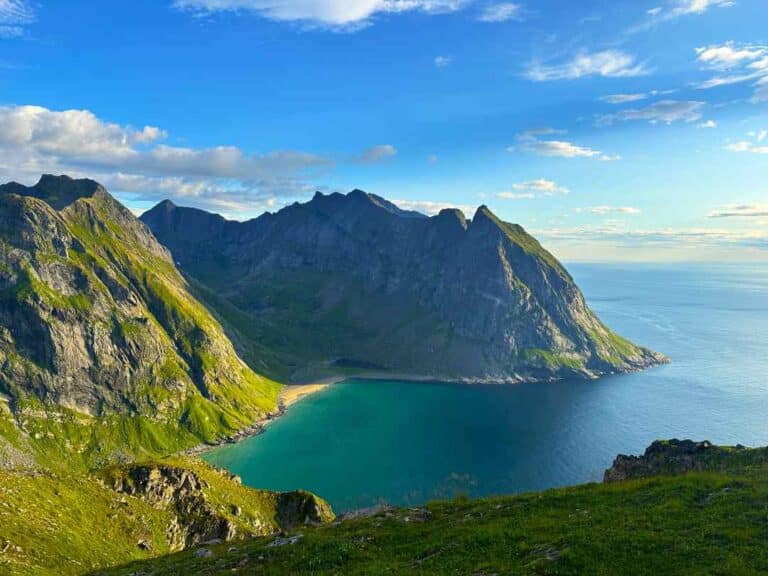
If you love to see and feel forces of nature, Lofoten in October will make you feel alive. The mountains are still majestic, and the views still incredible, even when (or maybe especially when) storms are shaking the islands.
Why October Works
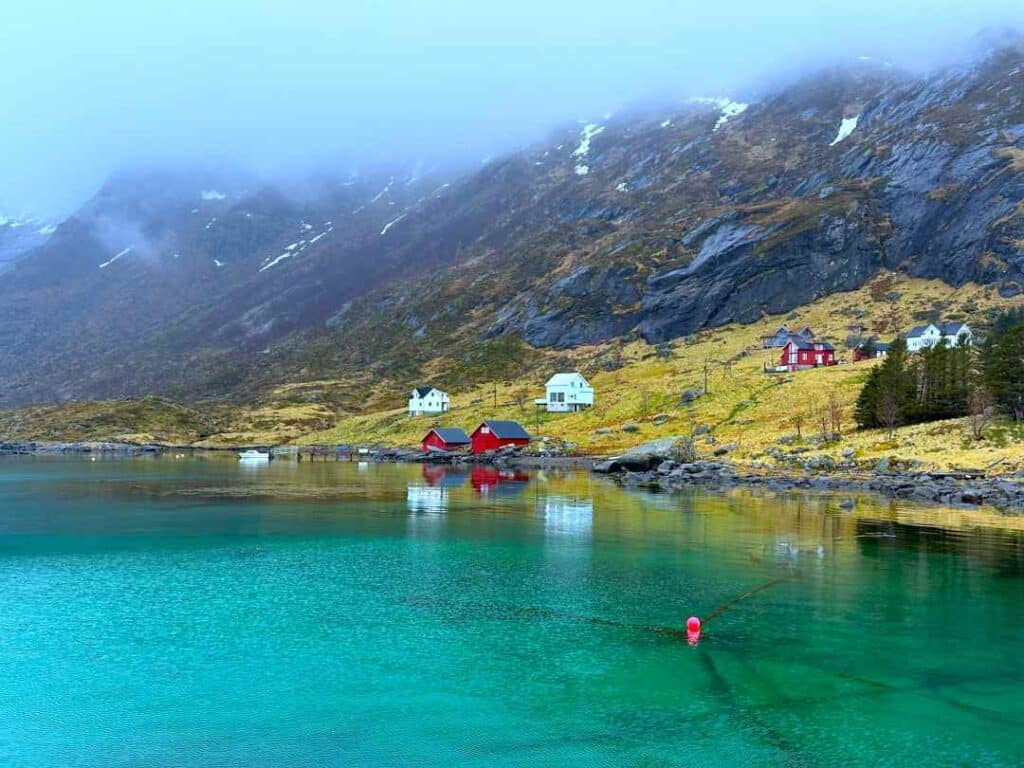
The trails are (almost) empty. The light is low, long, and dramatic for most of the day instead of just at golden hour.
Storms roll through the fjords in a way that’s genuinely worth watching from somewhere warm and dry, or go out and meet the nature forces if you dare.
Some hikes, like Reinebringen, might close sometime during October. If the top gets covered in the first snow of the season, the Sherpa Staris get slippery, and you dont want to be up there under those conditions.
But most hikes are accessible also in October.
Prices drop somewhat, and you get the first real stretch of Northern Lights season without the deep-winter driving conditions that come with it a month or two later. You can still go hiking, but expect the wild side of Lofoten, so don’t expect t-shirt, shorts, and trainer-conditions on the trails.
Who Should Skip It
If you want guaranteed sun for photos, warm-weather hiking to exposed summits, or every café and tour operator running on full summer hours, October will frustrate you.
So will anyone who hasn’t packed proper rain gear. Come for what October actually offers, not for what July offers in October’s calendar slot.
Also read: Norway In December: What to Actually Expect (From A Lofoten Local)
What’s Open in Lofoten in October (And What’s Not)

A number of the smaller seasonal cafes, guesthouses, and restaurants in the quieter villages wind down or close for the season after September, so check ahead rather than assume, especially outside the bigger hubs.
Places with year-round traffic, like Svolvær, Henningsvær, and Reine, tend to stay open, but hours shrink.
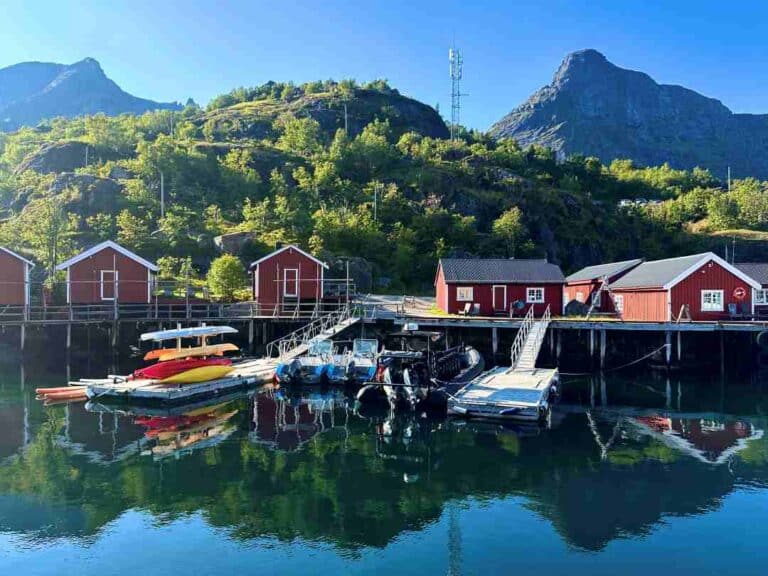
Boat-based activities like kayaking and RIB safaris often keep running into October depending on the operator and that day’s weather. Contact them directly rather than booking blind.
Surfing is a year-round activity in Lofoten, and can be a magical experience under the dramatic mountains. Check out Lofoten Beach Camp, and Unstad Arctic Surf.
The road network stays fully open and well maintained; October doesn’t usually require winter tires yet, but early snow at altitude isn’t impossible, so it’s worth a look at what driving in Lofoten and winter driving conditions actually involve before you go.
Ferries and the coastal voyage run year-round regardless of season, but be prepared for delays and sometimes cancellations. It is a good idea to have some buffer time wherever you change transport.
You would not be the first person stuck in Lofoten due to a storm and a canceled ferry while your flight leaves Bodø without you, but I don’t recommend joining that statistic.
Things to Do in Lofoten in October
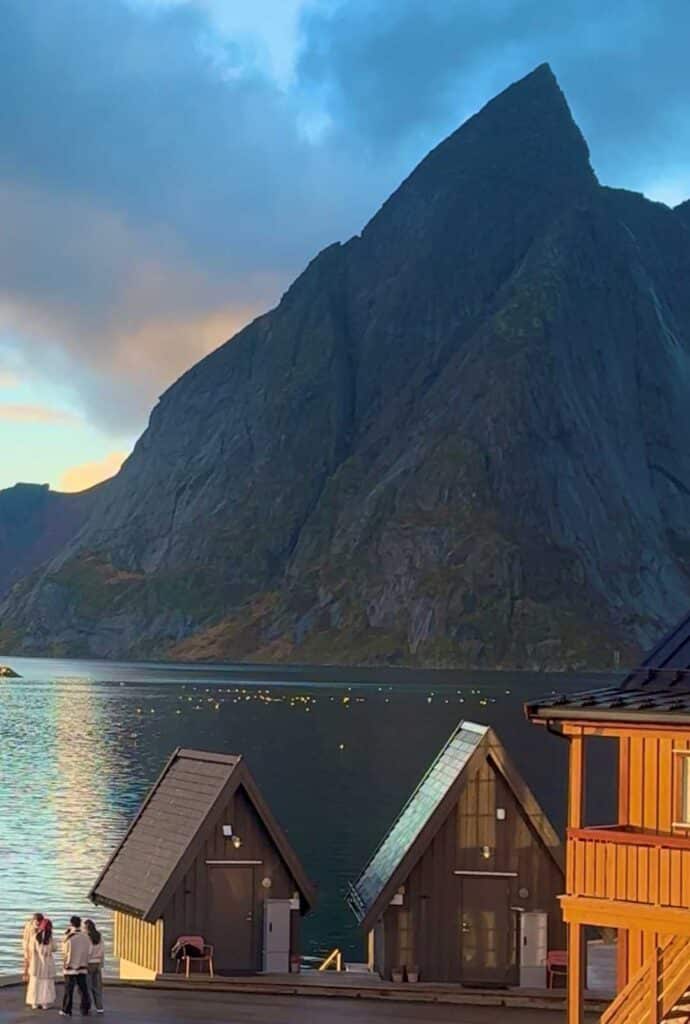
Hike the lower trails. The classic Reinebringen hike is still doable, but the stairs get slick in rain and the days are short — start early, bring a headlamp for the way down, and check conditions near the summit before you commit.
Walk the beaches in a storm. Uttakleiv in October weather is a different experience from Uttakleiv in July. Moodier, louder, better for photographs that don’t look like everyone else’s. I visited in December with my parents, and yes, we saw someone still swimming!
Go kayaking anyway. With a drysuit and a guide, paddling around Reine in October is a cold-weather adventure, not summer leisure — and it’s one of the better ways to see the fjords without another soul around.
Hunt the aurora. Bring patience and a thermos with a warm drink.
Go surfing in Lofoten Beach camp by Ramberg, or Unstad Beach outside Leknes.
Let a day be slow. A sauna, a plate of local fish, a window seat during a storm is genuinely part of what October is for here, not a consolation prize for bad weather. Many hotels and resorts have saunas with direct access to the sea (photo above), and accept non-staying guests.
Where to Stay in Lofoten in October
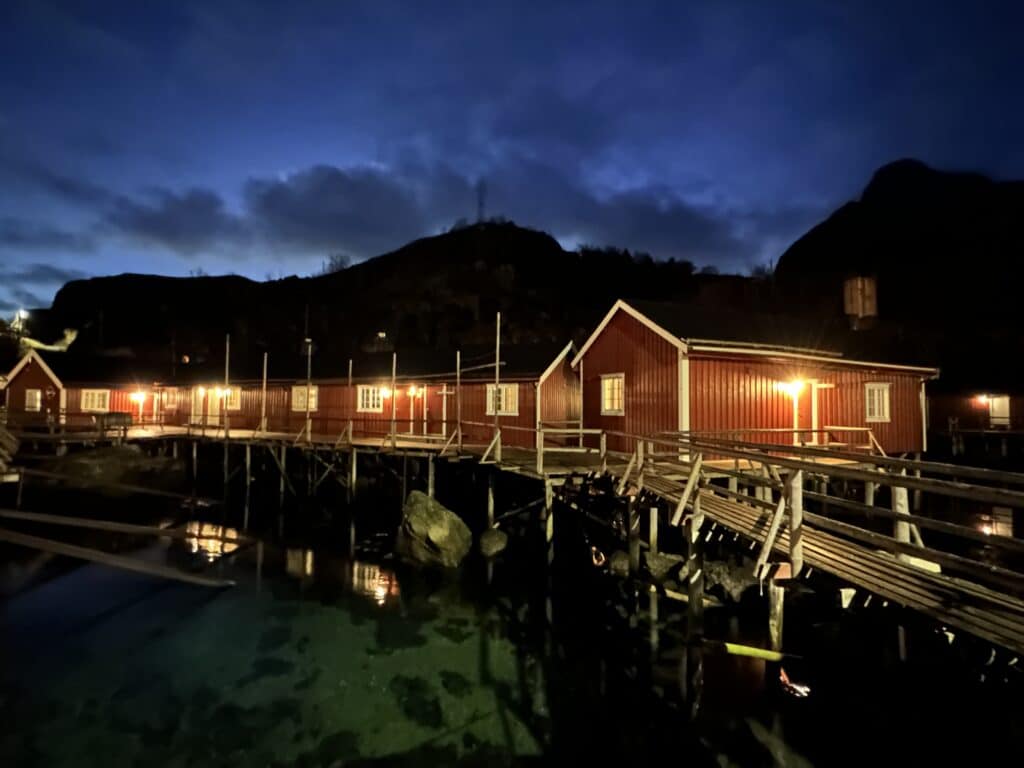
Shoulder-season rates start to apply across the best places to stay in Lofoten, which is one of October’s real upsides.
As general advice, I’d lean toward staying in or near a hub like Reine, Henningsvær, or Svolvær rather than a remote village this time of year.
Services are thinner everywhere in October, including bus departures, and being near what’s still open matters more than it does in August.
My suggestions for traditional fishermen’s cabin stays:
- Svolvær: Svinøya Rorbuer Fishermans Cabins
- Henningsvær: Henningsvær Rorbuer Fishermans Cabins
- Reine: Sakrisøy Rorbuer or Reine Rorbuer
- Å i Lofoten: Å Hamna Rorbuer
What to Pack for Lofoten in October
For October, if you plan to be outdoors at all, you need all things waterproof (even your hat), and you need to stay warm: always layers. Thermal underwear or wool, and rain- and windproof outerwear are essential, and warm socks in your sturdy waterproof boots.
Choose comfort over cute, or at least dont sacrifice comfort for cute.
- A proper waterproof shell (“water resistant” will let you down within the hour)
- Wool base layers, because wet and cold is worse than either on its own
- Waterproof hat and mittens
- Hiking boots with real grip. Wet rock and wooden stairs get slick fast
- A day pack if you plan to do any hiking
- Dry extra thermal wear/sweaters in your day pack
- Reusable water bottle (you can drink the tap water in Norway)
- A headlamp. On October 31st, the sun sets at 3:19 pm
- A dry bag for your camera, because the best shots happen exactly when the weather turns
Travel To Norway Tip: Not all accommodations have paved roads all the way to the entrance. Keep that in mind when you choose luggage; your largest wheeled suitcase may become a nuisance to drag around.
Getting to Lofoten in October
Flights into Svolvær and Leknes run their normal schedules, and there are multiple daily departures from Bodø (and some from Tromsø).
You can also fly to Evenes (Harstad Narvik Airport), and drive down south. From Evenes to the end of Lofoten, the drive is around five hours, weather and traffic dependent.
Driving in via the E10 or arriving from Tromsø both work fine in October conditions. Just check the forecast the morning you travel, not the week before. Ferries and the coastal voyage are scheduled as normal, but might have delays or even cancellations during storms.
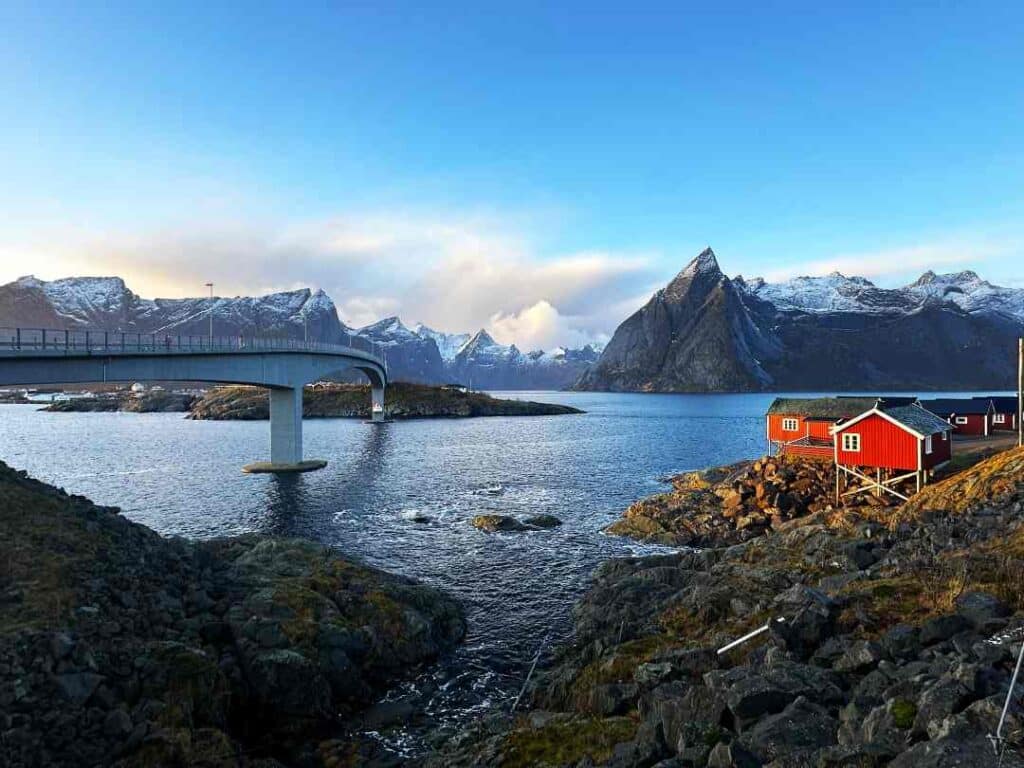
Also be aware that driving through Lofoten, you need to cross a number of bridges, and if the wind gets really fierce, some of these might close for a time.
Wrap Up Lofoten In October
Visiting in October won’t give you Lofoten’s postcard version. It’ll give you the fierce one, stormy, quiet, dramatically lit, and far less crowded than the photos you’ve seen suggest.
If that sounds better than worse to you, pack the rain jacket and go. And if you’d rather ease into the off-season gradually, September is still the gentler bridge between the two.
You might also like:
Ultimate Lofoten Islands Travel Guide From A Local
Sustainable Travel in Lofoten: How to Visit Without Being Part of the Problem